
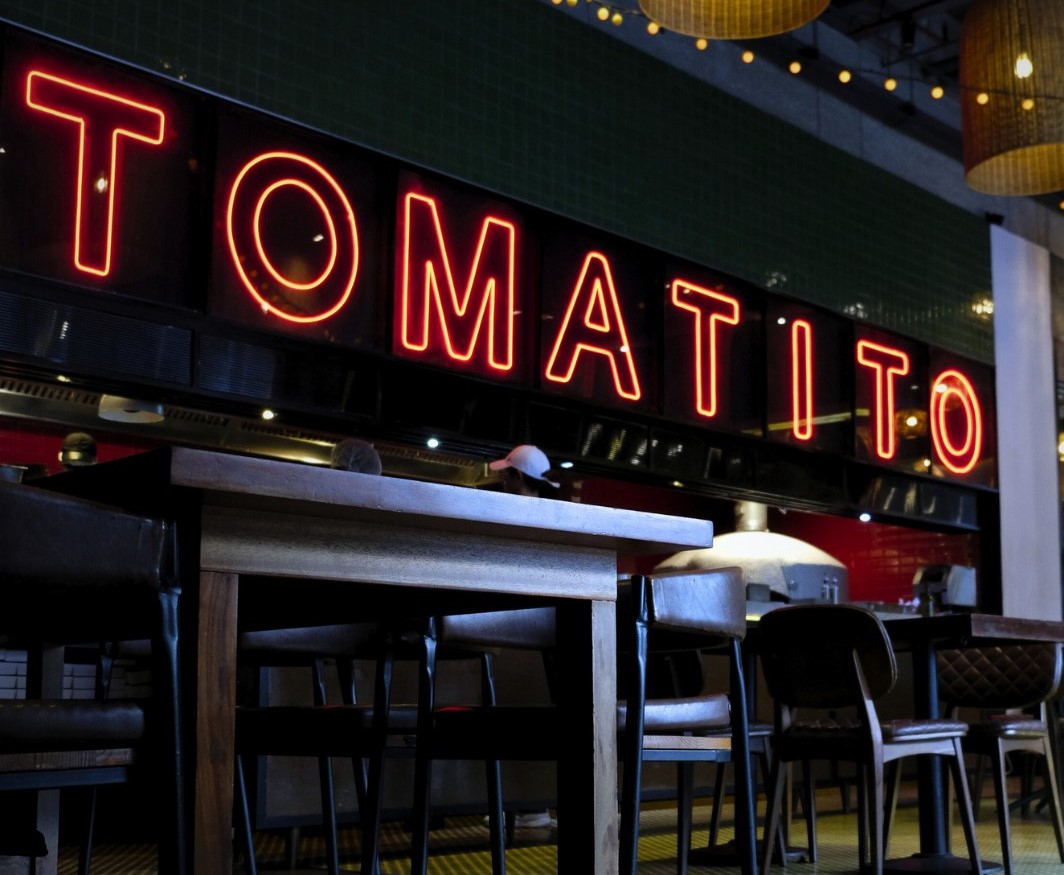
MANILA — On the ground floor of BGC Corporate Center, where 30th Street meets 11th Avenue, a red door opens into something that defies the quiet, gray-suited logic of a business district. This is Tomatito, the "sexy tapas bar" that actress and entrepreneur Solenn Heussaff co-owns with the Barcelona-born trio who gave the city Las Flores, Rambla, and La Lola Churreria. Since opening in December 2016, the restaurant has done something quietly remarkable: it has outlasted the typical lifespan of a celebrity-backed venture—twice over, and counting. In 2026, nearly a decade in, Tomatito is neither a fading novelty nor a nostalgia piece. It remains what it set out to be: a loud, warm, unapologetically playful room where the music is as carefully chosen as the wine, and the tapas are engineered for the kind of evening that ends later than planned.
The name itself is borrowed from José Fernández Torres, the legendary flamenco guitarist known simply as Tomatito. It is a name that carries rhythm and heat, and the restaurant wears it well. Walk inside and the visual language shifts registers: flamenco dresses displayed like art, vintage Spanish film posters on the walls, neon signage cutting through the amber lighting. The design is a deliberate throwback—a reinterpretation of the traditional Spanish bars of the 1980s, with their unvarnished conviviality and their refusal to separate eating from living. The group behind Tomatito—Dani Aliaga, Sergi Rostoll, and Uri Singla—had already proven with their earlier concepts that they understood how to translate Iberian hospitality for a Filipino audience. With Tomatito, they added Heussaff to the partnership and turned the volume up.
A Menu Built on the Logic of a Good Time
The kitchen is anchored by Chef Iván Fernández, who arrived in Manila from Tomatito's flagship in Shanghai in 2019. His appointment marked a deliberate tightening of the restaurant's culinary identity. Fernández inherited a menu that had already earned a following—Salmon TNT, Filete con Airbag, Croquetas Don Julio—and began refining it with the precision of a chef who understands that casual dining still demands technical discipline.
The Salmon TNT remains the signature. Smoked salmon, cream cheese, honey, and truffle oil arrive on a small bread airbag, and the instruction is unsentimental: two fingers, one bite. It is a dish built for the moment when hunger and curiosity collide, delivering a controlled explosion of flavor. The Airbag—thinly sliced tenderloin on a crunchy mini-baguette—offers a meaty counterpoint. The Pulpo a la Gallega, with tender octopus, potato, smoked paprika, and aioli, channels the seafood traditions of Spain's northwest coast without leaving the tropics.
For groups settling in for the long haul, the Mixto Platter assembles cold cuts and cheeses into a generous starting point, while the Paella Iberica—layered with Iberian pork shoulder, ham, butifarra, shimeji mushrooms, and truffle oil—arrives in a wide, shallow pan that becomes the center of the table. Smaller plates punctuate the meal: Albondigas con Tomate (meatballs in a thick tomato sauce rich with herbs), Pimientos Rellenos (stuffed piquillo peppers), and Escalivada con Carpaccio, which pairs local tanigue with roasted vegetables, feta, and pickled green chilies in a nod to the Filipino ingredient that Chef Fernández discovered he could not find in Spain.
The beverage program mirrors the food in its balance of tradition and flexibility. Sangrias are made with attention to fruit and freshness, while the wine list leans Spanish. For the adventurous, the bar is known to accommodate customizations—pick a base spirit, name a flavor profile, and watch what arrives. It is the kind of bar that treats a request not as an inconvenience but as a prompt.
Cumbia Nights and the Sound of a Restaurant That Refuses to Be Furniture
One of Heussaff's earliest promises for Tomatito, made in the excited Instagram posts that preceded the December 2016 opening, was that the restaurant would host "crazy Latin Cumbia nights." It was the kind of line that can sound like marketing and then, years later, turn out to have been a statement of intent. Cumbia—the infectious, accordion-laced dance music born in Colombia and absorbed across Latin America—functions here as both entertainment and identity. The restaurant does not simply serve Spanish food; it insists on a soundtrack that matches the heat of the menu.
This commitment to atmosphere is what has allowed Tomatito to hold its ground on a BGC block that has seen concepts arrive, struggle, and vanish. The restaurant opens daily at 11 a.m. and runs until midnight on weeknights, 1 a.m. on weekends—hours that accommodate both the lunch crowd spilling out of the surrounding office towers and the evening groups for whom dinner slides, uncomplaining, into drinks. The space, with its mix of casual dining and bar seating, adapts easily to both registers.
It helps that Tomatito is embedded in a restaurant group with deep operational roots. The Barcelona boys, as they are sometimes called, established their Manila presence through the Bistronomia group, which continues to manage a portfolio of Spanish concepts. That structure gives Tomatito access to supply chains, wine import channels, and kitchen talent that a standalone operation might struggle to sustain. It also means that the restaurant has survived the exits and pivots that often accompany celebrity partnerships. Heussaff's role—visible, invested, but not operational—has held steady because the operational foundation beneath her is solid.
What a Decade-Old Tapas Bar Tells Us About BGC's Dining Maturity
Tomatito's quiet milestone—approaching ten years on a corner that was a different city when it opened—is not merely a story of survival. It is evidence that Bonifacio Global City's dining scene has matured in a specific direction: toward restaurants that reward repeat visits rather than single Instagram posts. The 2016 BGC that welcomed Tomatito was still building its reputation as a dining destination. The 2026 BGC that keeps it busy on a Tuesday night is a borough where a restaurant can age gracefully, where a familiar table carries its own kind of currency.
For Heussaff, who has since expanded into art exhibitions, fashion, and a growing portfolio of ventures, Tomatito remains a foundational brick in a career that has never fit neatly into a single category. The restaurant does not depend on her daily presence, and that is, in many respects, the point. It was built to be a place, not a project—a distinction that every restaurateur understands and few achieve. Step inside, order the Salmon TNT, and listen for the cumbia.