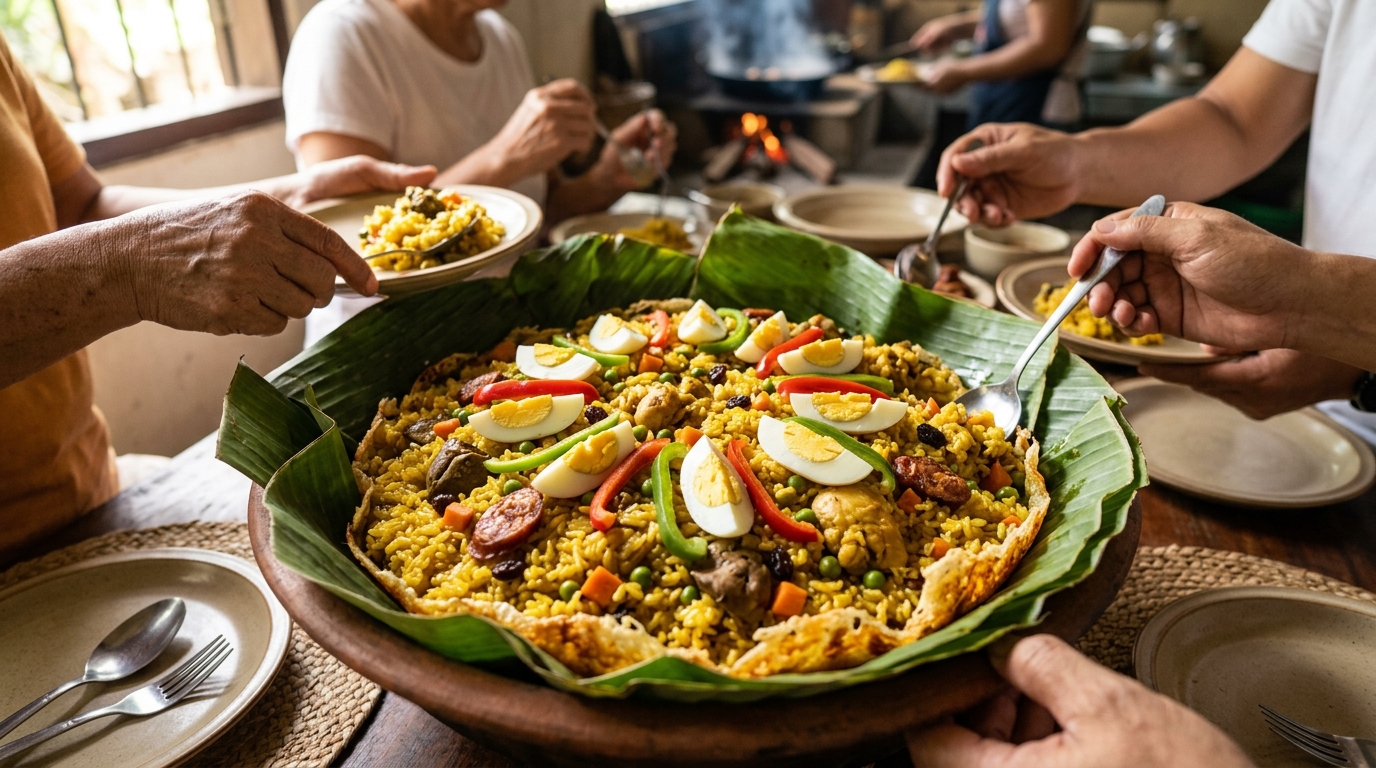
Spain gave the Philippines paella. Pampanga gave it soul. Bringhe, the Kapampangan adaptation of the classic Spanish rice dish, replaces expensive saffron with locally grown turmeric and uses rich coconut milk (gata) to create a distinctly Filipino flavor profile that has become a festive staple in Kapampangan households . This one-pot celebration meal is commonly served during fiestas, holidays, and family gatherings, where its golden-yellow hue and creamy, sticky texture take center stage on the dining table.
Unlike traditional Spanish paella, which aims for an al dente bite, bringhe uses glutinous rice (malagkit) that absorbs the coconut milk and broth, resulting in a comforting, velvety texture that coats every grain . The dish has gained international recognition, being featured in Kapampangan-inspired menus abroad, including in Hawaii during Filipino Food Week celebrations, proving that this provincial specialty can hold its own on the global stage.
The Secret Behind Bringhe's Signature Golden Color and Creamy Texture
What sets bringhe apart from its Spanish ancestor are three key ingredients: glutinous rice, coconut milk, and turmeric. The glutinous rice gives the dish its signature sticky, toothsome texture, a comforting quality that Filipinos crave in festive rice dishes. Coconut milk replaces the traditional broth, coating each grain in a rich, velvety creaminess that is distinctly tropical and unmistakably Filipino. Turmeric — not saffron — provides the brilliant golden-yellow color, a substitution born of practicality that has become a defining characteristic of the dish .
The proteins tell a story of culinary fusion as well. While Spanish paella might feature seafood or rabbit, bringhe typically showcases chicken, chicken liver, and Chorizo de Bilbao (or Chinese sausage), ingredients that were more accessible to Kapampangan cooks while still delivering deep, savory flavor . The addition of raisins provides small bursts of sweetness that balance the savory elements, creating a complex dish that is greater than the sum of its parts.
How to Make Bringhe at Home: Step-by-Step
Prepare the banana leaves. Soften banana leaves by passing them quickly over an open flame until they become pliable and aromatic. Line your cooking vessel — a large pan, clay pot, or traditional paellera — with the leaves, allowing some to overhang. The leaves will infuse the rice with a subtle, earthy aroma and help create the coveted crispy bottom crust.
Sauté the base. Heat oil in a separate large pan. Sauté 3 cloves of minced garlic and 1 diced onion until fragrant. Add 2 tablespoons of turmeric powder and cook briefly to release its color and aroma. Add 1 lb of boneless chicken (thighs or breast) and 1/2 lb of chicken liver, cooking until lightly browned.
Cook the rice. Pour in 2 cups of glutinous rice (malagkit) and stir until each grain is coated with the turmeric mixture. Add 1.5 to 2 cups of coconut milk and 1 cup of chicken broth. Bring to a boil, then lower the heat, cover, and let simmer until the rice is nearly cooked, with most of the liquid absorbed.
Add mix-ins and finish. Stir in sweet green peas, raisins, sliced carrots, and 1-2 links of sliced Chorizo de Bilbao. Season with 1 tablespoon of fish sauce (patis) to taste.
Create the tutong (crispy bottom). Transfer the mixture into your banana leaf-lined pan or clay pot. Fold the overhanging banana leaves over the top to cover. Cook on medium-low heat for another 10 minutes — this step creates the coveted tutong or soarat (the crispy, toasted rice crust at the bottom of the pot), the most prized part of any bringhe.
Garnish and serve. Top with sliced hard-boiled eggs and sliced red and green bell peppers before serving. For the best experience, encourage your guests to scrape the bottom of the pot for the crispy, golden crust that brings the meal to a perfect finish.