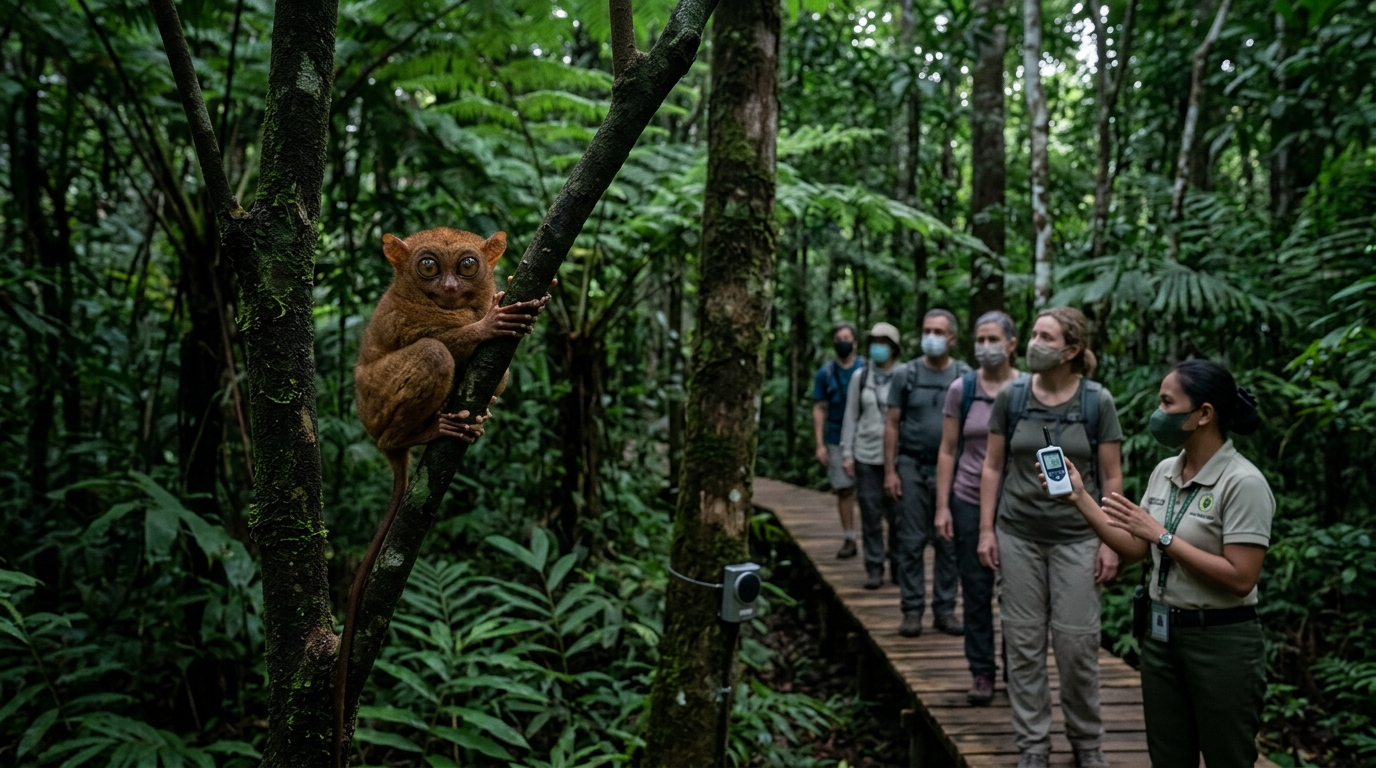
The Philippine Tarsier Sanctuary in Corella has reported a significant breakthrough in primate conservation as of April 2026. These tiny, nocturnal creatures are the focus of a renewed "Silent Tourism" initiative aimed at reducing stress during the peak travel month. As of April 19, stricter visitor guidelines have been implemented to ensure that the tarsiers remain undisturbed in their natural habitat. This balance between education and protection is setting a new standard for wildlife tourism in Southeast Asia.
The Implementation of Silent Tourism
The sanctuary has recently introduced high-tech decibel monitors to ensure that the environment remains quiet for the sensitive primates. Tarsiers are known to be highly stressed by loud noises, and these new measures are designed to mimic their natural, tranquil environment. Visitors are now guided in smaller, more frequent groups to minimize the human footprint within the sanctuary. This initiative has been praised by international wildlife experts as a model for ethical animal interaction.
Habitat Expansion for 2026 Growth
Recent data shows that the sanctuary’s protected area has expanded by ten hectares this month to accommodate a growing tarsier population. This expansion provides a more diverse range of insects and nesting sites, which are crucial for the tarsiers' survival and reproduction. Scientists monitoring the area have noted an increase in juvenile sightings, indicating a healthy and thriving community. The new zones are strictly off-limits to humans, serving as a vital "safe zone" for the species.
Educating the Next Generation of Travelers
The sanctuary's new visitor center now features immersive displays that explain the evolutionary history of the tarsier, which dates back 45 million years. Rather than just viewing the animals, tourists are encouraged to learn about the specific threats they face, such as habitat loss and the illegal pet trade. These educational sessions emphasize the importance of the tarsier as a flagship species for Philippine biodiversity. By the end of the tour, visitors gain a deeper appreciation for the delicate balance of the Boholano ecosystem.