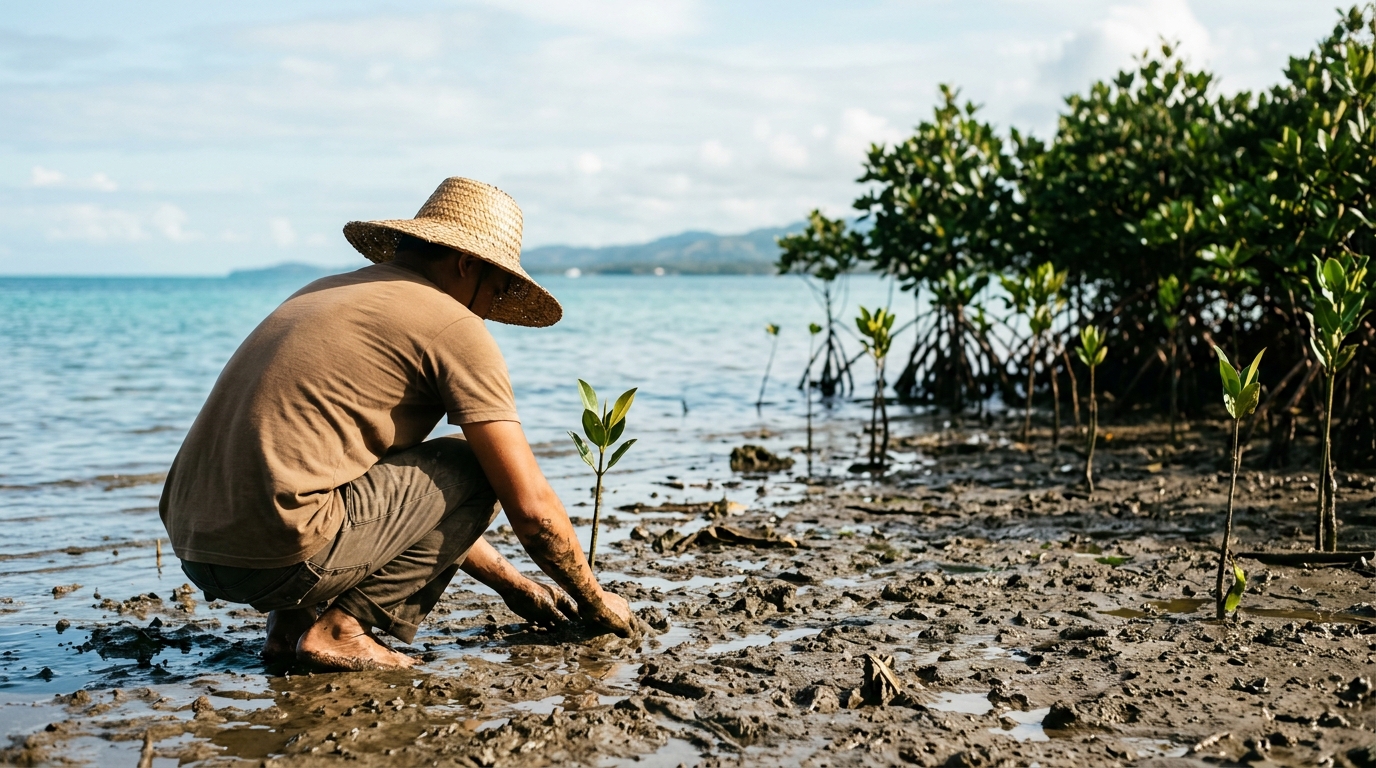
CEBU — Aboitiz Construction and the Ramon Aboitiz Foundation Inc. (RAFI) are deepening their commitment to coastal communities through a mangrove rehabilitation project that will plant 1,000 seedlings in Barangay San Isidro by 2029. The partnership, formalized on May 26 in Taguig City, merges environmental restoration with livelihood support.
A Partnership for Coastal Resilience
Mangroves serve as nature’s shield against storm surges and erosion while nurturing fish breeding grounds. The San Fernando project aims to enrich roughly 0.10 hectares of mangrove forest, directly strengthening the coastline’s ability to withstand extreme weather. Such efforts have become a cornerstone of local climate adaptation strategies across Cebu.
The signing ceremony brought together corporate leaders and foundation executives, signaling a shared vision that goes beyond simple tree-planting. Aboitiz Construction senior AVP for business transformation Karmine Andrea Ching emphasized the dual objective. “It not only preserves vital ecosystems but also supports local livelihoods,” she said.
Training and Livelihood for Fisherfolk
Twenty-five members of the San Isidro Farmers and Fishermen Association (SIFFA) will undergo comprehensive training under the initiative. The curriculum covers mangrove enrichment, plantation design, nursery establishment, seedling production, and long‑term site maintenance. This hands‑on education equips them with skills that extend far beyond the project’s timeline.
Participants will earn income through seedling production purchases and paid work during site preparation and planting phases. This model transforms environmental restoration into a viable economic activity. For families dependent on the sea, the additional earnings provide a financial cushion during lean fishing seasons.
Ambitious Survival Rate Targets
The partners have set a minimum survival rate of 85 percent for the planted seedlings before project turnover. Continuous monitoring and community participation will be critical to achieving this goal. RAFI CEO and president Amaya Cristina Fansler noted the program’s evolution from a compliance‑driven activity to one that genuinely includes and empowers communities.
RAFI’s One to Tree program, which anchors this collaboration, marks a significant milestone as the foundation celebrates its 60th anniversary. Fansler expressed satisfaction in returning to the group that started the journey, highlighting how the initiative has matured to deliver lasting impact. The project’s design ensures that local residents become stewards of their own environment.
Part of a Broader Sustainability Push
The Cebu project builds on earlier successes between the two organizations. In 2024, Aboitiz Construction partnered with RAFI to plant 1,455 seedlings in Lian, Batangas. These consecutive initiatives reflect a deliberate strategy to embed environmental stewardship within the company’s core operations.
Beyond mangrove rehabilitation, the Aboitiz Group continues to expand its sustainability footprint. Recent collaborations include a satellite‑based forest carbon monitoring project with a Japanese climate technology firm and a large‑scale watershed rehabilitation program in Central Cebu. These undertakings, combined with employee volunteer activities like Brigada Eskwela, demonstrate a holistic approach to community and environmental well‑being.