
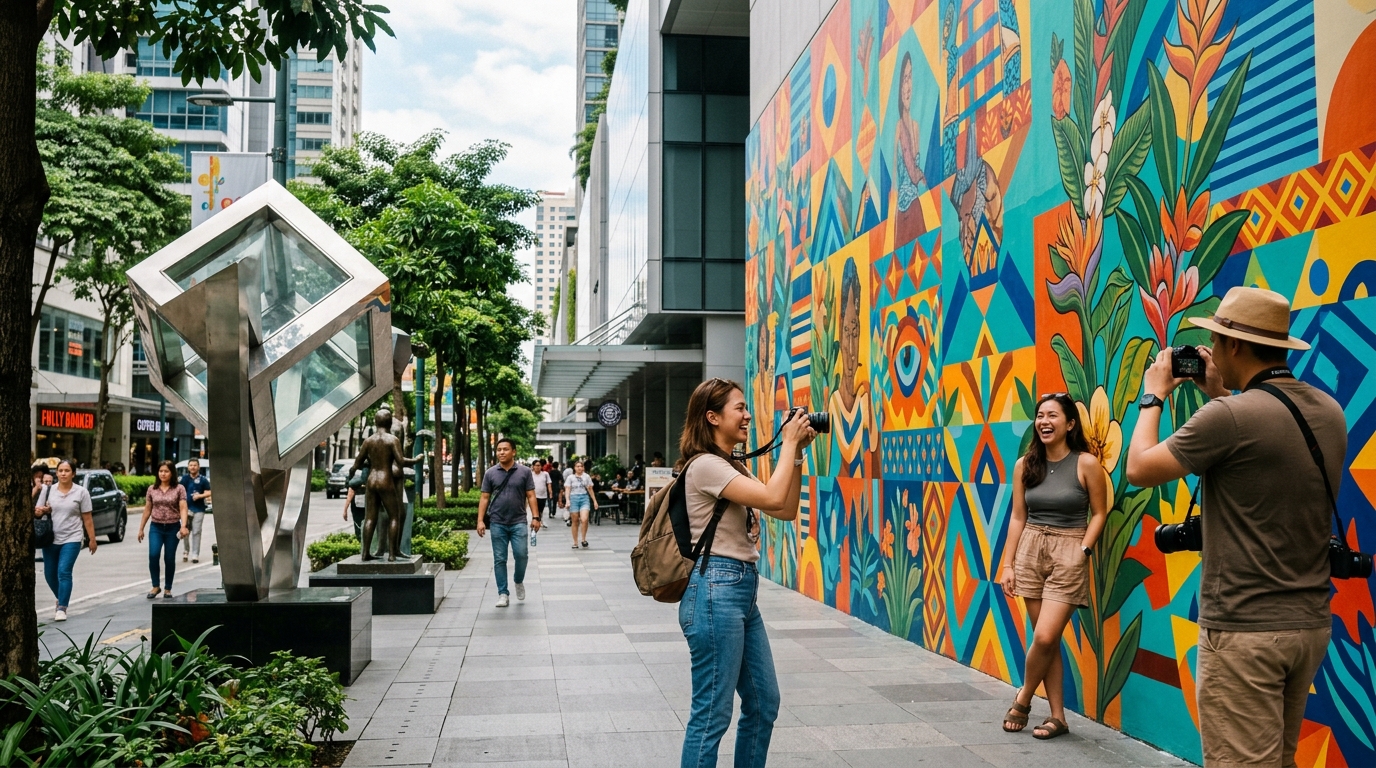
Public art installations, murals, sculptures, and creative urban displays across Bonifacio Global City are transforming ordinary streets into major tourism attractions as visitors continue exploring the district’s visually immersive public spaces. In 2026, BGC’s growing art scene has become one of the district’s defining lifestyle tourism features, attracting students, photographers, tourists, and social media creators searching for highly aesthetic urban experiences.
Throughout parks, sidewalks, and commercial areas, visitors can find giant murals painted by local and international artists, modern sculptures inspired by Filipino culture, and interactive public art installations integrated into BGC’s walkable environment. Several artworks feature themes connected to technology, sustainability, city life, and cultural identity, helping create deeper connections between tourism and creative expression. Tourists frequently spend entire afternoons walking around BGC while discovering murals, taking photographs, and exploring public art displays hidden throughout the district. Some installations even feature digital lighting systems and projection effects that make nighttime exploration more visually engaging. Social media continues strongly contributing to the popularity of BGC’s art tourism industry. Viral online videos showcasing colorful murals, glowing sculptures, and interactive public installations regularly attract millions of views and encourage more tourists to visit the district.
Urban planners explained that public art strengthens tourism because it encourages visitors to explore open spaces more actively while creating memorable experiences connected to the identity of the city itself. Unlike traditional museums that exist within enclosed buildings, BGC’s public art culture transforms the entire district into an open-air creative environment accessible to everyone. Several cafés, restaurants, and businesses near public art spaces also benefit from increasing tourist activity as visitors often spend additional time dining, shopping, and relaxing around these creative attractions. Tourism analysts believe the rise of public art tourism reflects changing travel preferences where younger generations increasingly prioritize visually engaging, interactive, and culturally immersive destinations during trips and weekend explorations.