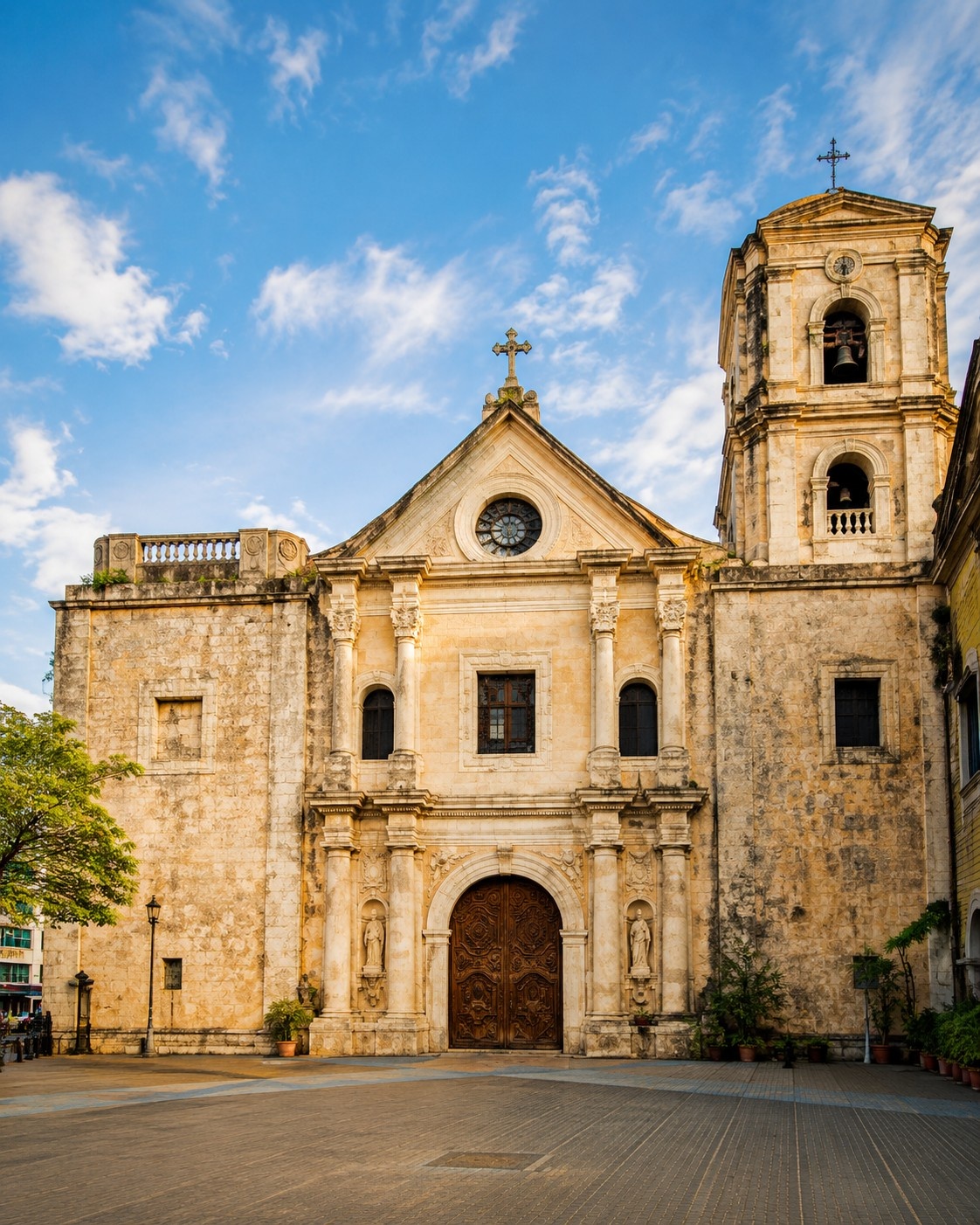
In the middle of Cagayan de Oro’s fast-moving commercial districts and traffic-heavy streets stands a structure that continues to slow people down the moment they enter its gates. St. Augustine Metropolitan Cathedral remains one of the city’s most recognizable landmarks not because it competes with modern attractions, but because it quietly preserves centuries of faith, memory, and architecture in the heart of downtown. For visitors arriving in the city for the first time, the cathedral often becomes more than a religious stop; it becomes a window into how CDO grew from a small settlement into one of Northern Mindanao’s busiest urban centers.
A Cathedral That Has Watched the City Change for Generations
Long before glass buildings and commercial strips dominated downtown Cagayan de Oro, St. Augustine Cathedral already stood near the city center as a gathering place for worshippers and travelers. Its stone façade and towering arches carry traces of different eras, surviving wars, reconstructions, and decades of urban growth surrounding it. Many Kagay-anons associate the cathedral with major life moments weddings, graduations, fiestas, and Sunday traditions that have quietly passed from one generation to another. Even visitors who are not religious often pause to admire the calm atmosphere inside, especially in contrast to the busy roads just outside its walls.
Why Travelers Still Include It in Their CDO Itinerary
Tourists exploring the city frequently stop at the cathedral because of its accessibility and historical significance. Located near Plaza Divisoria and several commercial establishments, the church naturally becomes part of walking routes around downtown CDO. What draws people in is not only the architecture, but the feeling of continuity the place offers in a rapidly changing city. While cafés, malls, and hotels continue to rise nearby, the cathedral keeps its old-world rhythm church bells, candle lit prayers, and quiet afternoon masses that remain familiar to locals.
More Than a Religious Landmark
Beyond its spiritual role, the cathedral also functions as a cultural anchor for the city’s identity. Religious celebrations, community gatherings, and important liturgical events continue to bring together residents from different parts of Northern Mindanao. The church’s presence reminds many residents that CDO’s story did not begin with business districts or modern developments, but with communities shaped by tradition, migration, and shared faith. In a city constantly expanding outward, St. Augustine Cathedral remains one of the few places where the past still feels close and visible