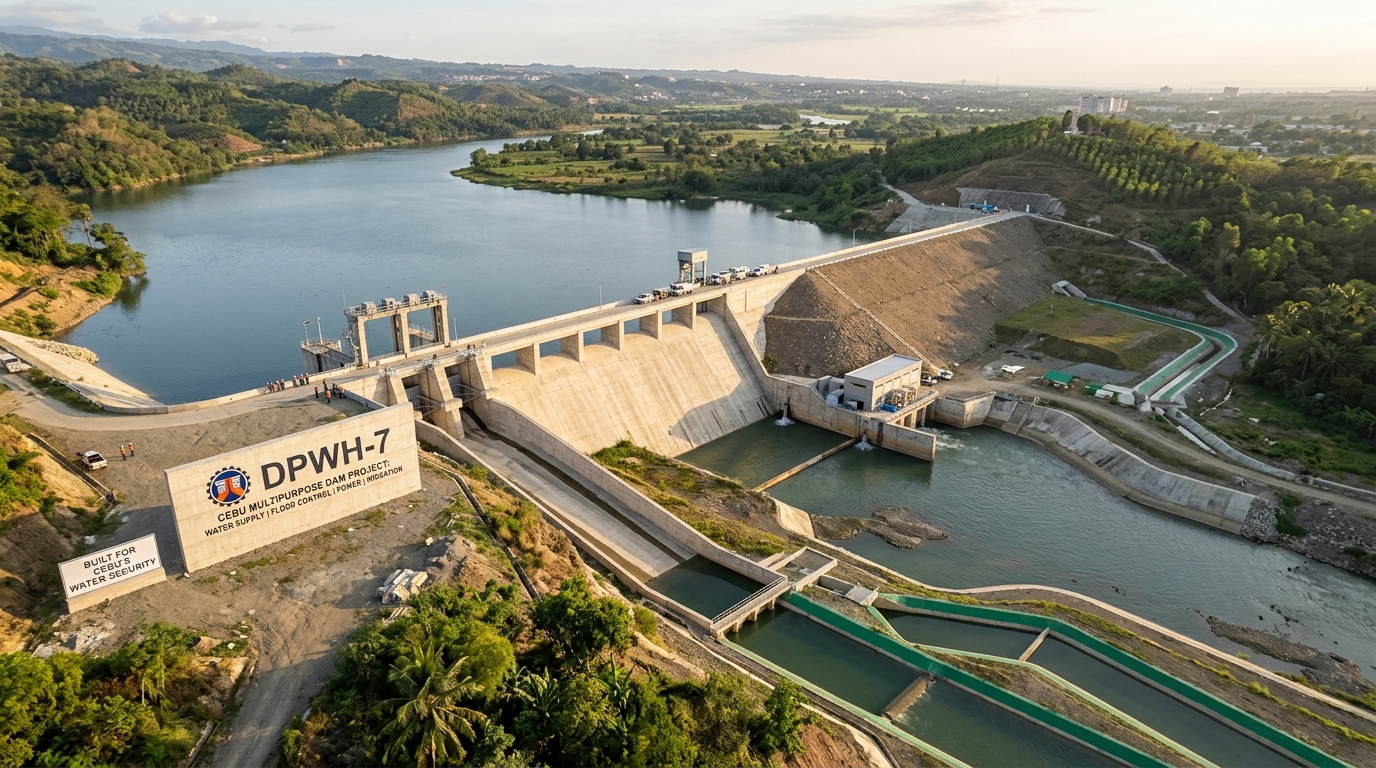
The Department of Public Works and Highways (DPWH-7) unveiled a high-priority ₱7-billion infrastructure roadmap on April 27, 2026, to combat Cebu’s chronic water scarcity and flood risks. Regional Director Simon Arias confirmed that the plan involves constructing a series of multipurpose dams along seven critical waterways, including the Mananga, Guadalupe, and Butuanon rivers. For residents across Metro Cebu, this strategic pivot serves as a primary anchor for the province’s water security, seeking to transition from temporary truck deliveries to permanent, high-capacity storage. Governor Pamela Baricuatro has voiced her strong support for the project, noting that these "four-in-one" structures are the sophisticated solution the province needs to survive the intensifying El Niño cycles.
Four-in-One Infrastructure for Seven Major Rivers
The 2026 identity of Cebu’s resource management is defined by "Multimodal Engineering," where each proposed dam serves a tactical, quadruple purpose: flood control, hydropower, irrigation, and domestic water supply. As of early May, the DPWH-7 has identified seven high-fidelity locations, including the Lusaran River in Cebu City and the Cotcot River in Liloan, with each project estimated at a ₱1-billion investment. This week, regional directors emphasized that these dams are a tactical necessity to capture rainwater that currently flows wasted into the sea. It effectively creates a unique environment where "Infrastructure Resilience" meets the sophisticated, long-term needs of a growing metropolitan population.
Capitol’s Immediate Seven-Project Response
While the DPWH focuses on large-scale dams, the Cebu Provincial Government is moving at high speed on its own tactical seven bulk water projects slated for completion by late 2026. As of April 29, 2026, Water System Head Aldrin Barade reported that facilities in Barili, Oslob, and five other towns are already 60% finished, aiming to provide 28.2 million liters of water daily. This month, Governor Baricuatro highlighted that these projects are a primary anchor for the province’s drought readiness, as PAGASA has raised a 79% alert for an El Niño onset this June. It provides a tactical ecosystem where "Immediate Relief" through bulk water systems works in tandem with the sophisticated, decade-long dam roadmap.
The Anchor of Cebu’s 2026 Climate Roadmap
As of May 2, 2026, the combined efforts of the DPWH and the Capitol have been recognized as the definitive spark for the "Climate-Ready Cebu" initiative, driving high-fidelity confidence in the region’s agricultural and urban stability. Recent updates suggest that shifting from spring-dependent sources to surface water reservoirs is a tactical template for the 2026 roadmap of regional climate adaptation. This month, local leaders reinforced that these "Strategic Water Hubs" are the essential keys to the 2026 summer strategy for making Cebu a sophisticated, global-standard sustainable capital. For any resident in the province this May, the dual push for multipurpose dams and bulk water systems is the ultimate signal of a region mastering its geography to achieve peak environmental security.