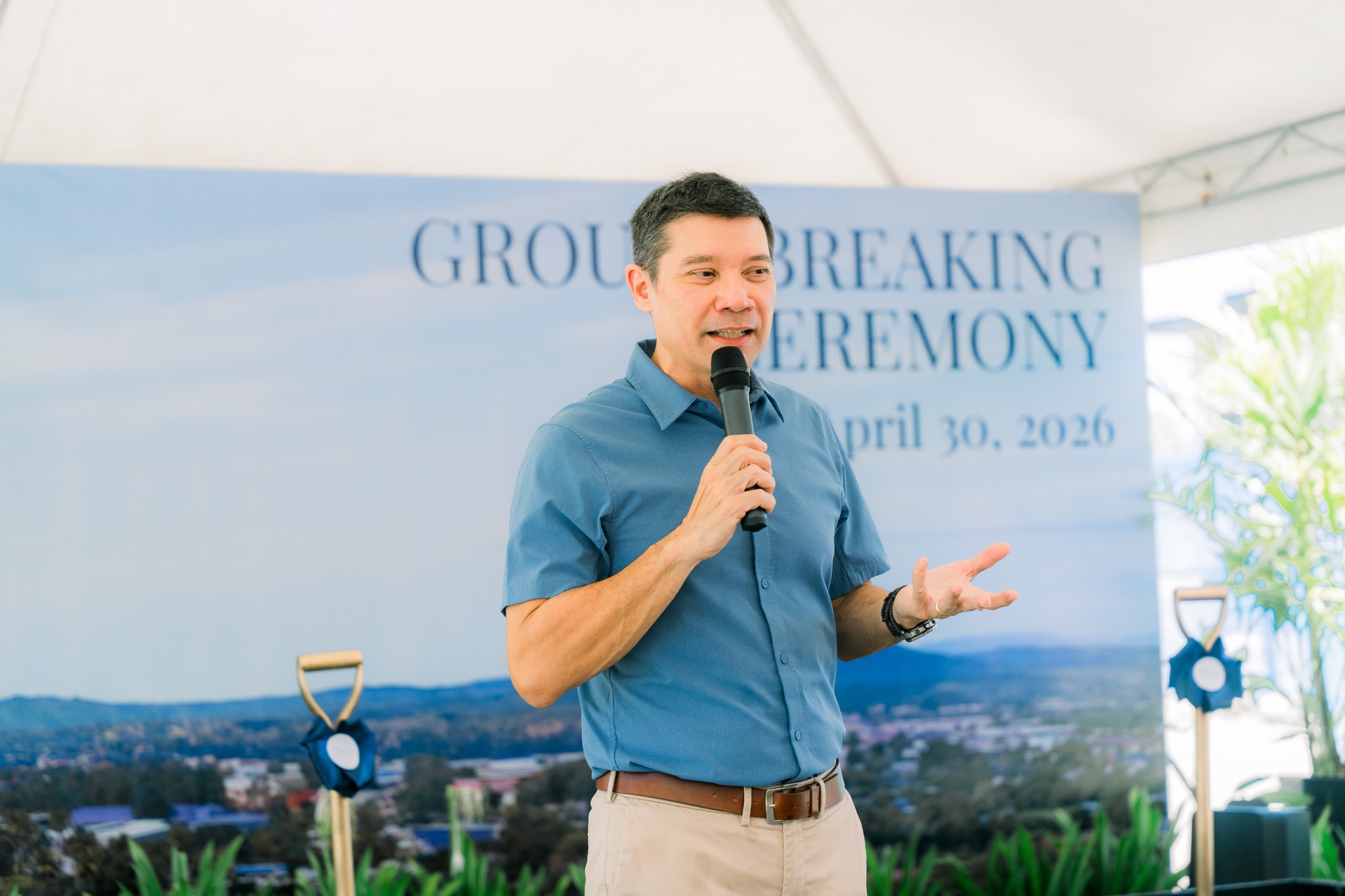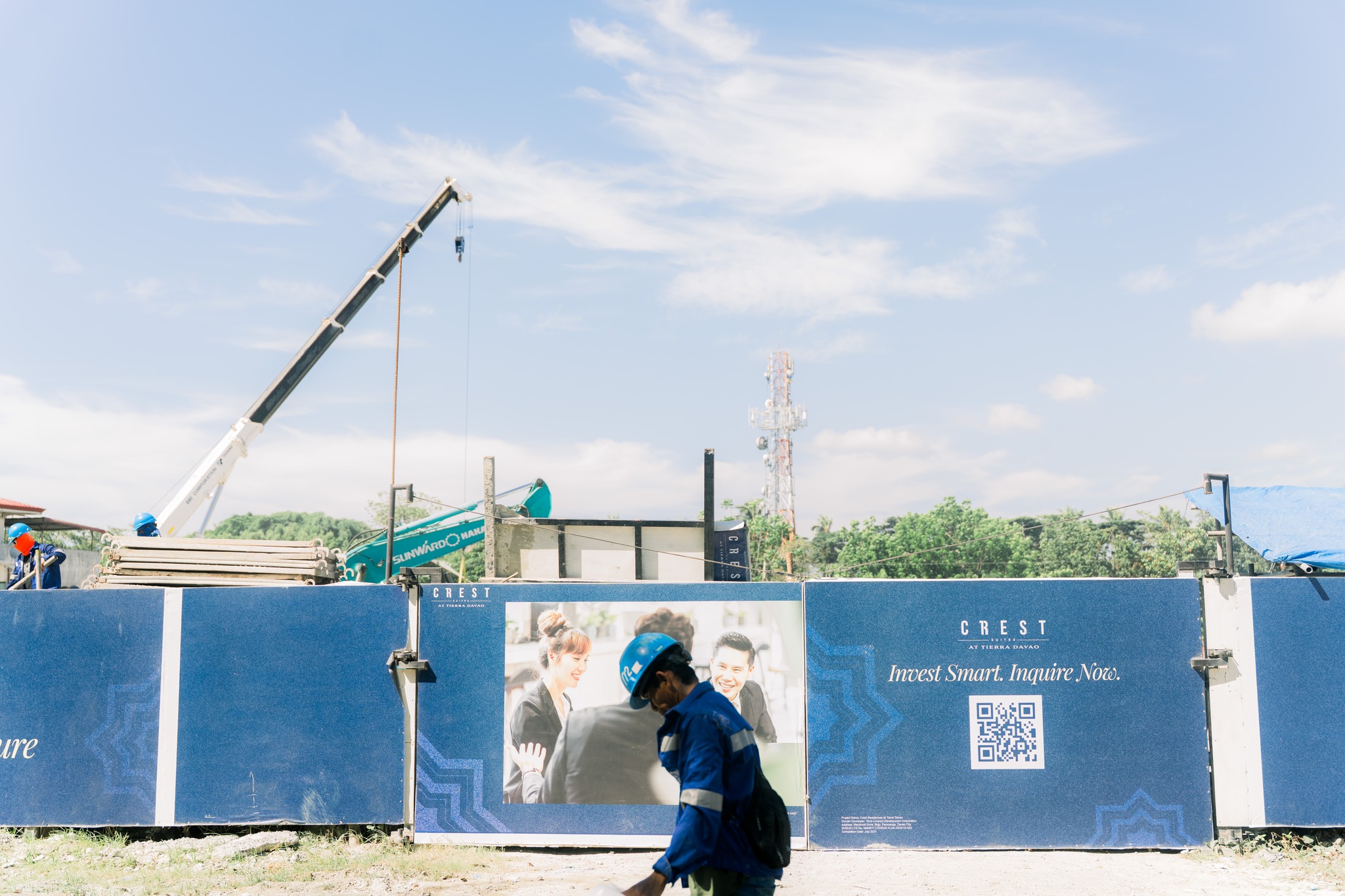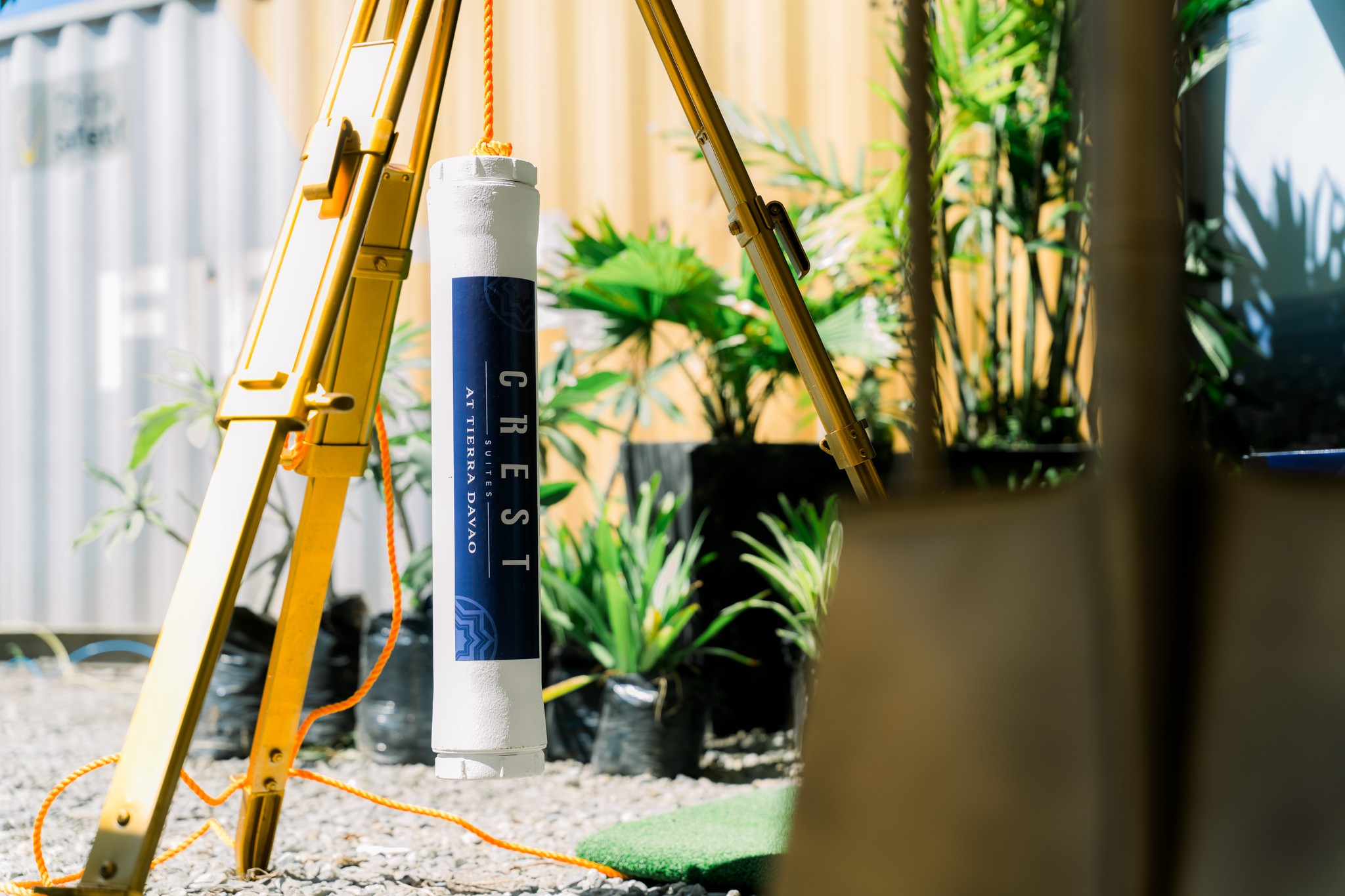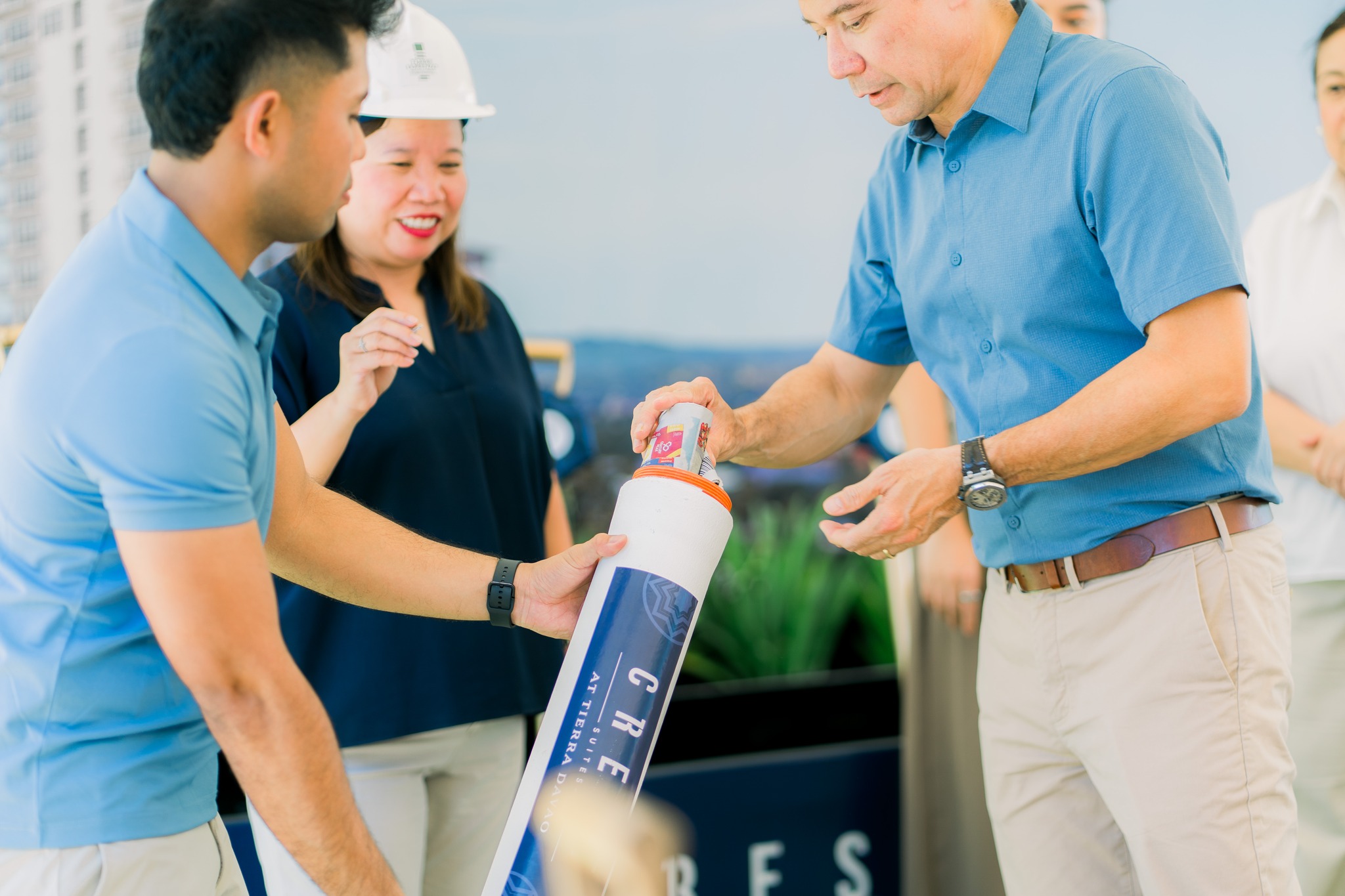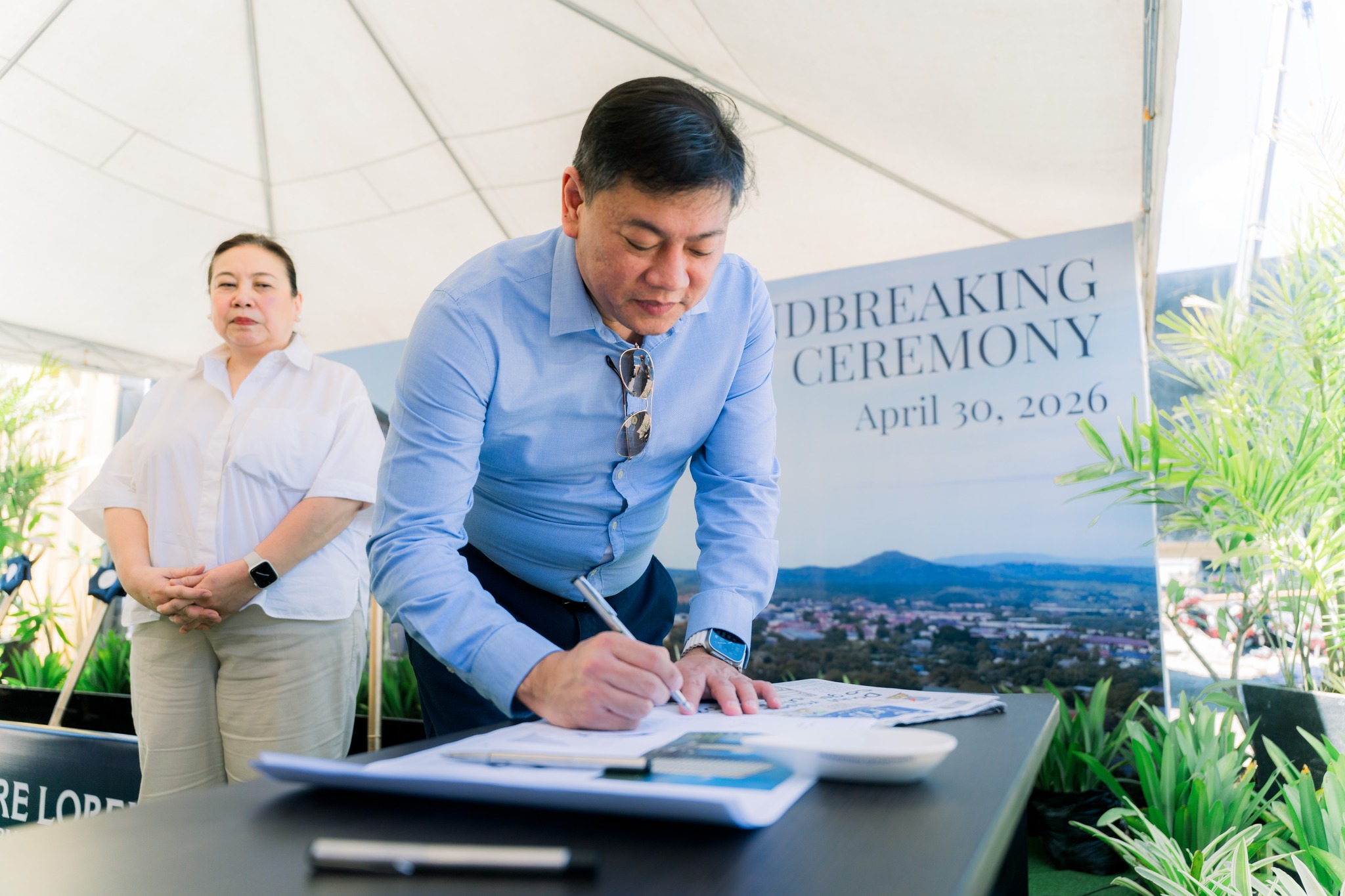
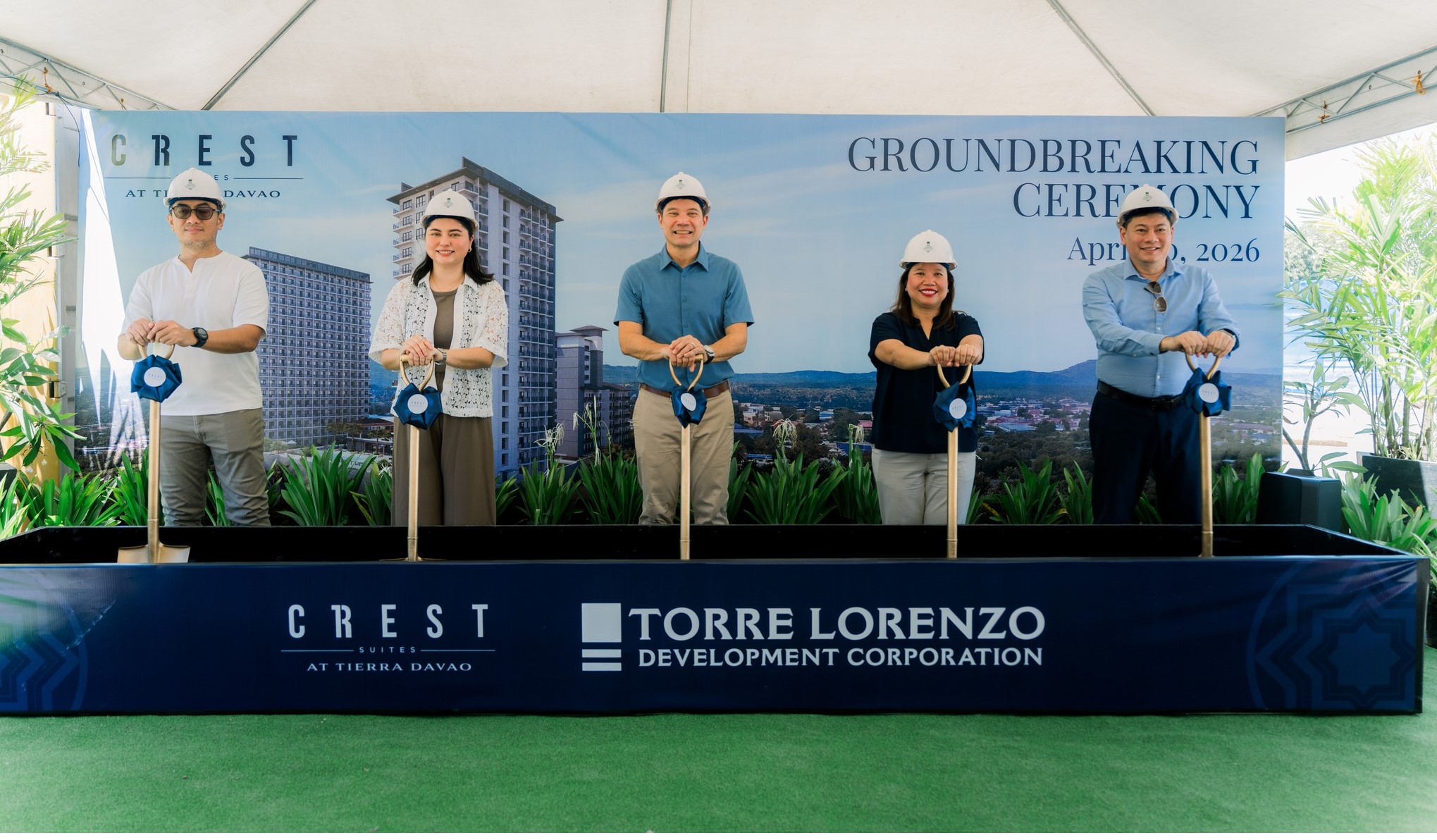
DAVAO CITY — There is a particular stillness that settles over a construction site moments before the first shovel breaks ground. On a sun-drenched morning in early May 2026, that stillness gave way to motion along Maryknoll Drive. Torre Lorenzo Development Corporation (TLDC), the developer that brought five-star hospitality to Davao's skyline with Dusit Thani Residence, gathered its leadership, partners, and stakeholders to formally break ground on Crest Suites at Tierra Davao. The 21-story mixed-use tower, designed to blend the comfort of condominium living with the service orientation of a hotel, now begins its climb into the Davao Gulf skyline.
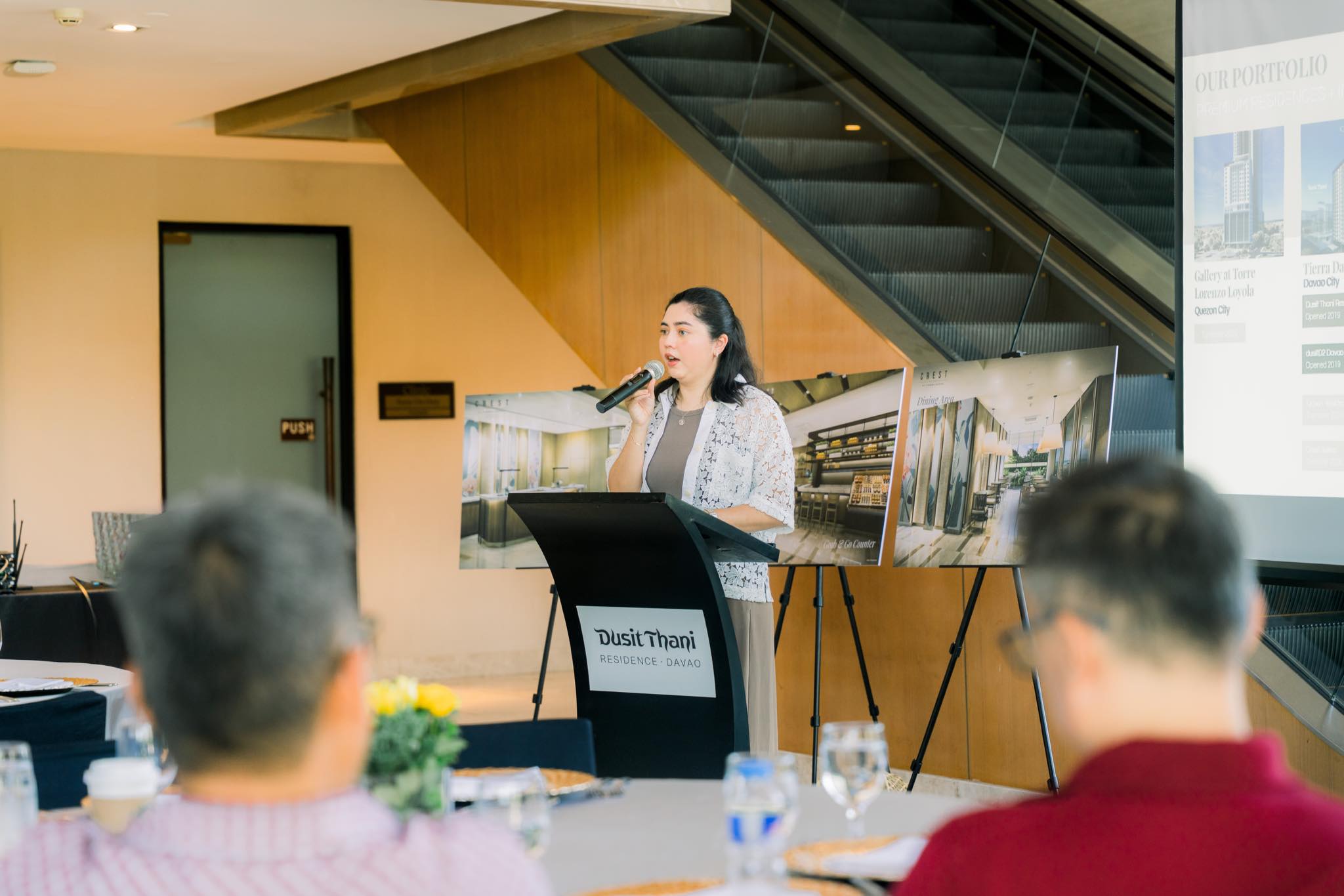
The ceremony was not merely a corporate milestone. It represented the activation of a vision that has been taking shape across Tierra Davao's integrated estate since Dusit Thani Residence Davao first opened its doors—a vision where residential life, hospitality, and commerce coexist within a single walkable community. Monica Lorenzo, TLDC Director for Leisure and Business Development, captured the mood: "Davao's tourism and business landscape continues to grow every year. We're excited to continue not only contributing to Davao's rising economy, but also growing Torre Lorenzo's hospitality portfolio through Crest Suites at Tierra Davao, where investors can choose consistent demand and long-term value."
A Tower Engineered for the Modern Traveler
Crest Suites is not a conventional residential condominium, nor is it a traditional hotel. The 21-story development dedicates 16 floors to condominium-hotel units and three floors to residential condominium units, yielding a combined inventory of 260 units. The configuration reflects a deliberate design philosophy: a single tower that serves two distinct markets without forcing either to compromise. The condominium-hotel floors cater to investors seeking recurring income through professionally managed short-term stays, while the residential floors offer permanent homes within the same envelope of hospitality-grade service.
The amenity roster reads like a deliberate response to the post-pandemic traveler's hierarchy of needs. A fully equipped fitness center serves the health-conscious guest. A jogging path weaves through the estate grounds for those who prefer outdoor movement. A children's playground and a paw park acknowledge that modern travelers increasingly move with family—including the four-legged members. A yoga and meditation garden provides a designated space for stillness, while versatile function rooms accommodate both corporate presentations and social celebrations. These are not add-ons; they constitute the building's argument about what hospitality should mean in 2026 and beyond. "Crest Suites is designed as a hybrid hospitality development that blends modern amenities with practical living solutions for mobile professionals and frequent travelers," TLDC noted in its official release.
Construction giant EEI Corporation, which secured the contract alongside the adjacent Crown Residences tower as part of a ₱1.6-billion project pipeline for early 2026, will lead the build. EEI President and CEO Henry D. Antonio has characterized the Davao contracts as emblematic of the company's push into high-growth residential and hospitality segments beyond its traditional industrial base.
Tierra Davao: An Integrated Estate Comes of Age
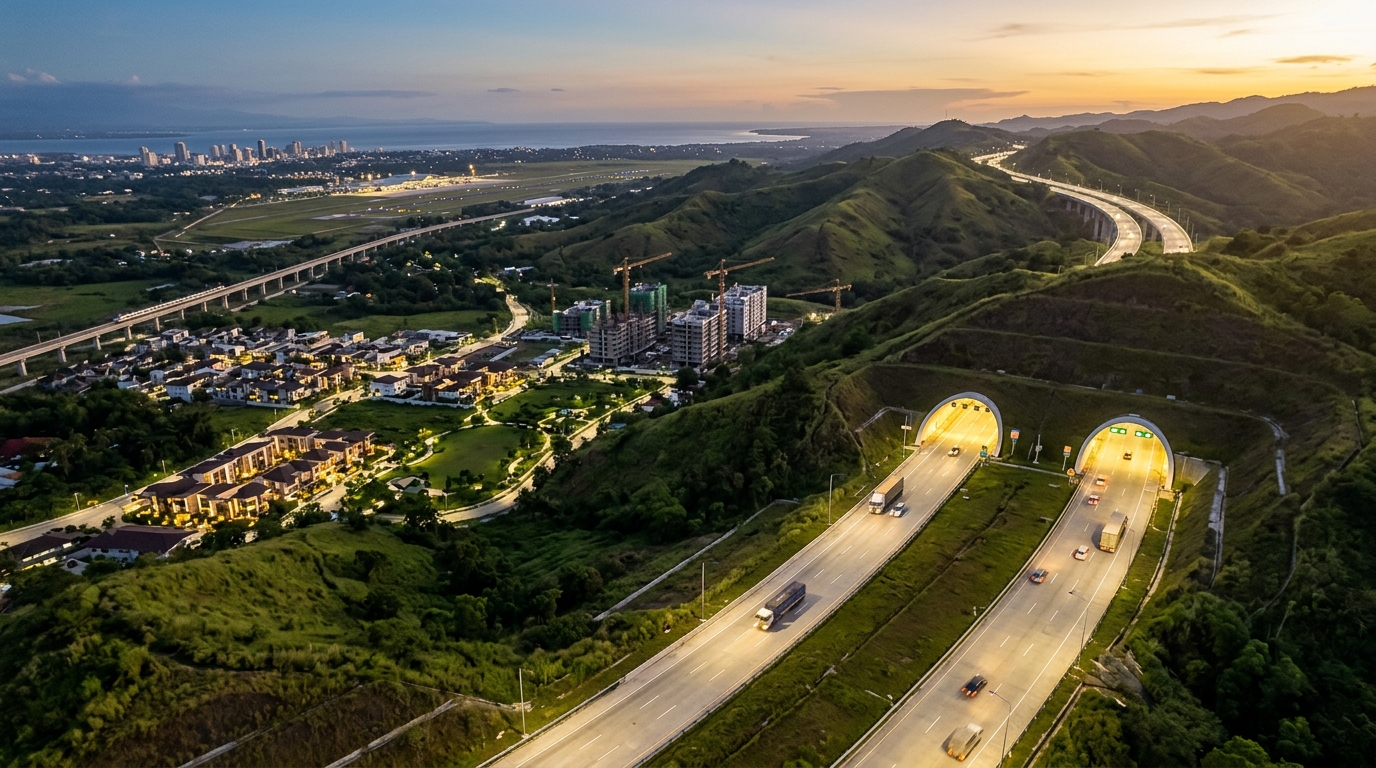
To understand what Crest Suites represents, one must first understand the ground it rises from. Tierra Davao is not a single-building proposition. It is an integrated-use estate that already houses Dusit Thani Residence Davao—the city's first five-star residential-and-hotel development—and dusitD2 Hotel, a contemporary lifestyle brand under the same Thai hospitality group. Crown Residences, a 21-story residential tower with 322 units and expansive wellness facilities, is rising concurrently. Crest Suites completes a quartet of towers that, together, form a mixed-use neighborhood where a resident can live, work, dine, host guests, and access hotel services without leaving the property.
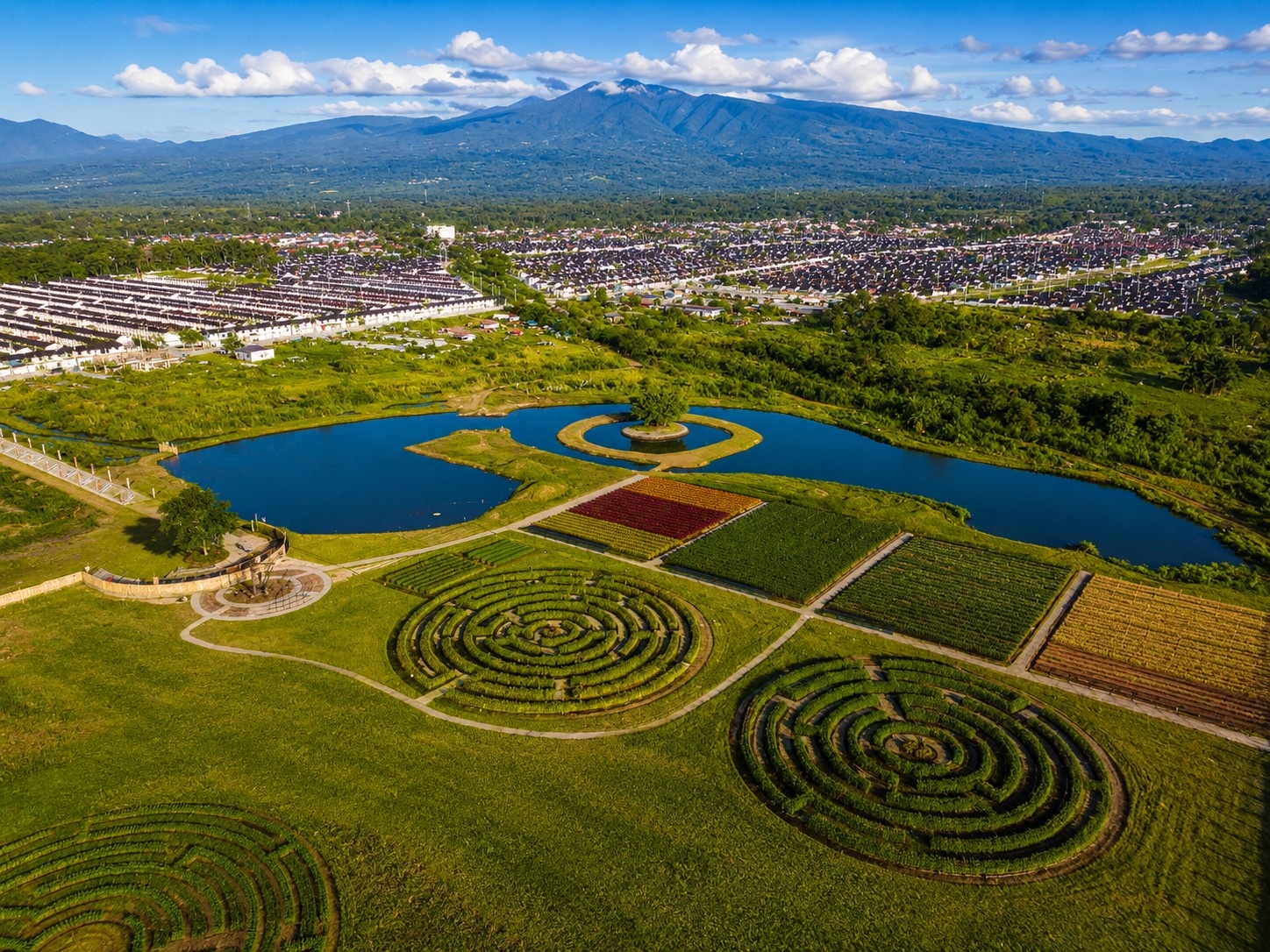
The estate's location along Maryknoll Drive places it within reach of Davao's key business districts, schools, shopping centers, and hospitals, while its elevated position affords panoramic views of the Davao Gulf. This combination of urban accessibility and natural scenery is increasingly rare in Philippine cities, where density often comes at the expense of sightlines. TLDC's master plan envisions the entire Tierra Davao complex reaching completion by 2030, a timeline that positions Crest Suites as both a near-term investment vehicle and a long-term bet on Davao's trajectory.
A Developer's Quiet Ascent
Torre Lorenzo Development Corporation has built its reputation on a distinctive portfolio strategy. The company is known as a pioneer in premium student residences near major universities, having developed properties adjacent to De La Salle University and University of the Philippines campuses. Its pivot into integrated-use estates—first with Tierra Davao, and continuing with Dusit Princess Lipa in Batangas and Dusit Thani Lubi Plantation Resort in Davao de Oro—marks a calculated expansion into hospitality-anchored communities.
What distinguishes the TLDC approach is its willingness to partner with established global brands. Dusit International, the Thai hospitality group, is the company's most visible collaborator, with four joint projects across the Philippines. This partnership model reduces the operational risk of entering the hospitality sector while lending immediate brand recognition to each new development. Crest Suites extends this logic by positioning itself as a hospitality investment property—managed professionally, marketed to both business and leisure travelers, and structured to generate recurring income for unit owners.
The groundbreaking arrives as Davao's property market continues to post strong fundamentals. The city has seen sustained demand from the BPO sector, returning OFWs, and a growing population of young professionals. A mixed-use tower that offers condominium-hotel units—essentially, hotel rooms that can be sold to individual investors and rented out when the owner is not in residence—speaks directly to the OFW buyer who wants a Davao asset that earns while they work abroad. It also speaks to the domestic investor seeking exposure to Davao's tourism economy without the management burden of a standalone rental property.
What the Groundbreaking Means for Davao
Every groundbreaking ceremony carries within it a projection of the future. When the shovels lifted on that May morning, they did more than displace soil. They signaled that Davao's hospitality infrastructure is deepening beyond the airport hotels and downtown business properties that have historically defined the city's accommodation landscape. A 21-story tower purpose-built for the condominium-hotel segment represents a bet that Davao will attract not only more visitors but visitors who stay longer, spend more, and seek accommodations that feel less like a hotel room and more like a temporary home.
For the city's tourism planners, Crest Suites adds capacity at a moment when Davao is actively courting MICE events, international conferences, and a larger share of domestic leisure travel. The function rooms within the development can host corporate gatherings, while the yoga garden and jogging path appeal to the wellness-oriented traveler—a demographic that has grown substantially since the pandemic. For investors, the building offers a product type that barely existed in Davao a decade ago: a professionally managed hospitality asset in an integrated estate anchored by a global hotel brand. As construction now proceeds, the countdown to occupancy begins, and with it, a new chapter for both Torre Lorenzo and the city it has chosen to build in.