Davao City is currently reclaiming its historical narrative through the mouth, following the April 2026 expansion of its "Suroy Ta" tourism circuits. The Downtown Food Crawl, a curated journey by the City Tourism Operations Office (CTOO), targets the "OG" (original) homegrown establishments that have defined the Dabawenyo palate since the mid-20th century. As of May 2026, this circuit has become a tactical centerpiece for cultural preservation, linking the raw agricultural energy of the Bankerohan Public Market to the refined heirloom recipes of the city center. By moving away from generic franchises and focusing on family-owned institutions, the crawl offers a visceral connection to the city’s post-war resilience and its evolving multicultural identity.
Institutions of the Mid-Century Palate
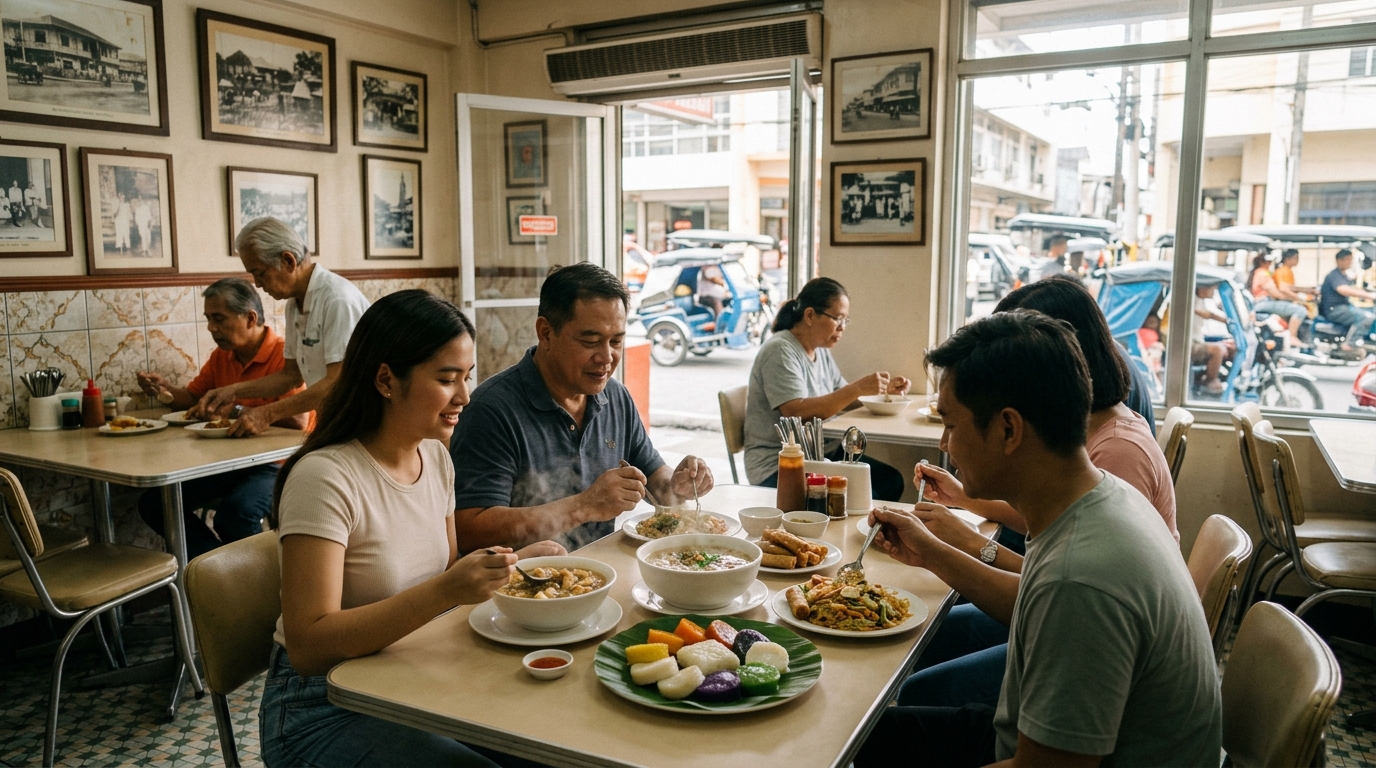
The heart of the crawl lies in legendary stops like Dencia’s Restaurant, a Filipino-Chinese landmark that relocated from Manila to Davao in the 1960s. This May, travelers are flocking to its air-conditioned halls for the "Nostalgic Power-Pairing" of Goto and Tokwa’t Baboy, dishes that have remained virtually unchanged for over sixty years. Similarly, Cecil’s Snack Inn and Bakeshop, established in 1963, continues to draw crowds for its signature pancit luglug and fresh lumpia, recipes passed down through the Guinoo family. These spots function as living archives, where the silver-haired staff and the vintage ambiance provide a tangible link to Davao’s mid-century social life
From Market Stalls to Signature Plates
What makes this 2026 circuit unique is its structural link to the Davao Market Experience, ensuring a "market-to-table" narrative that tourists can follow in real-time. Establishments like Kusina Dabaw, famous for its 24/7 service and salted egg siopao, and Jaltan Food Centrum, a 1960s authority on kakanin (rice cakes), source their primary ingredients directly from the nearby Bankerohan hub. This week, tourism specialists have highlighted that witnessing the raw materials in the morning and eating the finished product by lunch creates a deeper appreciation for the local supply chain. This transparency not only boosts the local economy but also validates the "freshness" that has kept these businesses thriving for over half a century.
The Multi-Ethnic Melting Pot
Davao’s culinary map for 2026 is increasingly inclusive, featuring the Tausug flavors of Yong’s Satti along Jacinto Street as a vital segment of the crawl. Here, the spicy, peanut-rich Satti and the blackened soup of Tiyula Itum introduce visitors to the city’s rich Islamic heritage and its connection to the Sulu Archipelago. Modern classics like Lachi’s Sans Rival Atbp. in the Marfori district have also been integrated into the 2026 roadmap, ensuring that the dessert ritual is as sophisticated as the main course. By weaving together Chinese-Filipino comfort food, Tausug specialties, and Spanish-influenced sweets, the city is presenting a unified but diverse identity that appeals to the 2026 global food explorer.