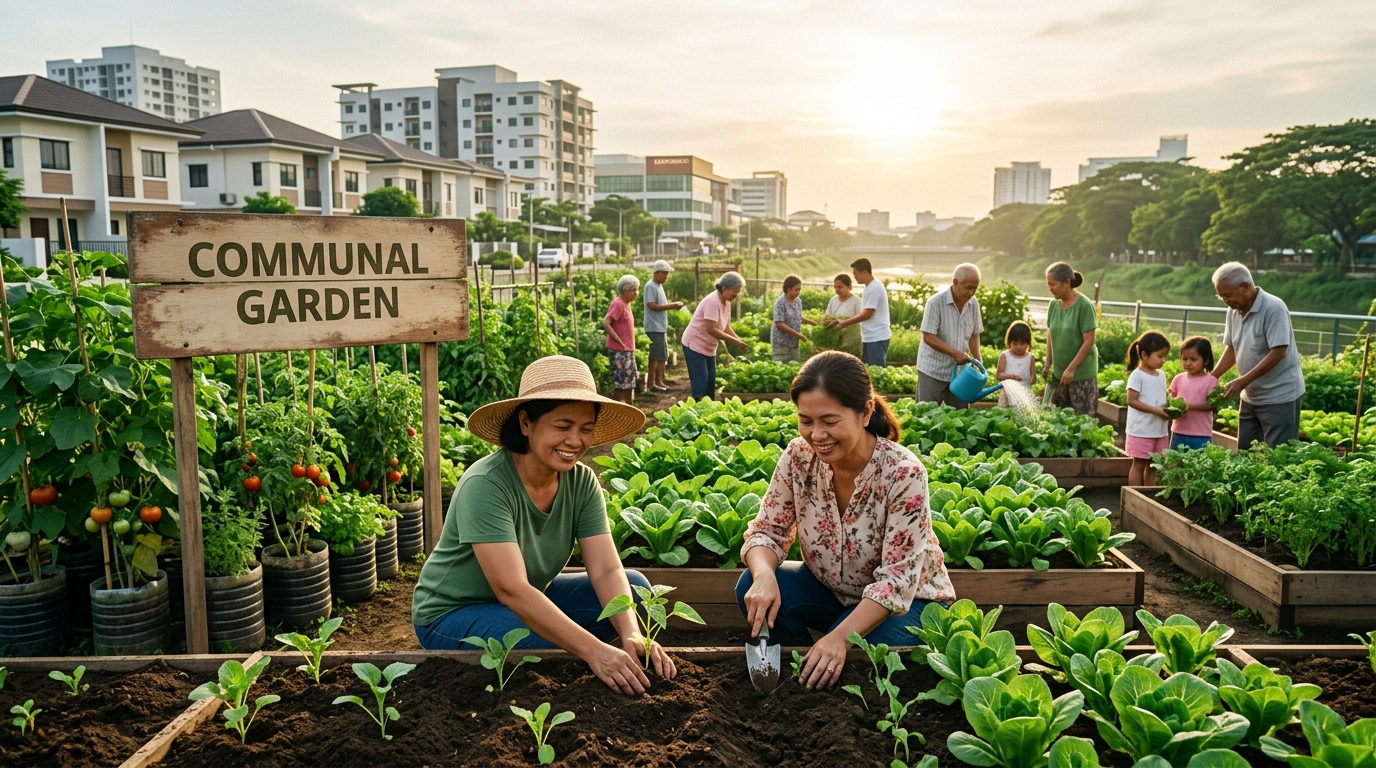
ILOILO CITY — The Iloilo City government announced on April 30, 2026, that it is activating communal gardens in barangays across the metro, setting a target of 100 such gardens this year. City Agriculturist Iñigo Garingalao confirmed that orientation training has already been completed for the communities where the gardens will be established, with planting scheduled to begin by the end of May in time for the early rains. For the real estate sector, the initiative represents more than a food security program. It signals that Iloilo is systematically embedding green, productive open space into its urban fabric—an investment that property analysts have increasingly linked to sustained growth in land and residential values.
The communal garden program began as an edible landscape competition that ran for six years, with last year's cycle reaching close to 90 participating barangays. Some communities opted to pause this year to allow their soil to recover, but the city pushed forward with an expanded target. "This year, we target 100 communal gardens even if others will no longer join the competition," Garingalao said. The gardens operate on an eight-month cycle and carry a triple mandate: providing a sustainable food source, running a feeding program for malnourished children in the host barangay, and generating income through the sale of excess produce.
The Esplanade Effect Offers a Glimpse of What Comes Next
Iloilo City has already demonstrated, at scale, what happens to property values when green infrastructure is treated as a planning priority rather than an afterthought. The Iloilo River Esplanade, which began as a 1.2-kilometer strip and has since expanded into a 10-kilometer blue-green corridor as of 2026, has been cited by real estate analysts as a direct driver of price appreciation in adjacent barangays. A comprehensive analysis of the city's growth trajectory published in April 2026 noted that the Esplanade's expansion "skyrocketed the valuation of adjacent lots in the Mandurriao and Molo districts."
The communal garden initiative applies this same logic at the granular, barangay level. Where the Esplanade demonstrated the value of linear green corridors, the 100 gardens promise a distributed network of green nodes embedded within residential neighborhoods. Research on urban agriculture's impact on property markets has consistently found a statistically significant positive correlation between proximity to community gardens and property values, suggesting that the perceived benefits—aesthetics, community cohesion, and food access—are being capitalized into market prices. For Iloilo, a city whose house-and-lot take-up rate already leads the Visayas-Mindanao region at 96 percent, according to Colliers Philippines' first-quarter 2026 data, the addition of 100 neighborhood gardens could provide precisely the kind of differentiated amenity that sustains premium pricing.
A Township-Scale Bet on Green Infrastructure
The communal garden rollout does not exist in isolation. It forms part of the city government's broader "Luntiang Bukas" framework, which integrates land access, climate-resilient housing, expanded green spaces, and sustainable livelihood opportunities into a single, comprehensive strategy. Mayor Raisa Treñas-Chu has publicly committed to maximizing the city's nursery complex to ensure a ready supply of seedlings, with the community kitchen program standing by to utilize harvested produce in the event of emergencies.
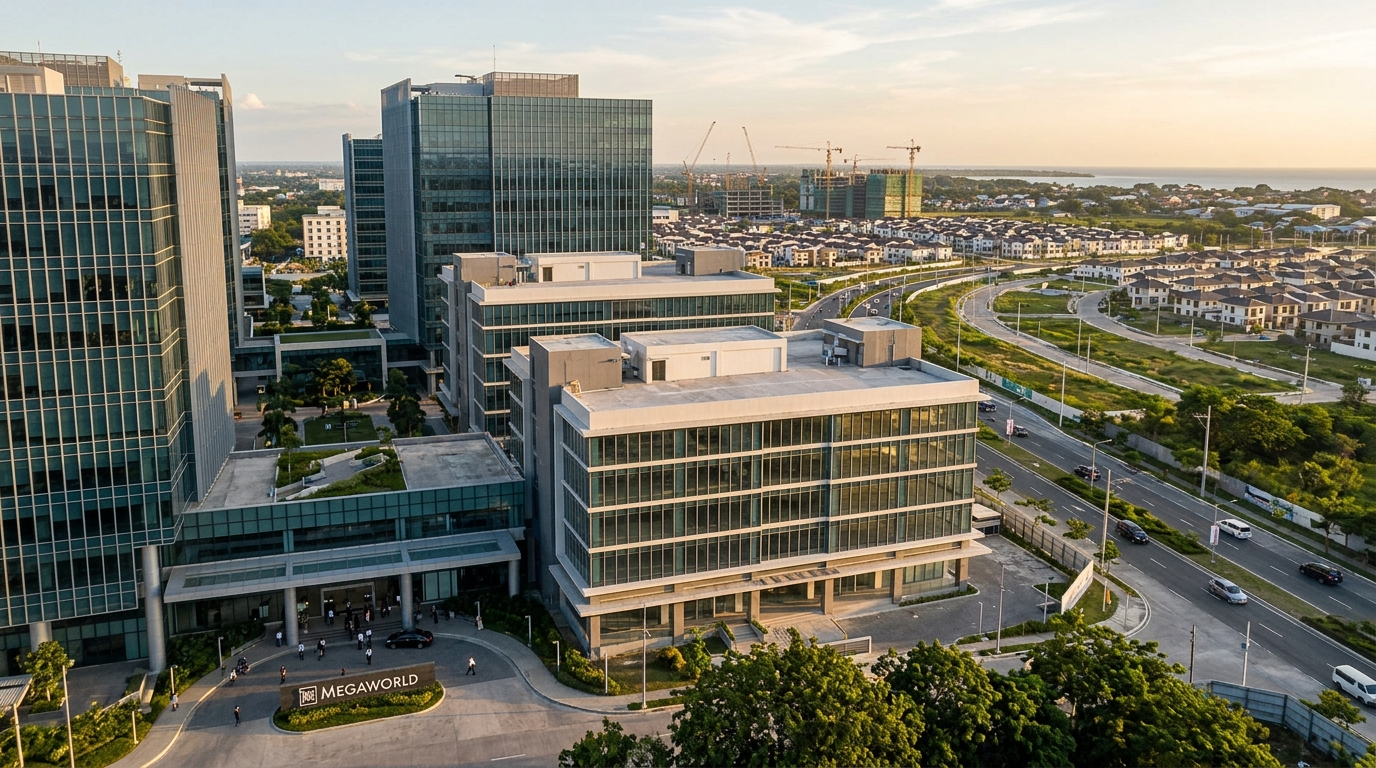
Peri-urban farming clusters and a program linking multiple barangays into vegetable and rice farming networks complement the 100-garden target, creating a layered agricultural infrastructure that functions at different scales across the metro. For developers currently marketing residential projects in Iloilo—where condominium take-up rates stand at 89 percent and lot-only purchases at 80 percent—these investments in neighborhood-level livability provide a substantiated answer to a question buyers increasingly ask: what kind of community surrounds my unit?
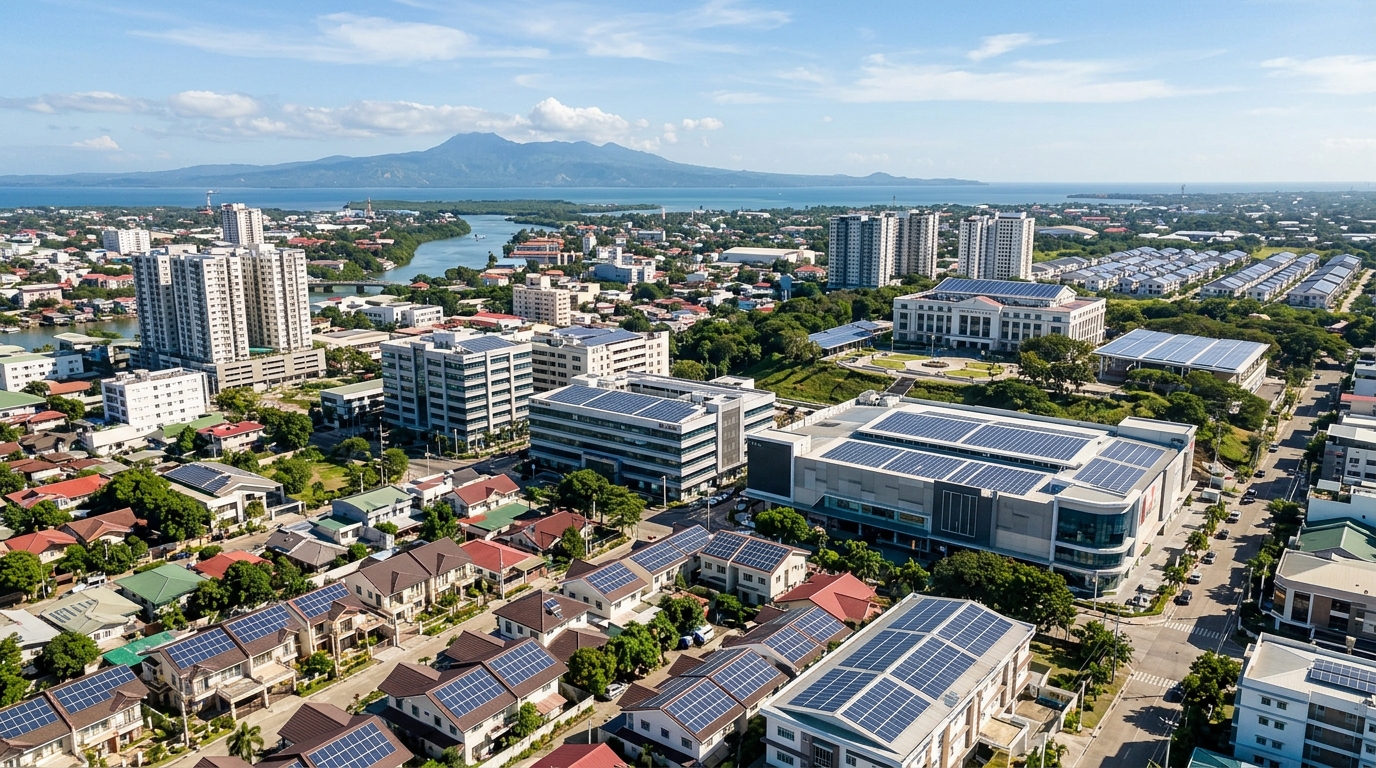
Iloilo City's growth narrative has been built on governance predictability, streamlined business permitting through the Electronic Business One-Stop Shop, and a compact, multi-center urban model that prevents the unchecked sprawl visible in other regional hubs. The communal garden initiative extends this philosophy into the realm of everyday neighborhood experience. As the first seedlings go into the ground at the end of May, the city is planting not just vegetables but a long-term argument for why property in Iloilo commands the premiums it does.