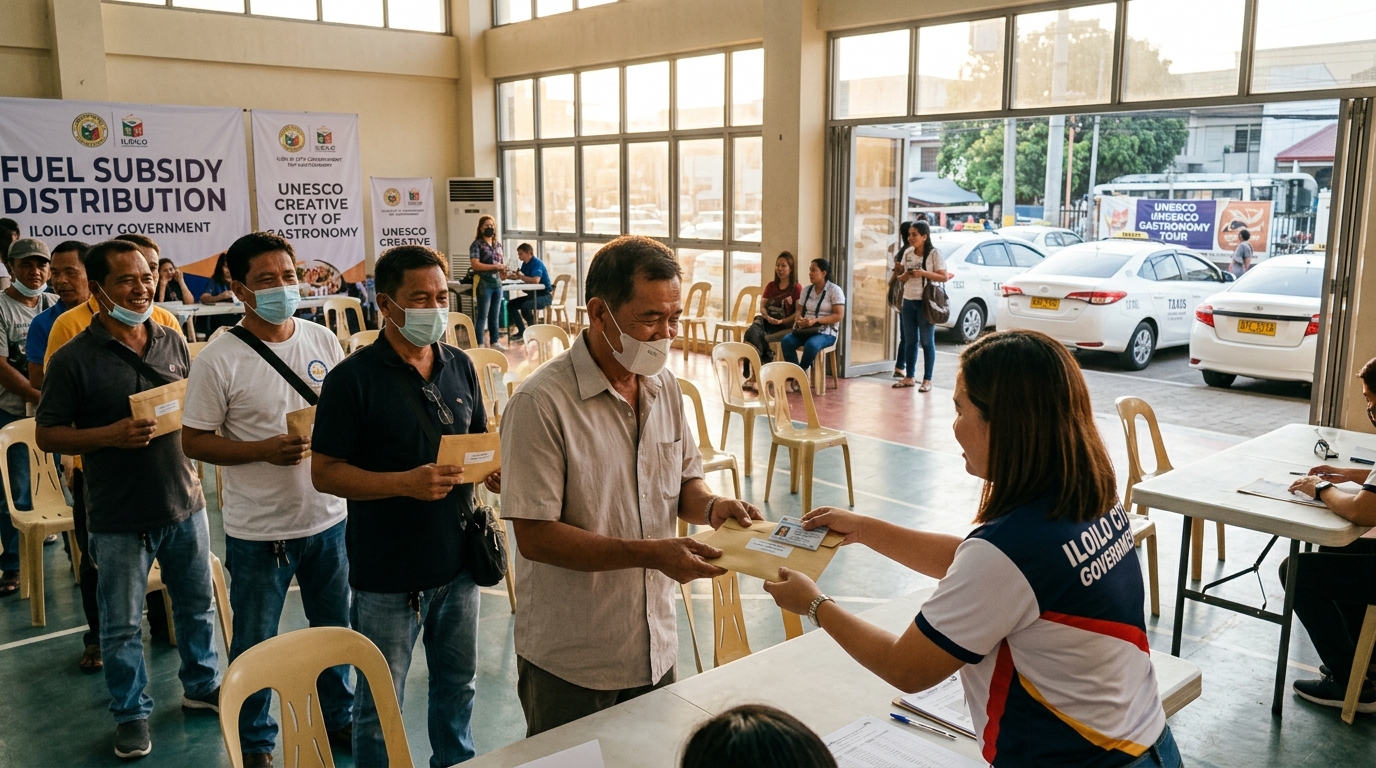
ILOILO CITY — On May 8, 2026, hundreds of taxi drivers will line up at the Quintin Salas Gym in Jaro district to receive ₱1,000 worth of fuel coupons, a lifeline from the city government designed to keep their meters running and their livelihoods intact. Mayor Raisa Treñas-Chu announced the rollout as the final piece of a transport subsidy program that has already extended aid to jeepney and tricycle operators. The initiative, born from the same Middle East supply disruptions that pushed diesel to ₱120 per liter in mid-April, directly protects the mobility backbone of a city whose tourism economy depends on visitors moving seamlessly between airport arrivals, heritage plazas, and gastronomic landmarks.
The fuel subsidy carries a significance that reaches well beyond the transport sector. Iloilo City welcomed an estimated 550,000 spectators during the Dinagyang Festival in January 2026 and has since hosted Filipino Food Month as the country's lone UNESCO Creative City of Gastronomy. Each tourist who arrives at the Iloilo International Airport, checks into one of the city's 5,100 hotel rooms, and sets out to explore the Esplanade, Molo Mansion, or a batchoy institution relies at some point on a taxi driver whose operating costs have nearly doubled in recent months. Without intervention, those costs inevitably find their way into fare negotiations and compromised service quality, eroding the very visitor experience that the city has spent years cultivating.
A Subsidy Engineered to Keep Tourists Moving
The program's mechanics were designed for immediate impact. Approximately 1,000 taxi drivers will receive coupons redeemable at designated fuel stations from 4 p.m. to 8 p.m. on distribution day, with the window scheduled to minimize disruption to peak service hours. The Land Transportation Franchising and Regulatory Board verified that 1,347 of the 2,760 active taxi units in the city are driven by bona fide Iloilo City residents, the sole eligibility criterion. A supplemental budget of ₱1.4 billion, of which ₱30 million is earmarked for a six-month subsidy cycle, ensures the program is not a one-off gesture.
Rising fuel costs affect every segment of the transport ecosystem, but taxis occupy a distinct niche in the tourism value chain. Unlike jeepneys that serve fixed commuter routes or tricycles confined to neighborhood loops, taxis provide the point-to-point flexibility that visitors navigating an unfamiliar city require. A tourist hoping to visit Miag-ao Church, sample seafood in Villa, or attend a conference at the Iloilo Business Park relies on a taxi fleet that can respond to demand without imposing surcharges that leave a sour aftertaste. The city's intervention aims to preserve exactly that reliability.
A UNESCO Destination Anchored on Livability and Access
Iloilo's tourism identity has been built around accessibility and hospitality, values that a fuel crisis tests directly. The city earned its UNESCO Creative City of Gastronomy designation in 2023 and has since leveraged it into a cohesive visitor proposition. Filipino Food Month in April 2026 drew gastronomic tourists despite airfare hikes, with Mayor Treñas-Chu emphasizing that the city's reputation for "good and cheap" food keeps travelers coming. That reputation depends on a transport network capable of delivering visitors affordably from the airport to the food crawl.
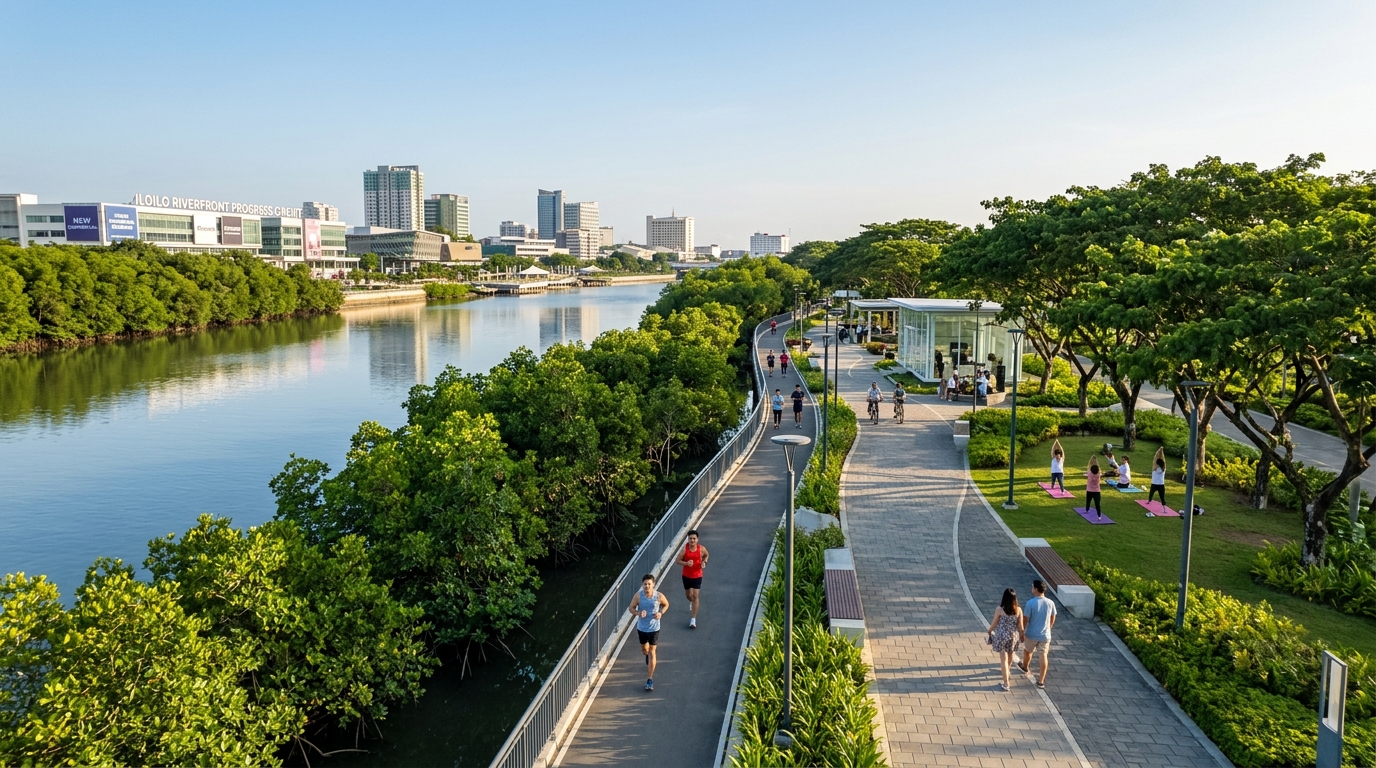
Beyond gastronomy, Iloilo City has reinforced its status through the ASEAN Clean Tourist City Award for the 2026 cycle and during ASEAN Climate Week 2026, where its river Esplanade was cited as a model of sustainable urban development. The city has also secured $298,440 in TIEZA funding for MICE sector expansion, with Megaworld opening the 405-room Belmont Hotel Iloilo to bring the company's share of the city's room inventory to nearly 25 percent. Each of these achievements depends, at street level, on the reliability of the taxi fleet that the fuel- subsidy program is designed to sustain.
Local Leadership Meets a Global Headwind
The subsidy program forms part of a broader local and national response that the Asian Development Bank has recognized as among the most extensive in the Asia-Pacific region. The Philippines implemented fuel subsidies, targeted cash transfers, and transport sector support as diesel prices rose by roughly 60 percent from end-February levels. Iloilo City's local initiative dovetails with LTFRB-6's phased rollout, which has already reached over 4,000 drivers across Western Visayas and Bacolod City.
Mayor Treñas-Chu has framed the assistance in pragmatic terms. "We will continue extending assistance to our transport sector through the fuel subsidy program as a modest support to help them cope with the abnormal increase in petroleum prices caused by the conflict in the Middle East and other global factors," she said. For the tourism sector, the subtext is equally pragmatic. A city that cannot move its guests affordably and efficiently is a city that loses repeat visitors, conference bookings, and the organic word-of-mouth that sustains a destination brand. Iloilo City's fuel subsidy is, in this sense, an investment in the connective tissue of its tourism economy.