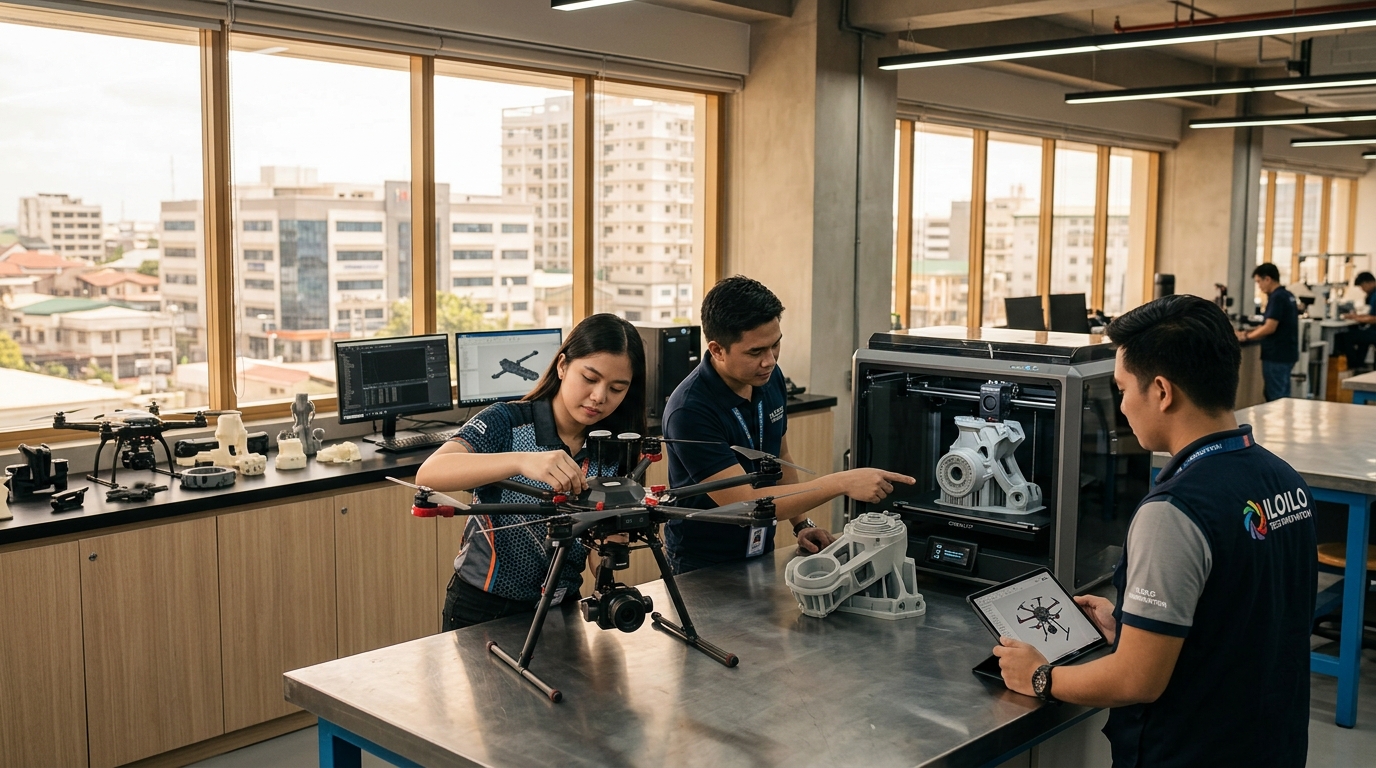
ILOILO CITY — When Governor Arthur Defensor Jr. sat down with TESDA Secretary Kiko Benitez on May 5, 2026, the agenda did not feature a single piece of traditional construction machinery or a single road widening proposal. Instead, the conversation centered on drone programming, airborne data analytics, and 3D modeling. The official request was for TESDA to help design specialized training programs for drone operations and 3D printing, an initiative that is part of Iloilo’s broader push to become the country’s premier hub for drone development. For those tracking the province’s quarter-on-quarter take-up rates, this meeting was not merely an education story. It was a direct signal to the residential and commercial real estate market that Iloilo is engineering a future workforce capable of attracting a new tier of international investor.
During the meeting, Secretary Benitez and Governor Defensor mapped out a strategic partnership to establish formal certification programs. “We have identified skills development, particularly in drone technology and application, as a platform to equip our people with future-ready competencies,” Defensor stated following the discussions. He noted that these high-tech skills would support key industries, including fisheries, disaster management, agriculture, and environmental protection. To cement this direction, the Sangguniang Panlalawigan is refining the “Protect, Defend and Preserve Iloilo Ordinance of 2026,” which proposes the creation of a dedicated Drone Operations Office. The ordinance envisions deploying high-capacity units equipped with LiDAR and thermal imaging to monitor coastal waters and manage traffic, tasks that require a highly technical, well-compensated workforce that will inevitably require housing.
From the Silid Aralan to the Studio Unit
The real estate implications of this pivot rest on a simple economic principle: high-value employment creates high-value housing demand. The blueprint is already visible in the negotiations with international firms like KVG and Ackerman Consulting, who met with Defensor for a scoping mission at Tatoy’s Atria on May 2. These foreign investors are exploring Iloilo as a viable site for a drone assembly line, drawn by the convergence of a tech-hungry workforce and the provincial leadership’s aggressive modernization agenda. Analysts at Colliers Philippines have consistently noted that demand in Iloilo’s residential sector is sustained by BPO and high-value outsourcing interest; the addition of a precision manufacturing sector, supported by TESDA-certified drone and 3D printing operators, adds a diversified layer to that base.
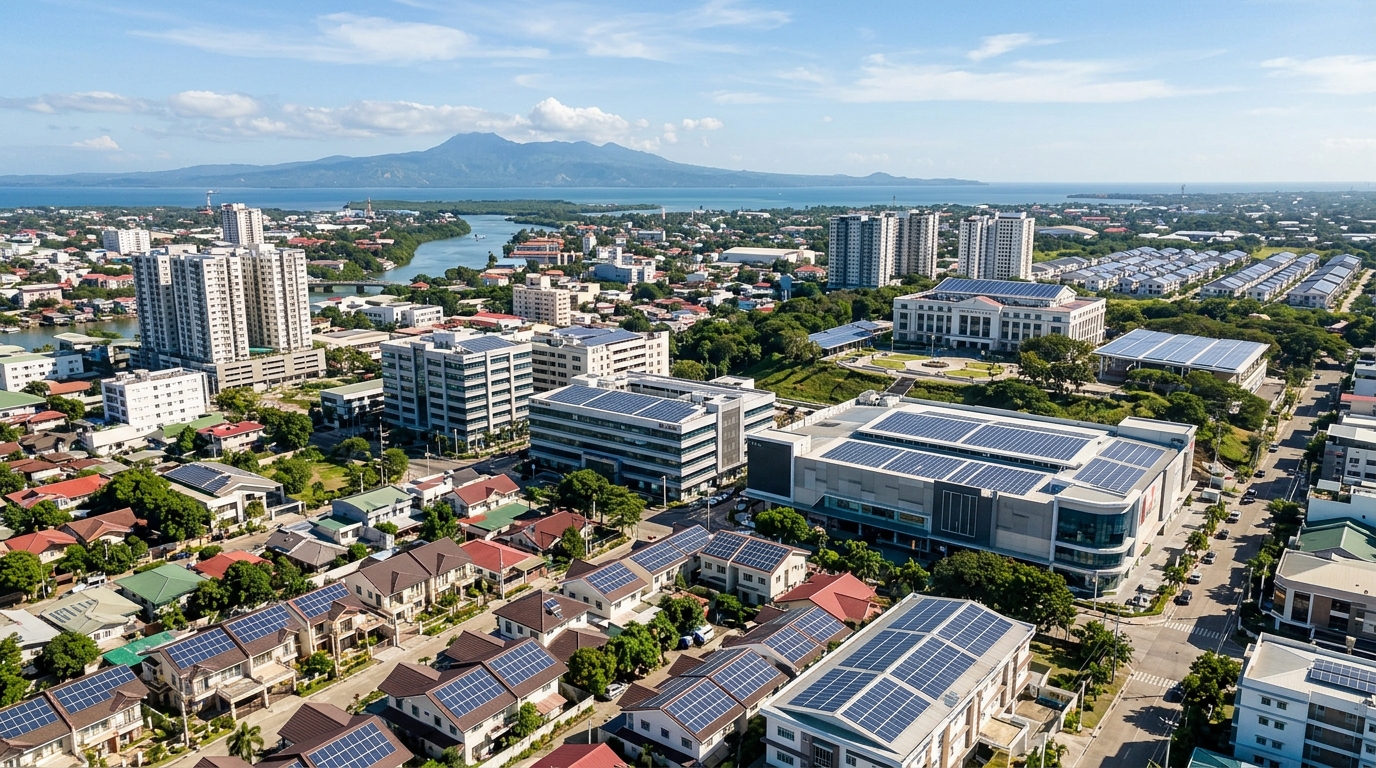
This diversification is crucial for sustaining the capital values seen in recent figures. The demand for modern condominium units and house-and-lot packages in townships like Iloilo Business Park is already being driven by a workforce that requires fiber-optic connectivity and proximity to lifestyle amenities. A future influx of drone technicians, software developers, and aerospace assemblers will not be looking for basic socialized housing. They will be absorbing the mid-market inventory currently being launched in Mandurriao and Pavia, driving further price appreciation in a market that already leads the Visayas-Mindanao region.
The Tech Premium on the Philippine Skyline
Iloilo’s current real estate fundamentals are the strongest outside of the capital. Leechiu Property Consultants reported that the IT-BPM sector absorbed 83,000 square meters of office space in 2025, pushing vacancy rates to historic lows. Megaworld’s Iloilo Business Park alone generates an estimated 20,000 direct jobs and pricing for its newest office slabs has crossed premium thresholds. By aligning with TESDA to establish certification pathways for drone specialists, Iloilo is not just preventing a skills gap; it is adding a “tech premium” to its property values.
Developers and investors have long operated on the understanding that a neighborhood’s value rises with the quality of its local school. Governor Defensor is scaling this principle to a provincial level. The launch of the Regional TVET Innovation Center in Taguig and the nationwide modernization of TESDA prove that the country’s technical education infrastructure is ready for high-tech delivery. By bringing drone and 3D printing operations to Western Visayas, the province is actively redefining the "location, location, location" maxim for the 21st century, ensuring that local properties are not just a place to live, but an asset growing in tandem with the community’s technical knowledge.