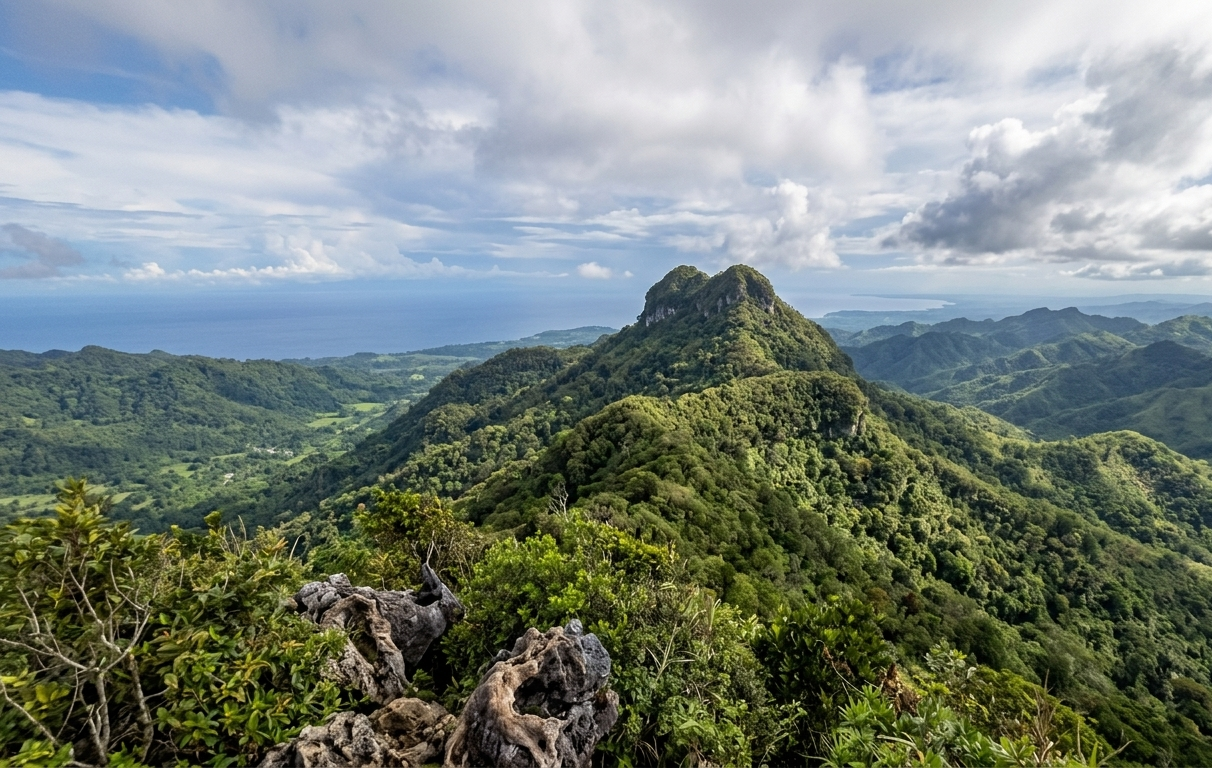

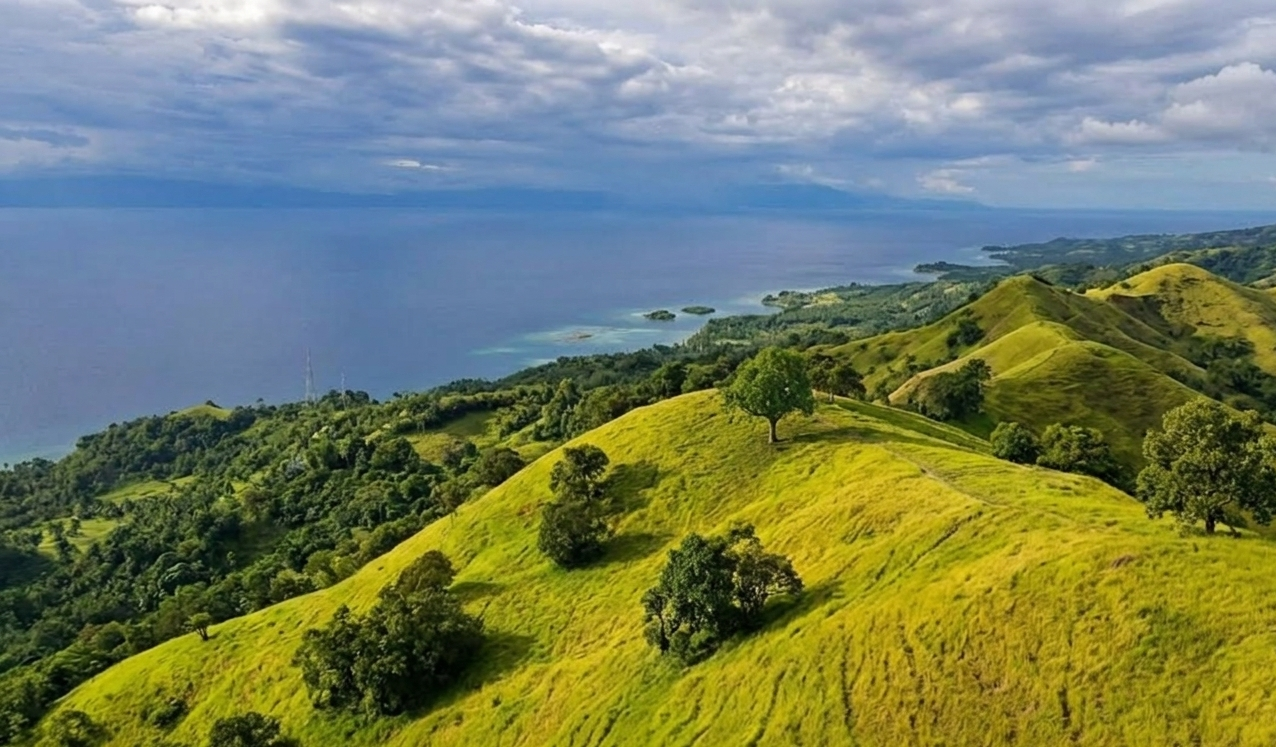
While most casual weekend warriors in the Central Visayas content themselves with the gentle, rolling trails of Osmeña Peak, experienced mountaineers seeking a true physical crucible are quietly redirecting their compasses toward Southwestern Cebu. Standing at 720 meters above sea level (MASL) in the rugged municipality of Alegria, Mount Lanaya has locked in its reputation as one of the most punishing yet wildly rewarding vertical experiences on the island. Known natively as Kalo-Kalo due to its distinctive, hat-like silhouette when observed from the coastal waters, this geological monolith presents a striking juxtaposition of pristine, sweeping emerald grasslands and jagged, prehistoric rock formations. For those daring enough to conquer its challenging topography, the reward is an unparalleled, unobstructed 360-degree vista at the apex that frames the vast Tañon Strait melting directly into the silhouette of neighboring Negros Island.
A Tale of Two Trails: Choosing Your Path to the Peak
Navigating the vertical slopes of Kalo-Kalo requires a conscious tactical choice between two primary routes that cater to completely different styles of wilderness exploration. The notorious Legaspi Trail is a relentless, 3-to-4-hour technical assault that snakes through dense, humid forests and exposed ridgelines, culminating in a near-vertical 70-to-90-degree scramble over raw rock faces where handholds are absolutely mandatory. Conversely, the significantly gentler Lumpan Trail acts as a convenient bypass, allowing specialized mountain motorbikes to navigate the lower elevation bands and leaving adventurers with a breezy 30-minute to 1-hour minor trek to reach the staging areas. Serious thru-hikers frequently choose to fuse these paths into an exquisite traverse, ascending the grueling verticality of the Legaspi face to earn their views before descending smoothly down the Lumpan network.
The Windows XP Meadow and Localized Budget Mechanics
Emerging from the grueling forested canopy of the mountain reveals a breathtaking, wind-swept plateau in Sitio Samuyao that instantly evokes nostalgia, mimicking the iconic, hyper-vibrant default desktop background of Windows XP. This rolling grassland doubles as a dreamlike overnight campsite, though campers must systematically account for highly localized community fees regulated at the Legaspi Barangay Hall. Securing access to this highland paradise is remarkably budget-friendly, requiring a modest ₱50 per person environmental fee, coupled with a mandatory local guide structure priced at ₱500 for standard day groups or ₱600 to ₱800 for overnight stays. To bridge the gap between the coastal highway and the remote trailheads, local habal-habal motorbike operators provide essential transport services ranging from ₱50 to ₱150 per way depending on your exact drop-off coordinates.
Southbound Logistics and the Ultimate Liquid Cool Down
Initiating this southern expedition begins at the Cebu South Bus Terminal in Cebu City, where travelers board a Ceres bus bound for Bato via Barili for a scenic 3.5-to-4.5-hour journey down the rustic western coastline. Because Mount Lanaya features an entirely dry summit with absolutely zero freshwater sources along the upper ridgelines, it is critical that every single climber packs at least 2 to 3 liters of water to avoid severe dehydration under the tropical sun. Due to the loose scree and highly technical scrambles near the summit block, footwear featuring aggressive, deep-lugged traction is non-negotiable to prevent dangerous slips on the volcanic rock. Fortunately, the grueling heat of the descent is perfectly offset by Alegria’s world-famous aquatic wonders, allowing hikers to easily transition into a refreshing side-trip to the nearby Cancalanog Falls, Cambais Falls, or the adrenaline-fueled canyons of the Agoda Canyoneering Adventure Service.