
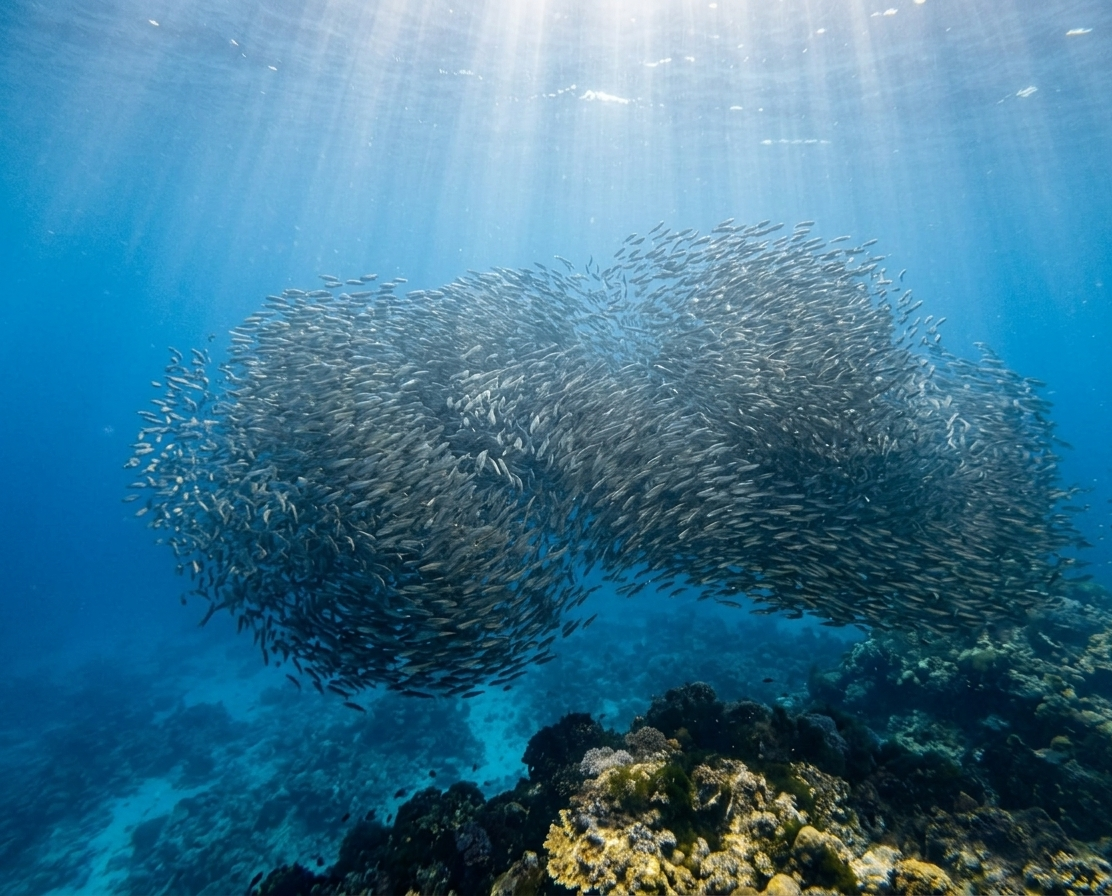
While global scuba communities traditionally flock to remote oceanic trenches to witness massive pelagic aggregations, an easily accessible coral ledge in the Central Visayas is turning heads this May 2026. Napaling Reef, quietly gracing the rugged northern coastline of Tangnan, Panglao Island, Bohol, has officially ascended as a world-class snorkeling and freediving phenomenon. What makes this coastal stretch so spectacular is its dramatic 25-meter underwater vertical wall drop-off that sits just a mere few meters directly off the rocky shore. This unique geological shelf serves as the permanent, year-round staging ground for millions of glittering sardines that dance in shimmering, liquid clouds, offering everyday beachgoers an elite marine spectacle without the costly logistical headaches of deep-sea boat expeditions.
A Shimmering Cloud of Silver and Deep-Sea Shadows
The underwater theater at Napaling is incredibly fast-paced, revolving entirely around a colossal, pulsing bio-mass of sardines that stretches across the shallow reef flat down into the dark blue abyss. Snorkelers and free-divers can float directly inside this shifting, living matrix, watching in awe as predatory jacks, barracudas, and mackerel dive-bomb the silver school in explosive hunting displays. The vertical wall itself is an intricate canvas of biodiversity, densely packed with colorful sea fans, massive tube sponges, and small hidden caverns that serve as resting shelters for ancient green sea turtles. Because this delicate ecosystem thrives so remarkably close to the intertidal zone, local marine groups actively implement strict reef protocols, requiring all swimmers to maintain neutral buoyancy to prevent damaging the fragile coral heads.
Navigating Entry Points and the DIY Cost Framework
For independent travelers planning a Do-It-Yourself excursion, the reef sits a highly convenient 15-minute motorbike or tricycle ride away from the bustling tourism hub of Alona Beach. Walk-in access is brilliantly facilitated through established cliffside gates like Kalikasan Dive Resort or designated municipal eco-parks, which feature structured staircases leading down the sharp rock faces. Navigating the entry logistics is straightforward, with a standard entrance fee ranging from ₱100 to ₱300 depending on your chosen resort lane, a mandatory ₱100 local government environmental conservation fee, and a ₱100 to ₱200 guide fee to ensure safe reef interaction. Premium snorkeling gear, including high-visibility masks and life vests, can be easily rented on-site for a modest ₱150, though independent swim times may be systematically capped at 45 to 60 minutes during peak mid-afternoon hours to prevent overcrowding on the reef flat.
Zero-Hassle Tours and Morning Visibility Secrets
Travelers who prefer a completely seamless experience can bypass the logistical steps entirely by booking all-inclusive packages through top-tier digital platforms like Klook or Traveloka, with comprehensive tour rates averaging ₱1,300 to ₱2,000 per person. These premium bookings efficiently package all conservation passes, high-end diving equipment, dedicated safety marshals, and complimentary high-definition underwater GoPro media capture to chronicle your dive. To secure the absolute clearest water conditions, dive instructors passionately recommend planning your splashdown early in the morning between 7:00 AM and 10:00 AM, when the tropical sun hits the drop-off wall perfectly, visibility stretches up to an incredible 30 meters, and the sardines rise close to the surface to feed before the large midday crowds arrive.