



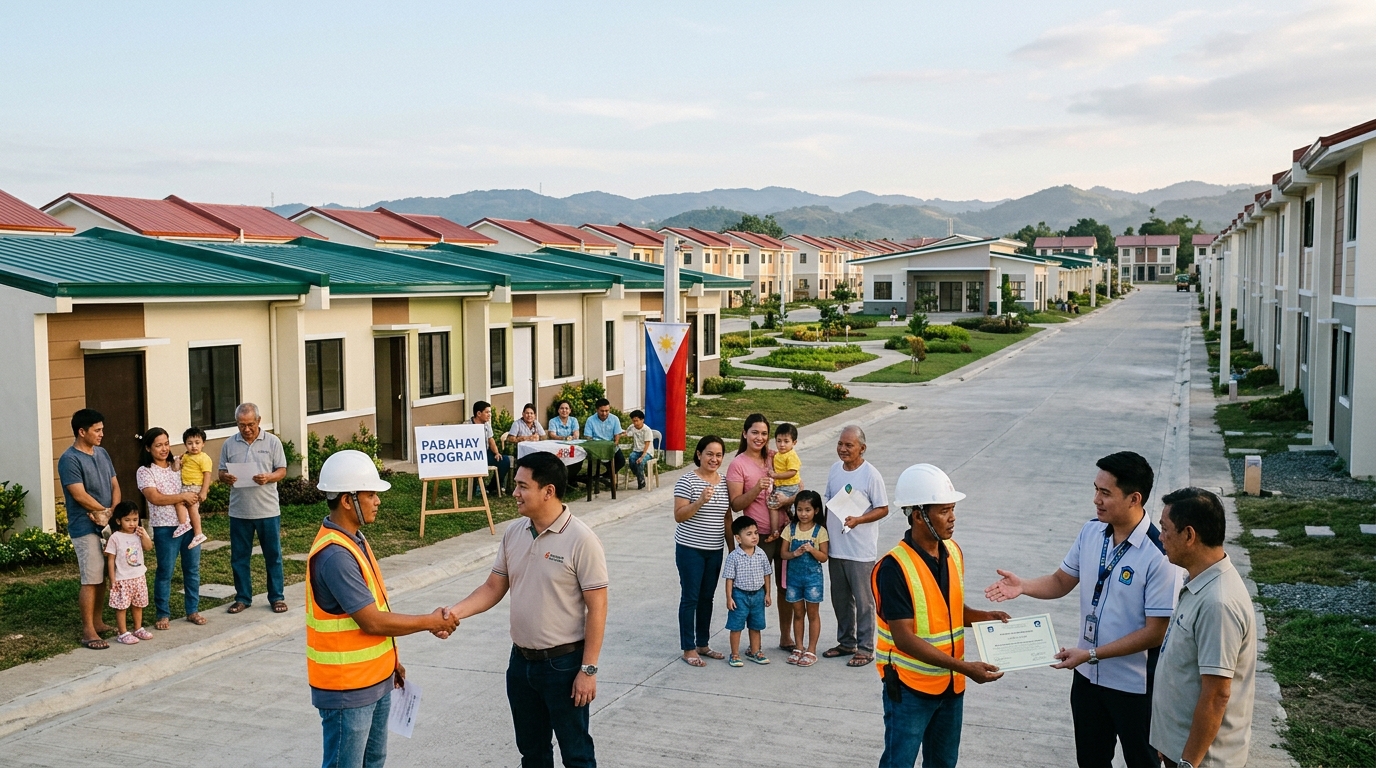
MANILA, PHILIPPINES– According to the DHSUD, there is a remarkable spike in the implementation of the “Pambansang Pabahay para sa Pilipino” (4PH) program during the first quarter of 2026. Besides being socially beneficial, the program has proven to be a boost for the nation’s real estate sector.
The industry experts and real estate analysts consider the rapid deployment as a catalyst for growth in the under-served low to middle market housing segment that has always seen high demand.
A Market Rebalancing in Favor of Affordability
The Philippine real estate market is seeing a healthy correction. While luxury condominiums in Metro Manila have faced a supply overhang, the government’s push for 4PH is redirecting developer interest toward horizontal housing and well-located affordable projects—areas where actual buyer demand remains robust.
According to DHSUD, the recalibrated 4PH program now includes more horizontal (house-and-lot) developments, a move that has drawn strong private sector participation. At least 42 private developers have already committed to building over 250,000 units under the expanded framework.
Streamlined Permits, Stronger Partnerships
One of the most positive developments for the real estate industry has been DHSUD’s commitment to cutting red tape. The department has extended the suspension of certain administrative sanctions related to balanced housing requirements, giving developers more flexibility to align their production with the 4PH’s goals without fear of penalties.
The National Real Estate Association (NREA) has reiterated that it fully supports the country-wide implementation as there have been improvements in licensing processes and regulatory certainty. The synergy between the public and private sector will go a long way in ensuring project efficiency and reduced compliance costs for all parties involved.
New Asset Classes Emerge: Rental Housing and Mixed-Use Communities
Beyond traditional home sales, the accelerated 4PH rollout is opening doors to entirely new real estate asset classes. For the first time, institutional-grade rental housing is being scaled on a national level.
Pilot initiatives include the construction of housing projects on the university grounds at UP Diliman and UP Los Baños, where good-quality rentals will be made available to workers and students from poor families. Medium-rise rental apartments are being erected in Sauyo and Bagong Silangan in Quezon City, changing the former informal areas into organized investments.
This shows that it is possible to create housing that is both socially beneficial and financially sustainable for the developer to have a diversified investment portfolio.
Financing at Record-Low Rates Fuels Demand.
Financing at Record-Low Rates Fuels Demand
The effectiveness of the program is ensured by strong consumer financing. Up to 10,000 households have already taken advantage of the low-interest home loans provided by the Pag-IBIG Fund, at a mere interest rate of three percent—the lowest interest rates ever seen, allowing even ordinary workers to own homes.
For property firms, it means there is an ongoing stream of eligible homebuyers who have been pre-approved for loans by the government. Some developers listed on stock exchanges have noted in their latest reports that the take-up rate for their lower-cost housing options is quicker than that for more expensive housing units.
Positive Outlook for 2026 and Beyond
DHSUD Secretary Jose Ramon Aliling has emphasized that the administration will not slow down the momentum achieved in the first quarter, vowing to further expand coverage in line with the President’s directive. For the real estate industry, this translates to a multi-year pipeline of projects, land development opportunities, and partnerships with local government units.
Despite these difficulties, however, the general direction seems to be a promising one. The rapid implementation of 4PH shows how productive the collaboration between the Government and private business sectors can be if both agree that there is a need for affordable housing.
