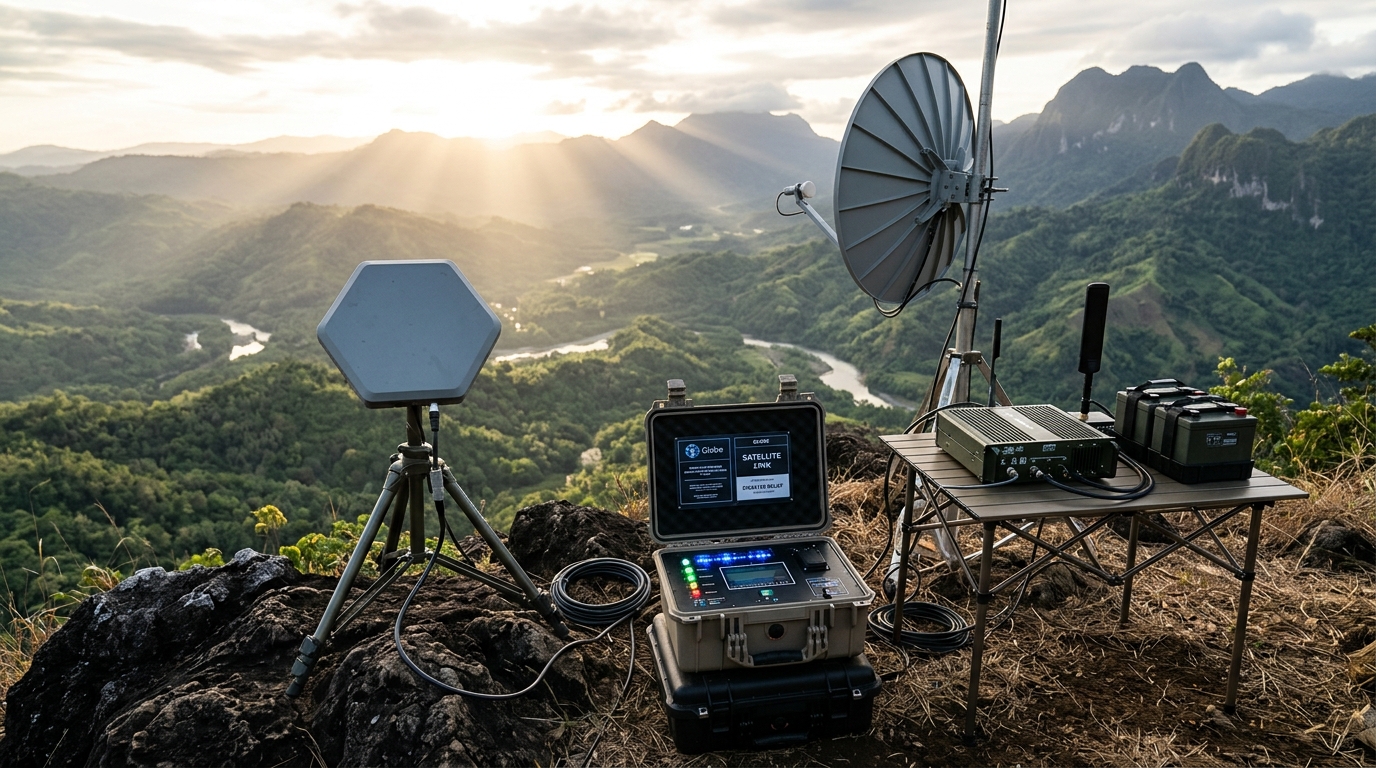
In the wake of the devastating 7.8-magnitude earthquake that struck Southern Mindanao on June 8, 2026, connectivity has become the most critical lifeline for recovery efforts. Rising to the challenge, Globe has officially deployed its pioneering satellite-to-mobile technology—a first for the Philippines—in the worst-hit provinces of South Cotabato, Sultan Kudarat, and Sarangani. By leveraging Starlink’s advanced satellite network, this initiative aims to restore vital communication channels for over 700,000 Globe and TM customers, ensuring they can reach their loved ones even when traditional cellular towers remain offline due to infrastructure damage or commercial power outages.
A New Era of Network Resilience
The deployment, conducted under a demo permit from the National Telecommunications Commission (NTC), marks a significant milestone in Philippine disaster management. The magnitude of the quake caused widespread network disruptions across 30 municipalities, isolating many communities from emergency services. Globe’s satellite-to-mobile solution bypasses ground-based infrastructure, allowing existing LTE-enabled phones to connect directly to satellites in orbit. This technology is being offered for free for 30 days, specifically enabling essential communication tools like SMS and WhatsApp, which are crucial for coordination between displaced families and relief authorities during the critical days following a seismic disaster.
Supporting Communities in Crisis
For those in the affected areas, the process is designed to be as seamless as possible; Globe is proactively reaching out to eligible customers with specific instructions on how to hook their existing SIMs into the satellite service. While this technology serves as a vital bridge, Globe continues to work hand-in-hand with local government units and electric cooperatives to repair damaged facilities and restore standard connectivity across the region. This satellite integration is just one part of a broader, multi-layered disaster response strategy aimed at reinforcing network resilience in one of the world's most earthquake-prone regions. As teams work around the clock on the ground, this innovation offers a powerful glimpse into the future of emergency response, where mobile accessibility can be maintained even when the ground beneath our feet is at its most unstable.