Massive infrastructure projects and billions in private investments from the country's top developers are transforming Cavite into an unstoppable economic powerhouse, making it the most promising investment hotspot outside Metro Manila.
Where Infrastructure Meets Opportunity
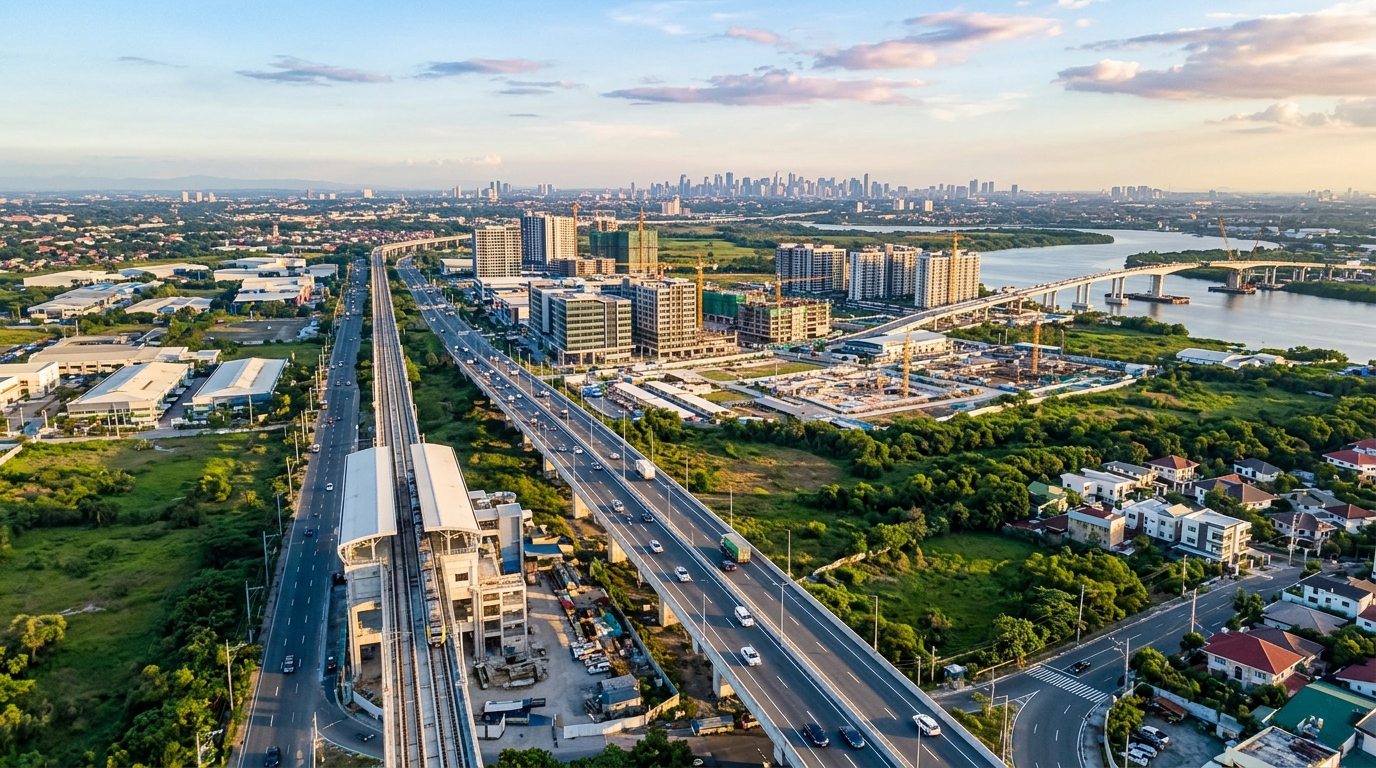
Cavite's transformation into an investment powerhouse is being driven by an unprecedented convergence of public infrastructure and private sector commitments. The LRT-1 Cavite Extension continues its southward expansion, the Cavite-Laguna Expressway (CALAX) is rapidly connecting the province to Laguna and Metro Manila, and the Bataan-Cavite Interlink Bridge will soon position Cavite as the gateway to North Luzon. These projects are dramatically reducing travel times and making the province more accessible than ever before.
Complementing these public investments, leading developers are pouring billions into Cavite's future. Ayala Land is spearheading Evo City in Kawit—a 207-hectare estate featuring office spaces now open for lease and a mall expected to be fully completed in 2026. The company's 752-hectare Vermosa estate in Imus and Dasmariñas continues to expand as a vibrant wellness-focused community. Meanwhile, Megaworld is establishing a strong presence with its 140-hectare Maple Grove Township in General Trias, offering a mix of residential condominiums and residential lots.
Major Townships Shaping the Province's Future
The scale of development across Cavite is truly remarkable. Villar Land's ambitious 3,500-hectare Villar City spans 15 towns and cities across Metro Manila and Cavite, featuring a central business district, tech valley, university town, and leisure facilities—a project expected to take decades to complete. Federal Land is also making its mark with Riverpark in General Trias, a 600-hectare "Next Gen City of the South" that will host SM City General Trias and a 15-hectare Ateneo de Manila University campus.
The province's office sector is poised for significant growth, with current occupancy estimated at 65% but expected to rise as IT-BPO companies expand into Cavite. The province received nearly a quarter of all office inquiries outside Metro Manila in 2025, with more than half being expansion-related. Businesses are drawn by significant cost advantages—lower minimum wages (P550-600/day compared to P695/day in NCR) and more affordable lease rates make Cavite an attractive alternative to congested Metro Manila districts.
A Talent-Rich Province Ready for Growth
Cavite's appeal extends beyond infrastructure and cost savings. The province features the second-largest concentration of higher education institutions in Luzon outside Metro Manila, with 82 colleges and universities primarily concentrated in Dasmariñas, Silang, and Bacoor. This robust talent pool supports the growing demand from IT-BPO firms and traditional businesses establishing operations in the province.
Cavite's population growth of 1.51% annually from 2020-2024, second only to Rizal among Luzon provinces, reflects the increasing number of residents gravitating toward the province's modern township developments. The provincial economy expanded by 5.4% in 2024, ranking Cavite as the country's second-largest provincial economy in terms of its share of the national GDP. With continued infrastructure improvements, commercial investments, and a strengthening demand profile, Cavite is steadily solidifying its position as the Philippines' next premier investment destination.