



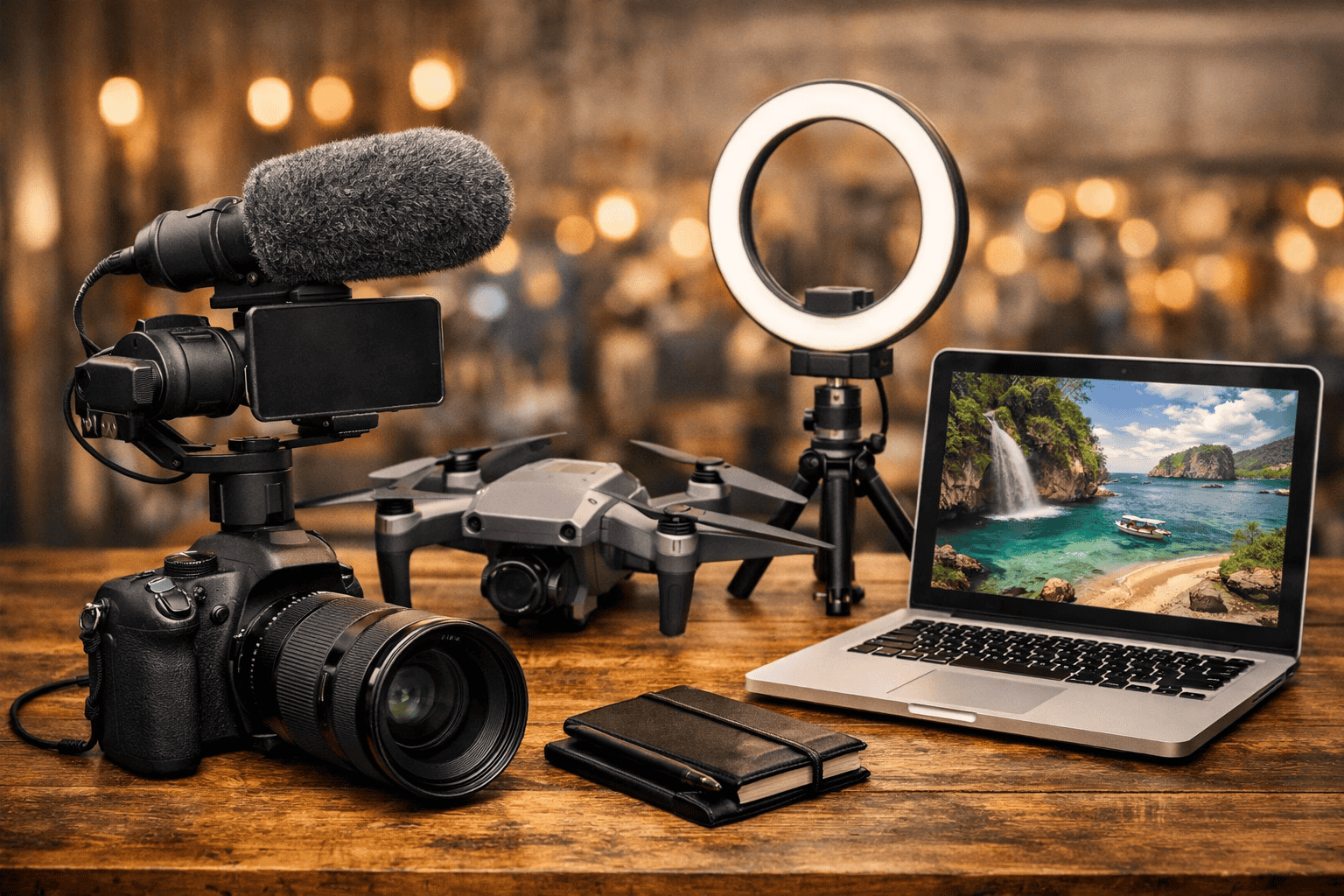
CEBU CITY — The province is officially putting its digital storytellers to work. Governor Pamela Baricuatro has established the Cebu Content Creators Council (C4), a government-backed body designed to harness the power of social media influencers, vloggers, and digital content creators to promote Cebu’s tourism assets, support local businesses, and amplify government programs.
The move formalizes a sector that has long operated informally, transforming it into a structured partnership between the provincial government and the digital community. For tourism stakeholders, this means a more coordinated, credible, and far-reaching effort to showcase Cebu’s destinations to a global audience.
A New Engine for Tourism Promotion
Under Executive Order No. 20, signed March 25, 2026, the C4 will be chaired by Governor Baricuatro herself, with the heads of the provincial tourism, information, and investment offices serving as key members. Accredited creators will gain access to official events, receive fact-checking and data privacy training, and must adhere to a forthcoming code of conduct—all designed to ensure authenticity and trustworthiness.
The council’s tourism mandate comes at a pivotal moment. Mactan-Cebu International Airport (MCIA) handled 1.3 million passengers in January 2026 alone—a 15% increase year-on-year and the highest monthly record in the gateway’s history. International traffic surged 25% over the same period, fueled by eight new routes launched in 2025 and the entry of carriers such as Jetstar Airways, Vietnam Airlines, and Firefly Airlines. MCIA Chief Executive Athanasios Titonis called the exceptional start “a testament to the growing demand for Cebu as a global destination and a key transit hub”.
Amplifying Festivals, MICE, and Hidden Gems
The C4 is expected to play a central role in amplifying Cebu’s major events. January 2026 saw an estimated 400,000 visitors for the Fiesta Señor and Sinulog Festival, a conservative 5% increase from the previous year, with hotels in Cebu City already 90% booked for the peak weekend. The Department of Tourism’s Balik Cebu Program welcomed returning Filipinos and international delegates, including attendees of the ASEAN Tourism Forum.
Beyond festivals, the council will help promote Cebu’s expanding Meetings, Incentives, Conferences, and Exhibitions (MICE) infrastructure. President Ferdinand R. Marcos Jr. inaugurated the ₱1.5-billion Mactan Expo Center in Lapu-Lapu City in March 2026, a convention facility with nearly 10,000 square meters of event space that can accommodate up to 2,500 guests. “Travelers look for destinations that are easy to reach, equipped with facilities such as this,” the President said. The center is scheduled to host the ASEAN Summit in May 2026.
From Solo Creators to a Structured Industry
Cebu is already home to a growing community of creative professionals—photographers, videographers, editors, marketers, and social media strategists—who fuel a thriving ecosystem for content production. Co-working spaces, local production houses, and digital marketing agencies provide the support system needed to turn ideas into professional content. With millions of tourists visiting each year, demand for travel vlogs, food reviews, and cultural features continues to rise, offering creators endless opportunities to collaborate with hotels, restaurants, and tourism campaigns.
The council complements the broader Cebu Creative Council’s roadmap to position the province as a regional hub for animation, gaming, film, and design, targeting ₱30 billion in value creation by 2030.
A Model for Digital-First Tourism Governance
By formalizing its relationship with content creators, Cebu is adopting a digital-first approach to tourism promotion that other provinces are likely to follow. The C4 ensures that the province’s stories are told not only by traditional media but also by a network of trusted, accredited digital ambassadors capable of reaching millions of followers across multiple platforms.
For travelers, this means more authentic, engaging, and up-to-date content about where to go, what to eat, and what to experience in Cebu. For local businesses, it opens new channels for visibility. And for the province, it transforms the creator economy from an informal hobby into a structured tool for economic development.
