



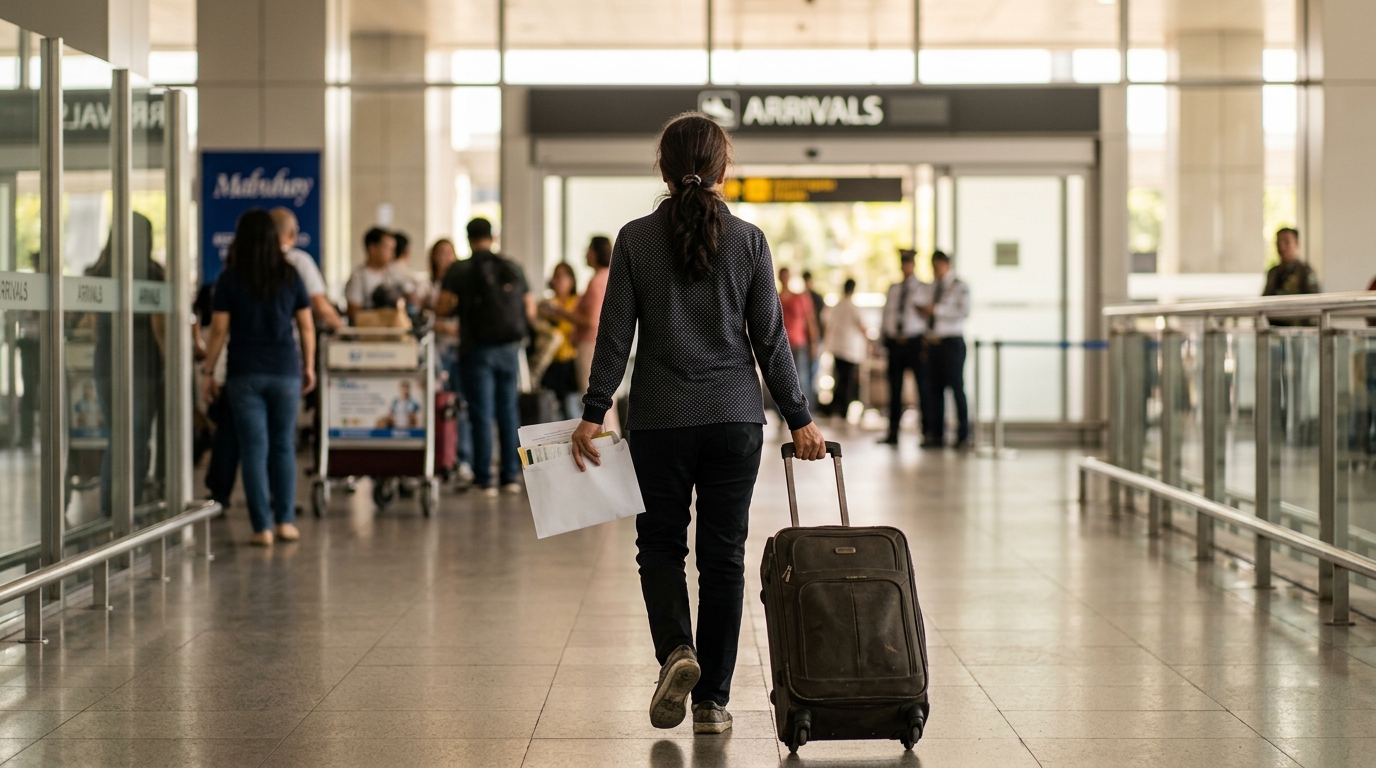
PHILIPPINES — The government has opened a new low‑interest, collateral‑free loan facility aimed at helping returning overseas Filipino workers rebuild their lives, with OWWA Administrator PY Caunan and Small Business Corporation vice president Wally Calderon outlining the program's mechanics in late May 2026. Loan amounts range from ₱30,000 to ₱20 million, with no collateral required for loans of up to ₱3 million for new borrowers and up to ₱5 million for those with existing businesses. Interest is set at one percent per month, or 6.7 percent annually, and repayment terms extend up to five years.
The OFW Negosyo Fund, a partnership among the Department of Migrant Workers, the Department of Trade and Industry, and SBCorp, carries a ₱2‑billion allocation and accepts applications entirely through the SBCorp Money app. "This is unique. We can lend even if the business is newly registered," Calderon said. "They just use the SBCorp money app completely online. In a matter of seconds or minutes, as long as the requirements are complete." DTI Secretary Cristina Roque framed the facility as a whole‑of‑government commitment: "We want to ensure our OFWs that when you come home, you are supported. You come home to opportunities, programs, and a government ready to help you move forward."
A Complementary Web of Reintegration Support
Caunan emphasized that the loan facility is designed to complement, not replace, existing livelihood grants. OWWA's Balik‑Pinas, Balik‑Hanapbuhay program provides a one‑time grant to returning workers, while the Tulong PUSO initiative offers registered OFW organizations up to ₱1 million in livelihood funding for startups or business expansion. "We strengthen their grant. SBCorp strengthens their access to capital. That's complementary," Caunan said.
The program arrives as more than 11,000 OFWs have recently returned home with depleted savings and disrupted contracts. "Once an OFW, always an OFW. The important thing is the purpose of the loan. It must be for business," Caunan said, underscoring that the facility is intended exclusively for entrepreneurial ventures. Borrowers may also avail of interest‑free periods of zero, six, or 12 months, at their option, providing critical breathing room during the early stages of business establishment. Eleven borrowers had already received an initial ₱2.9 million in funding as of early April 2026, spanning ventures from water refilling stations and pharmacies to events management and food kiosks.
Scholarships, Training, and a Bridge to a Degree
Beyond the loan program, OWWA is preparing an expanded reintegration package that includes scholarship opportunities for OFWs who did not finish college and enhanced skills training through TESDA. "We want comprehensive support, training that leads to employment, and help so OFWs can focus while they upskill," Caunan said. The recently launched LEAP‑OFWs program, a partnership between OWWA and the Commission on Higher Education, allows qualified workers to convert years of overseas work experience into academic credits through the Expanded Tertiary Education Equivalency and Accreditation Program, fast‑tracking their path to a college diploma.
The DMW and TESDA have also intensified skills training through the KAALAMAN Scholarship Program, which graduated 58 OFWs from its pilot batch in May 2026. The graduates completed specialized courses in paramedics, emergency medical services, emergency vehicle operation, and caregiving—fields selected to expand employment opportunities and ease the transition into healthcare and emergency response roles. "The KAALAMAN Program does not only provide training but also creates real pathways toward quality employment opportunities for our OFWs," DMW Undersecretary Felicitas Bay said. A total of 165 OFWs enrolled in the program, with 146 successfully completing it.
From Wage Earners Abroad to Entrepreneurs at Home
The OFW Negosyo Fund represents a structural shift in how the government approaches diaspora reintegration. Rather than treating returning workers solely as beneficiaries of emergency aid, the program recognizes them as potential entrepreneurs whose years of discipline, savings habits, and exposure to global markets can be converted into domestic enterprise. "If they want to start a business, this is a good program for them," Caunan said.
The digital application process removes a barrier that has historically discouraged OFWs from accessing government financing: the need to physically visit multiple offices. By consolidating the application on a single mobile platform, SBCorp has made the fund accessible to returning workers who may still be in transition, relocating families, or residing in provinces far from DTI regional offices. The tiered loan amounts accommodate the full spectrum of OFW business ambitions—from a modest sari‑sari store to a small manufacturing operation or a service franchise. For the OFW who steps off a plane carrying nothing but savings and the residue of a contract that ended sooner than planned, the fund offers not merely capital but a bridge. And behind that bridge, a growing network of training programs, scholarships, and livelihood grants waits to carry them the rest of the way.
