DAVAO CITY — Construction crews are pushing forward on the last stretches of the city’s landmark coastal highway, a project that began under the "Build, Build, Build" program of the previous administration and is now set to reshape how tourists experience the city’s southern and eastern seaboard. On Friday, April 17, 2026, heavy equipment and workers were seen busy at the site as the Davao City Coastal Road inches closer to its target completion in 2027.
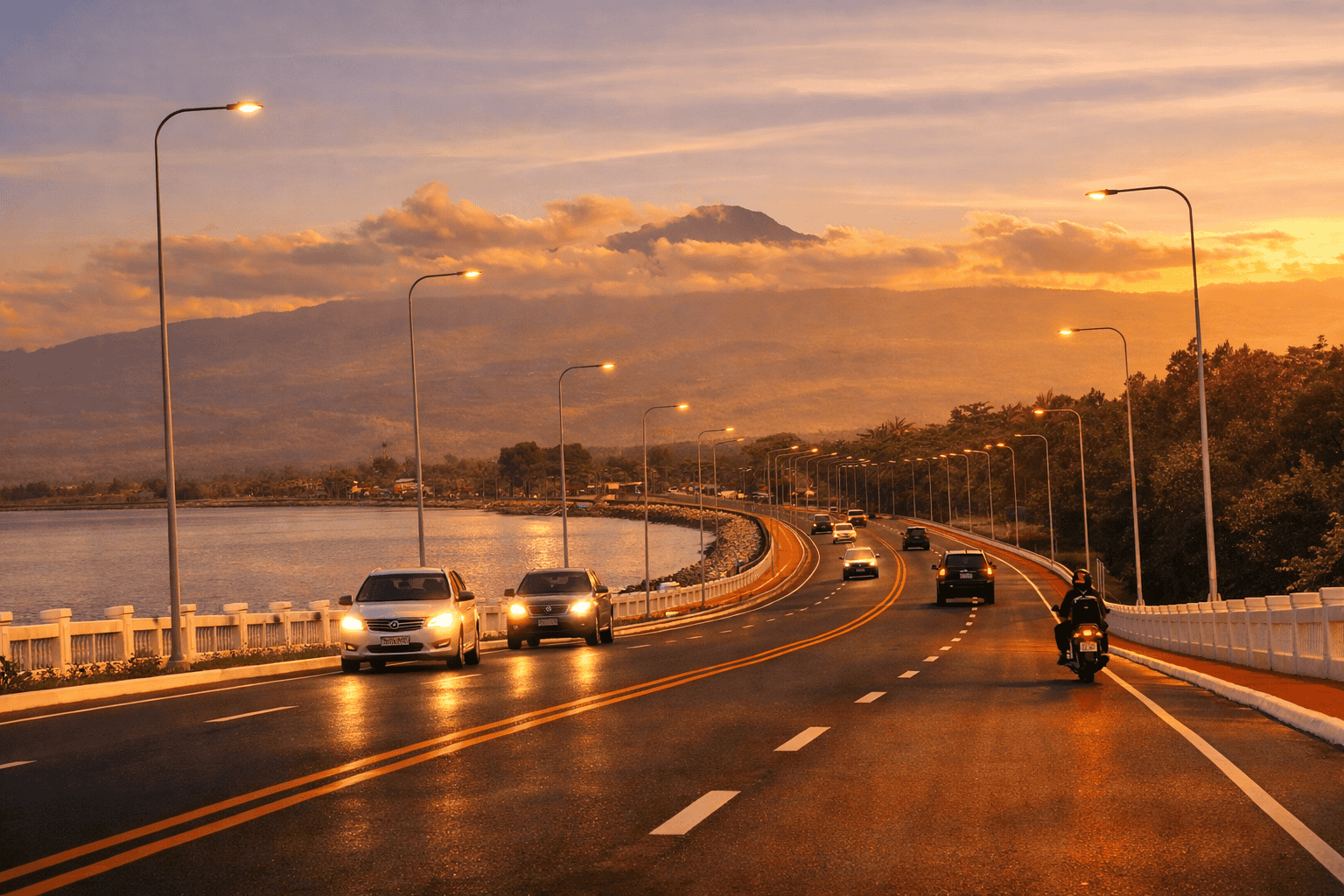
With 12.4 kilometers of the 17.78‑kilometer alignment already passable, the road is steadily transforming from a mere bypass into a scenic corridor that connects major barangays such as Talomo, Ulas, Puan, Catalunan Grande, Dumoy, and Toril. The 18‑kilometer, four‑lane expressway, which includes dedicated bike lanes and pedestrian sidewalks, is designed to decongest the city center while unlocking new opportunities for local tourism.
A Destination in Itself
Beyond its role as a traffic reliever, the coastal road has evolved into a recreational destination. It features walkways, bike lanes, linear parks, and public spaces that have already become popular among joggers and cyclists. In March 2026, the city expanded its “Car‑Free Sunday” route to include the iconic Bucana Bridge, giving residents and visitors a safe, scenic space for walking and biking every Sunday from 4 a.m. to 8 a.m..
The Bucana Bridge itself has become a centerpiece for community events. In February 2026, the bridge hosted the Chinese New Year celebration, blending heritage and modern infrastructure. “Holding the celebration at the bridge is one way of highlighting cultural ties while also showcasing a major development project in the area,” city tourism officials said. During the 2023 inauguration of an earlier segment, President Ferdinand Marcos Jr. noted the project’s tourism potential, envisioning “locals and especially our tourists taking a stroll while looking at the view, feeling the breeze coming in from the coast”.
Safety and Lighting Upgrades Underway
To ensure the road is safe and enjoyable around the clock, the Department of Public Works and Highways and the Davao Light and Power Co. have committed to installing conventional LED lamps along the coastal highway. The upgrade follows concerns about defective solar lights and wire theft, with an estimated ₱40‑₱50 million needed for the repairs. DLPC will handle the procurement and installation, a process expected to take four to six months, while DPWH has committed to replacing defective solar lights with stocks arriving in early May.
Tourism‑Friendly Features Take Center Stage
Once fully completed, the coastal road is expected to slash travel time from the Toril district to the city center from nearly two hours to just 30 minutes, making day trips to southern beaches and coastal attractions far more appealing. The road already serves as a venue for major international events like the Ironman 70.3 triathlon, whose course runs along the coastal highway with Mount Apo as a dramatic backdrop.
The infrastructure also serves as a vital link to other key tourism projects. It connects directly to the Samal-Davao Connector Bridge, which is on track for completion, and will integrate with the proposed Davao City Expressway. The Regional Project Monitoring Committee validated the coastal road’s progress alongside other connectivity projects such as the Ulas Viaduct and the Davao International Airport expansion.
The Final Push to 2027
The remaining work includes resolving land acquisition issues, completing flood mitigation measures, and finishing the last contract packages. Segment D, the final stretch of the ₱33‑billion project, is already in full swing and targeted to be passable by the end of 2026, with full completion expected in 2027.
As the asphalt is laid and the final lights are installed, the coastal road is poised to become not just a route, but a ribbon of economic and recreational opportunity—one that invites both residents and tourists to rediscover Davao’s shoreline.