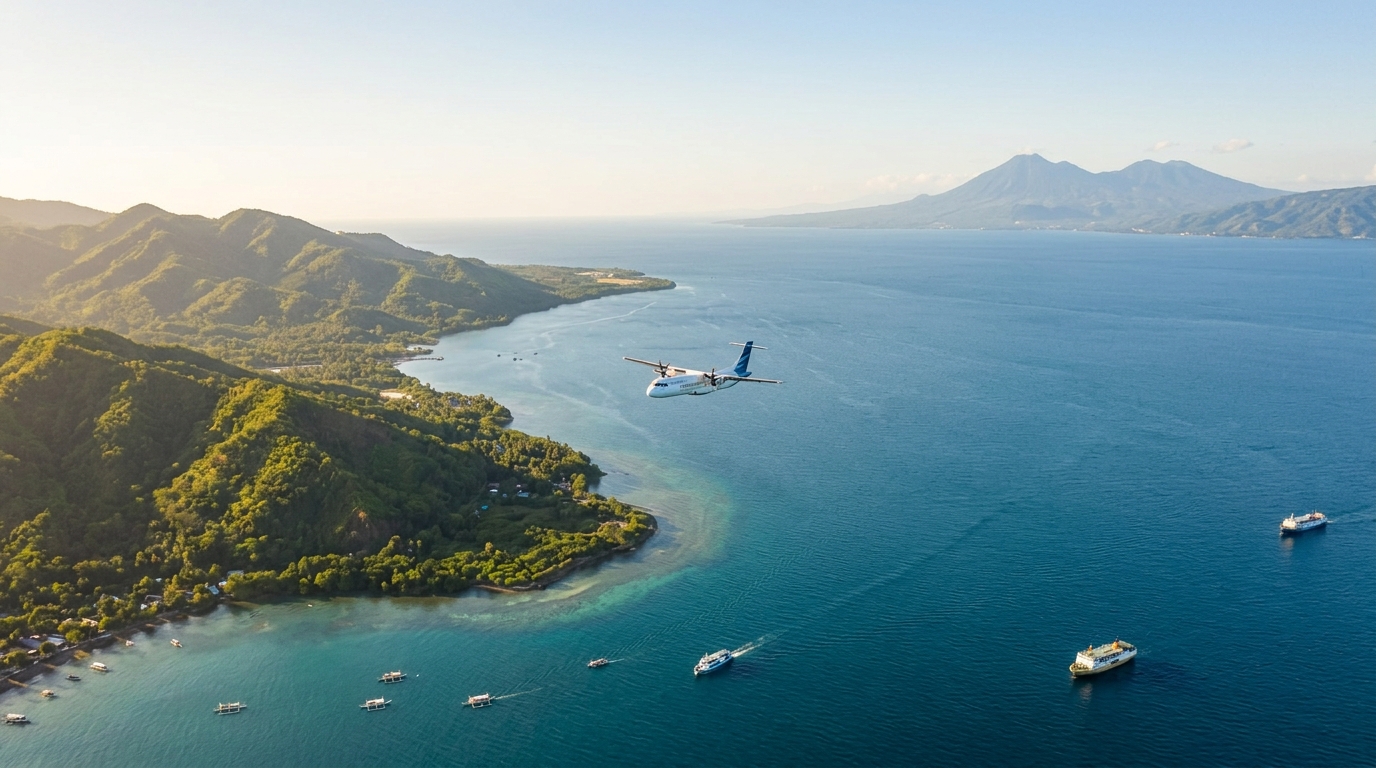
DAVAO — A transformative vision for regional travel is quietly taking shape in the waters between Mindanao and North Sulawesi. Under the Brunei Darussalam–Indonesia–Malaysia–Philippines East ASEAN Growth Area (BIMP-EAGA) framework, Indonesia and the Philippines are powering a fresh era of cross‑border tourism built not on grandiose promises but on concrete connectivity: restored air links, integrated tourism circuits, and a shared commitment to turning secondary gateways into primary destinations. The centerpiece of this push is the proposed revival of direct flights between Davao City and Manado—a route that, if successfully relaunched, would slash travel time from nearly 19 hours to just over an hour, effectively bringing two culturally and economically linked regions within arm‘s reach of each other.
A “Demand‑First” Strategy That Learns from Past Failures
Previous attempts to operate the Davao–Manado route failed for reasons that will sound familiar to anyone who has followed regional connectivity efforts: inconsistent passenger loads, thin cargo volumes, underdeveloped tourism links, and the crippling disruption of the COVID‑19 pandemic. Rather than simply restarting flights and hoping for the best, the Mindanao Development Authority (MinDA), alongside the Department of Tourism (DOT) and the Department of Trade and Industry (DTI), has deliberately reversed the sequence. The new approach is explicitly “demand‑first”: instead of launching flights first and chasing passengers later, government agencies and local stakeholders are actively cultivating tourism flows, trade exchanges, and local government partnerships before asking any airline to commit.
“We need to be able to reestablish the direct connectivity, flights between Davao and Manado. We have to create the demand, both for tourism and business, so airlines can decide to serve the route again,” said MinDA Deputy Executive Director Romeo Montenegro. This careful sequencing is designed to avoid the costly mistakes of the past, ensuring that when flights finally resume, they will be supported by strong and sustained passenger and cargo traffic.
One Hour Instead of Nineteen: Transforming Travel between Neighbors
The numbers behind the proposed route are striking. Currently, a traveler moving between Davao and Manado must endure a grueling indirect journey involving multiple connecting flights and, occasionally, sea travel—a process that can take the better part of a full day. A direct air link would compress that ordeal into a single hour, creating a seamless connection between Mindanao and North Sulawesi that officials believe could be transformative for both tourism and trade.
The revived route would also serve as a catalyst for deeper regional integration under President Ferdinand R. Marcos Jr.’s agenda, which has consistently emphasized improving regional connectivity and positioning Mindanao as a strategic gateway to ASEAN markets. Strengthening air links like the Davao–Manado route is seen by the administration as essential for boosting trade and investment between the Philippines and Indonesia, complementing broader infrastructure and transport modernization efforts in Mindanao.
Indonesian carrier TransNusa has already signaled openness to operating the route, pending a market viability study and regulatory requirements. MinDA is now coordinating with the Civil Aviation Authority of the Philippines and the Civil Aeronautics Board to apply BIMP‑EAGA support policies while gathering the passenger demand and cargo volume data needed to make the route commercially viable.
Beyond Airports: Tourism Circuits That Weave Two Regions Together
The revival of the Davao–Manado flight is not an end in itself but a platform for something larger: the development of integrated tourism circuits that span both Mindanao and North Sulawesi. A significant portion of MinDA’s April 2026 business mission to Manado was dedicated to identifying these cross‑border travel products, with a particular focus on sectors where both regions already have established strengths. Dive tourism is a prime example. The Coral Triangle, one of the world’s most biodiverse marine ecosystems, stretches across both Philippine and Indonesian waters. A revived Davao–Manado link could create a seamless diving circuit connecting globally renowned sites like Bunaken in Indonesia with the coastal destinations of Davao Oriental, allowing dive enthusiasts to explore both sides of the border in a single trip.
Beyond diving, officials from DOT Region XI have identified multiple growth areas, including medical and wellness tourism (a sector where both Davao and Manado have established facilities), educational exchanges that can build deeper people‑to‑people ties, and adventure travel that showcases the rainforests, waterfalls, and volcanic landscapes of both regions. “One of our main priorities is the revival of the Davao–Manado connectivity while pushing a strong tourism agenda through education, medical and wellness, dive exchange, and adventure tourism opportunities,” said Tanya Rabat‑Tan, Regional Director of DOT‑XI.
The Gateway Corridor: Three Provinces, One Direction
On the Philippine side, the connectivity push is anchored by the Tri‑Province Davao Gateway Corridor, an initiative that aims to integrate Davao de Oro, Davao Oriental, and Davao Occidental into a unified air, land, and sea hub linked to BIMP‑EAGA markets. The concept, first advanced in early 2026, seeks to connect production areas, tourism destinations, airports, and seaports into coordinated development corridors that can present a unified front to regional partners.
The strategy has already gained significant momentum. During a business mission to Manado from April 6 to 10, 2026, a 30‑person delegation from the Davao Region—including local chief executives, representatives from DOT and DTI, and private tourism stakeholders—engaged directly with Indonesian counterparts to identify complementary tourism products and explore joint marketing opportunities. The mission also produced concrete cooperation agreements: the local government of Governor Generoso signed a letter of intent to partner with Miangas and Bitung in fisheries, agriculture, tourism, and trade, while North Sulawesi officials committed to sending a counter‑delegation to Davao City within the year to finalize further exchanges.
“Tourism is more than travel. It is a bridge that connects people, cultures, communities, and opportunities,” said Congresswoman Maricar Zamora‑Mabanglo of Davao de Oro. “And for our three provinces, tourism is also a pathway to inclusive growth”.
The Road Ahead: From Planning to Passenger
While momentum is building, officials are careful not to overpromise. No firm timetable for the resumption of Davao‑Manado flights has been announced, and MinDA has emphasized that sustaining the route will ultimately depend on converting plans into actual passenger demand and commercial activity. “We are making sure that the preliminaries and preparations are worked out so that once operationalization is laid down, all bases are covered,” Montenegro said.
Yet the direction of travel is clear. With a demand‑first strategy, growing private‑sector interest, and a shared commitment from both national governments, Indonesia and the Philippines are quietly building the infrastructure—not just of airports and circuits, but of confidence and cooperation—that could finally unlock the tourism potential of the BIMP‑EAGA subregion. For travelers willing to look beyond the usual Southeast Asian itineraries, the promise is tantalizing: one hour between two countries, endless shores, and a new way to explore the archipelago.