



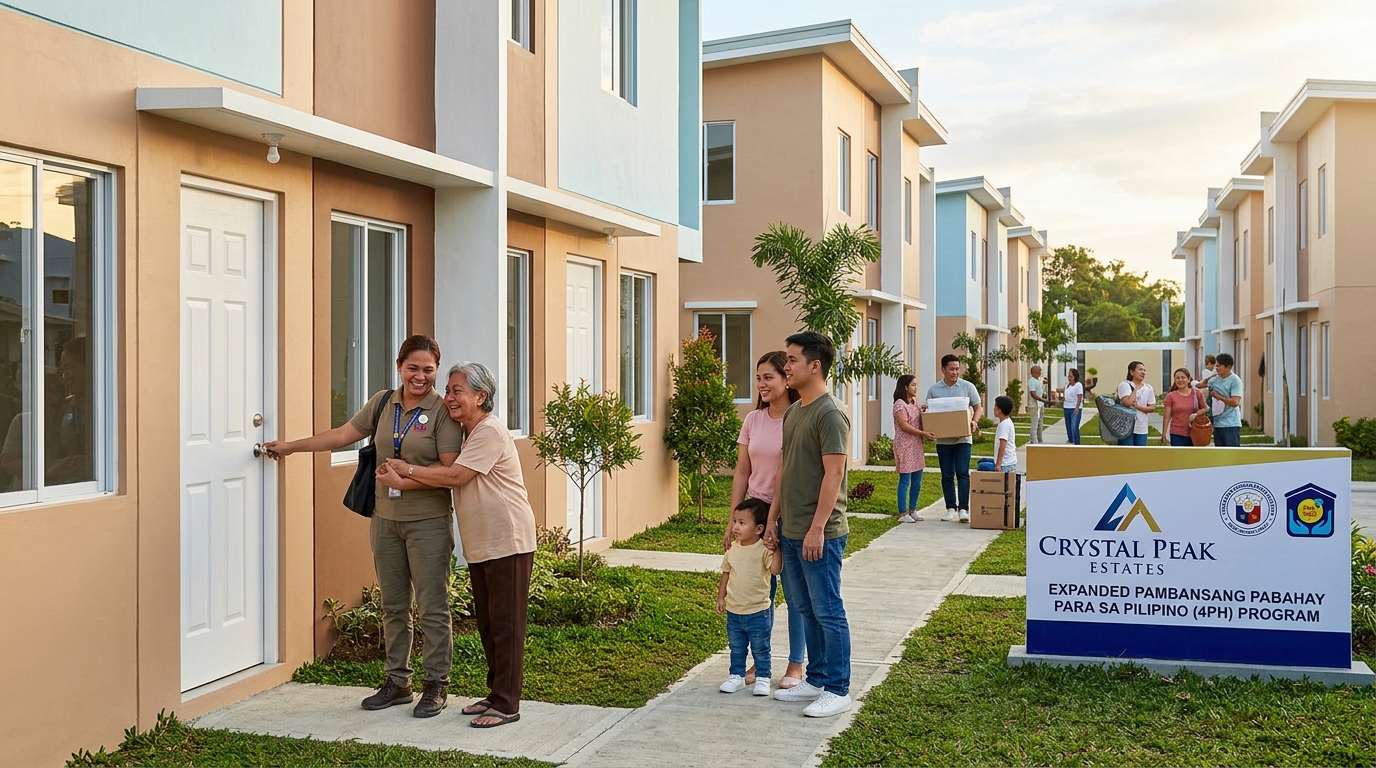
MANILA – It looks like the overseas Filipino workers have fulfilled their lifelong dream of owning their own homes through the government’s Expanded Pambansang Pabahay para sa Pilipino (4PH) Program under President Ferdinand R. Marcos Jr., according to Department of Human Settlements and Urban Development officials.
For many OFWs whose entire life revolves around working away from family and earning a living far from home for decades, it seemed like owning their own house was impossible. But the government's housing initiative of subsidized interest of 3 percent offered by the government through the Pag-IBIG Fund made the seemingly impossible possible.
OFW from Saudi Arabia to finally own a home
After having worked in Saudi Arabia for 18 years, Mrs. Rosemarie Libanan is now in the process of preparing to go back to the Philippines in order to pay a visit to her family’s first‑ever home in Crystal Peak Estates in Pampanga, which is part of the Expanded 4PH project in her province.
In an online interview with DHSUD, Libanan admitted that for years she struggled to find a property she could afford. Monthly payments always seemed too heavy. When she learned about the 4PH development in her hometown, she applied through Pag‑IBIG and was approved. Her brother, who stayed in Pampanga, helped monitor the unit's construction.
"Sana pag‑uwi namin this year, mapuntahan na namin siya. Maganda raw yung puwesto, malapit sa lahat," she said. She also shared that even while she remains abroad, her family can already enjoy the property.
Nueva Ecija family receives unit under 4PH
In Palayan City, Nueva Ecija, Sharon Joy Capyo – whose husband works in Japan – expressed gratitude after receiving their housing unit at the Palayan City Township Project, a vertical housing development under the Expanded 4PH Program.
"Masaya po kami na nagkaroon na kami ng sariling bahay. Nakikitira lang po kami dati sa pamilya namin," Capyo said. She directly thanked President Marcos, saying the program gave them a chance to own a home they can truly afford.
Other OFW beneficiaries include Jeremy Leyno, a painter in Japan, and Madelaine Ann Mallare, a nurse in Saudi Arabia. Both also expressed appreciation for the program.
OFWs given priority status
Under the Expanded 4PH, DHSUD and Pag‑IBIG have removed the monthly salary cap for OFWs and placed them among priority beneficiaries. This allows them to access the subsidized 3 percent interest rate, making monthly amortizations more manageable.
DHSUD Secretary Jose Ramon Aliling said the President's directive is clear: make housing more affordable, faster, and more accessible for every Filipino, including OFWs whom he called "modern‑day heroes."
"Sa pamamagitan ng Expanded 4PH, binibigyan natin sila ng pagkakataon na maranasan ang bunga ng kanilang sakripisyo – isang sariling tahanan na maaari nilang uwian," Aliling said.
OFWs given priority status
Under the Expanded 4PH, DHSUD and Pag‑IBIG have removed the monthly salary cap for OFWs and placed them among priority beneficiaries. This allows them to access the subsidized 3 percent interest rate, making monthly amortizations more manageable.
DHSUD Secretary Jose Ramon Aliling said the President's directive is clear: make housing more affordable, faster, and more accessible for every Filipino, including OFWs whom he called "modern‑day heroes."
"Sa pamamagitan ng Expanded 4PH, binibigyan natin sila ng pagkakataon na maranasan ang bunga ng kanilang sakripisyo – isang sariling tahanan na maaari nilang uwian," Aliling said.
More than just a house
Libanan summed up the sentiment of many OFWs who have long worked abroad without owning property. She thanked the government for a program that finally gives overseas workers a place to call their own when they come home.
"Ang daming OFW kahit matagal na nagtatrabaho ay wala pang nabibilhan na property," she said. "Pangarap nila para sa pamilya nila na habang nag‑aabroad sila, pag‑uwi nila, meron silang bahay na masasabing sa kanila."
Aliling added that the Expanded 4PH is not just about constructing buildings. It is about giving every Filipino – especially OFWs – a home that represents their sacrifice, hope, and success for their families.
