Bohol’s global identity as a UNESCO Global Geopark is defined by more than just its landscape; it is a sophisticated, high-fidelity network of wildlife that sustains the island's life. As of 2026, environmentalists are emphasizing that protecting iconic species like the Philippine Tarsier is only one part of a larger, tactical roadmap for survival. Other critical residents, such as the Sea Turtles nesting along the Panglao coastline and the unique Antingaw (rock-boring mollusc) in the Abatan River, act as primary anchors for ecological health.
Marine Guardians and Coastal Resilience
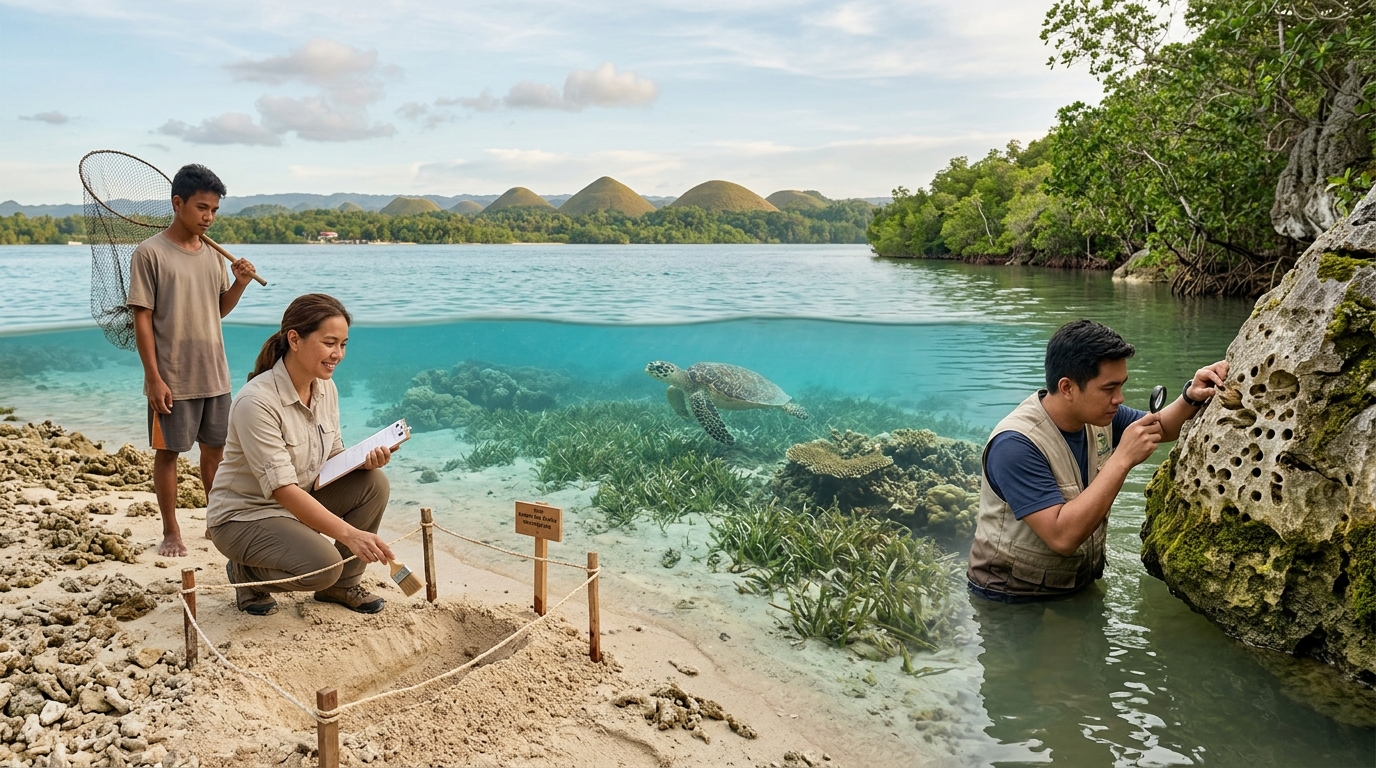
The 2026 identity of Bohol’s coastline is defined by "Natural Protection," where the tactical nesting of sea turtles provides a high-fidelity indicator of reef health. As of early May, the presence of these marine reptiles is a primary anchor for the province’s 2026 roadmap, as they maintain seagrass beds and coral reef ecosystems through their grazing habits. This week, local marine biologists highlighted that sea turtles are a tactical template for ocean biodiversity, effectively acting as "gardeners" of the sea. It provides a unique ecosystem for the 2026 generation of fisherfolk to experience a "Maritime Ritual" that is both high-energy in its conservation efforts and sophisticated in its economic benefits.
Freshwater Marvels and River Health
What sets this May 2026 window apart is the tactical recognition of the Antingaw, acting as a primary anchor for the health of Bohol’s river systems. As of April 30, 2026, this rock-eating mollusc has trended for its role in creating habitats for other small aquatic species by boring into limestone along the Abatan River. This month, researchers noted that such endemic creatures are a tactical template for the 2026 roadmap of understanding river evolution and geological changes. It offers a "Discovery Ritual" that is both high-energy in its scientific novelty and sophisticated in its role as a bio-indicator for water quality.
The Anchor of Bohol’s 2026 Heritage Roadmap
As of 2026, the protection of all wildlife has been recognized as a primary anchor for the "Bohol Life Circuit," driving high-fidelity trust in the island's sustainable future. Recent updates from the Provincial Environment Management Office (BPEMO) suggest that biodiversity is a tactical template for the 2026 roadmap of "Natural Heritage" preservation. This month, local leaders reinforced that "Whole-Species Protection" is an essential key to the 2026 summer strategy for making Bohol a sophisticated, global-standard eco-destination. For any resident in the province this May, the survival of these creatures is the ultimate signal of an island mastering its biodiversity to achieve peak ecological excellence.