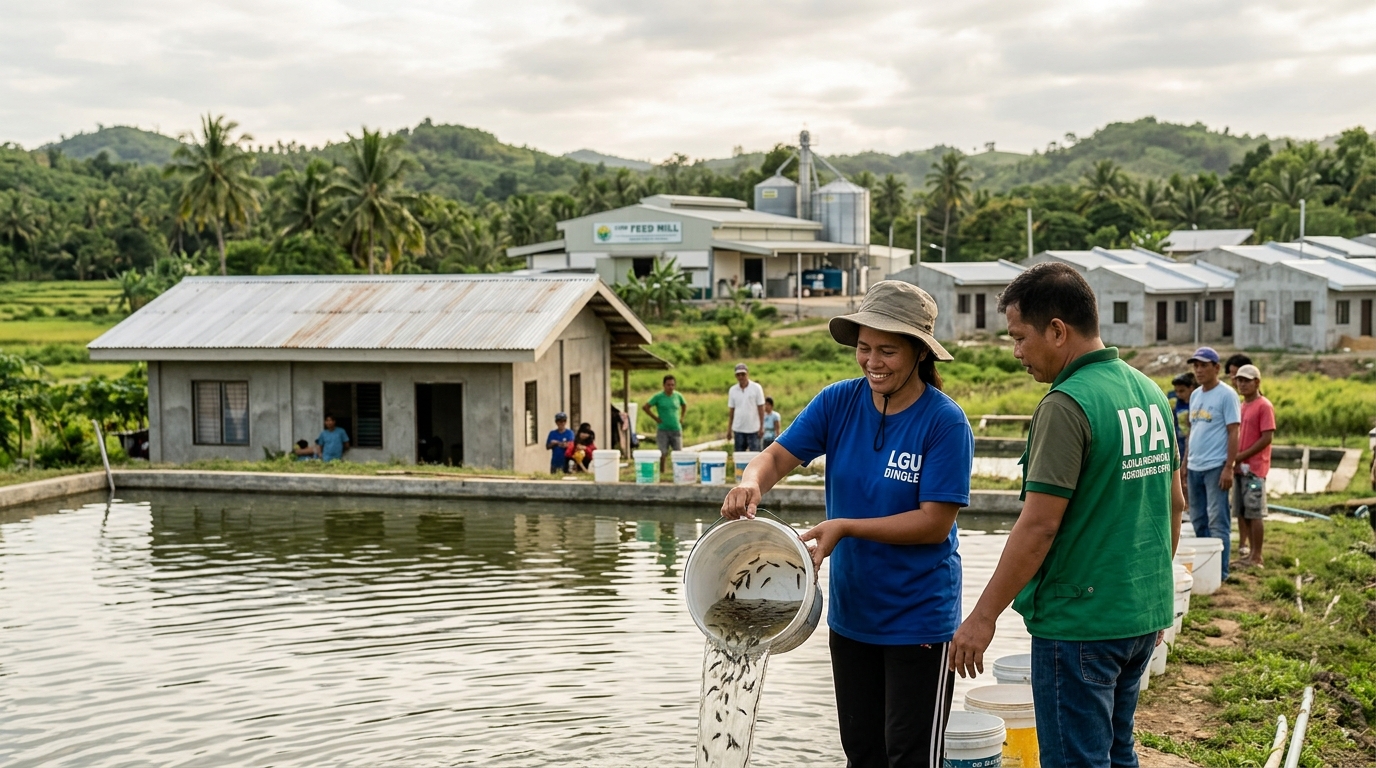
ILOILO CITY — On a humid April morning at the Integrated Freshwater Aquaculture Park and Technology Center in Barangay Nanga, Pototan, plastic bags filled with 100,000 tilapia fingerlings changed hands between provincial agriculture officers and representatives from three municipalities. The dispersal, which brought the year's total to 473,500 pieces across Iloilo province, was framed by the government as a food security measure. But for property analysts tracking land values in the province's interior, the numbers tell a parallel story: every fingerling released into a pond is a small deposit into the economic stability that ultimately underpins residential real estate demand in towns far from the city center.
Provincial Agriculturist Ildefonso Toledo confirmed that the April 29 distribution allocated 50,000 fingerlings to Banate, 26,000 to New Lucena, 12,000 to Dingle, and 12,000 more to three individual farmer-beneficiaries. These are not the municipalities that dominate Iloilo's property headlines. Banate sits on the northern coast, New Lucena and Dingle in the interior. But they are precisely the kind of towns where aquaculture income converts, over time, into home improvements, lot acquisitions, and the gradual formalization of informal settlements into titled properties.
A Provincial Aquaculture Engine That Builds Households, Not Just Ponds
The 473,500 fingerlings distributed as of April 30 are not an isolated statistic. They arrive in the same season that a P30-million aquaculture feed mill opened at the SEAFDEC complex in Tigbauan, a facility capable of producing up to five metric tons of feed daily and serving approximately 6,240 fish farmers annually. Together, the fingerling dispersal and the feed mill form a coordinated provincial strategy to lower input costs and raise yields across Western Visayas' inland fisheries sector. When fish farmers earn more, they spend more—on concrete, on roofing sheets, on incremental expansions that turn a one-bedroom structure into a two-bedroom home.
Colliers Philippines Research Director Joey Roi Bondoc reported on May 5 that Iloilo's house-and-lot take-up rate has reached 96 percent, the highest in the Visayas-Mindanao region. Condominium take-up stands at 89 percent, while lot-only purchases hit 80 percent. The Bangko Sentral ng Pilipinas has documented that 17 percent of OFW household remittances now flow directly into real estate. These macro figures are built on a foundation of micro-economic activity—the kind that aquaculture sustains in municipalities where overseas employment is not the primary income source. Banate, New Lucena, and Dingle may not house a single office tower, but their residents are participating in the same property market that developers track from their Makati headquarters.
From Pond to Property: The Transactional Chain That Binds Aquaculture to Land Values
The economic logic is straightforward. A tilapia farmer who receives fingerlings from the provincial government raises them over a four-to-six-month grow-out cycle, harvests, sells at market, and retains profit that previously went to more expensive feed or fingerling purchases. The Provincial Agriculture Office's choice of the IFAPTC-ART Center as the distribution hub is significant: the facility doubles as a training center where farmers learn pond management, water quality monitoring, and feed optimization. Higher survival rates and faster growth cycles compound into higher annual incomes, and in rural Iloilo, higher farm income translates directly into construction activity.
The P30-million Tigbauan feed mill reinforces this chain. BFAR-6 Director Remia Aparri confirmed the facility will lower feed costs by roughly P7 per kilogram, easing the single largest expense that fish farmers face. When 6,240 fish farmers each save thousands of pesos annually on feed, the aggregate effect on local purchasing power is substantial. The feed mill also purchases locally grown, plant-based raw materials as substitutes for imported fishmeal, opening a secondary income stream for crop farmers in the same municipalities. The result is a circular rural economy where fish growers, crop suppliers, and construction workers all see income gains, and where land—the finite asset underlying all of it—predictably appreciates.
Why This Matters to Developers and Investors in 2026
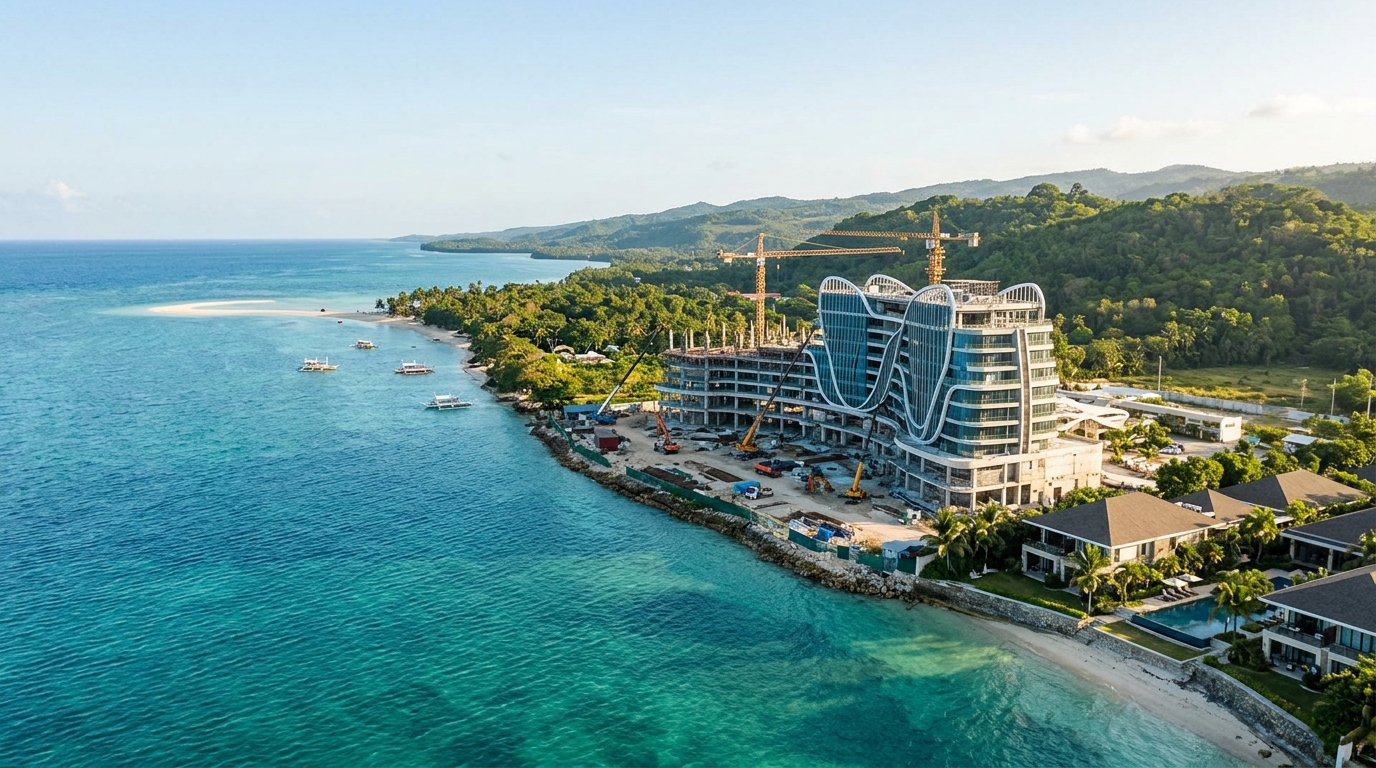
Iloilo's property market is already the strongest outside Metro Manila. Colliers reported that the city outpaced Metro Cebu in occupied office transactions for the first quarter of 2026, driven by high-value outsourcing firms and global capability centers. Megaworld's 72-hectare Iloilo Business Park continues to generate an estimated 20,000 direct jobs and 80,000 indirect jobs. Western Visayas was the country's fastest-growing regional economy in 2025, expanding by 6.4 percent. Into this high-demand environment, the provincial government's aquaculture investments inject a steady stream of rural purchasing power that sustains demand for affordable and mid-market housing.
For developers scouting land in Iloilo's second- and third-class municipalities, the fingerling dispersal program functions as a proxy indicator. Municipalities that consistently receive aquaculture support—fingerlings, technical training, feed mill access—are municipalities with rising household incomes and, by extension, expanding pools of potential homebuyers. The "Luntiang Bukas" initiative has already delivered 820 land titles across Western Visayas, including 647 agricultural patents, formalizing land ownership and creating the legal conditions for property transactions. As the provincial government continues to disperse fingerlings through the remainder of 2026, each batch released into a municipal pond is, in effect, a small vote of confidence in that town's long-term real estate trajectory.