Palawan is a destination where community and gastronomy are deeply intertwined, and Hapag by Balinsasayaw serves as the ultimate gathering place for this delicious culture. Nestled along Manalo Extension in Puerto Princesa, "Hapag" (meaning a table set for eating) has established itself as a premier culinary society for both locals and travelers. As of May 2026, it remains an essential feast-stop, celebrated for its native, open-air wooden kubos, lush garden setting, and a massive menu that honors the true heritage of Filipino comfort food.
Dine Like a Local in the Garden Kubos
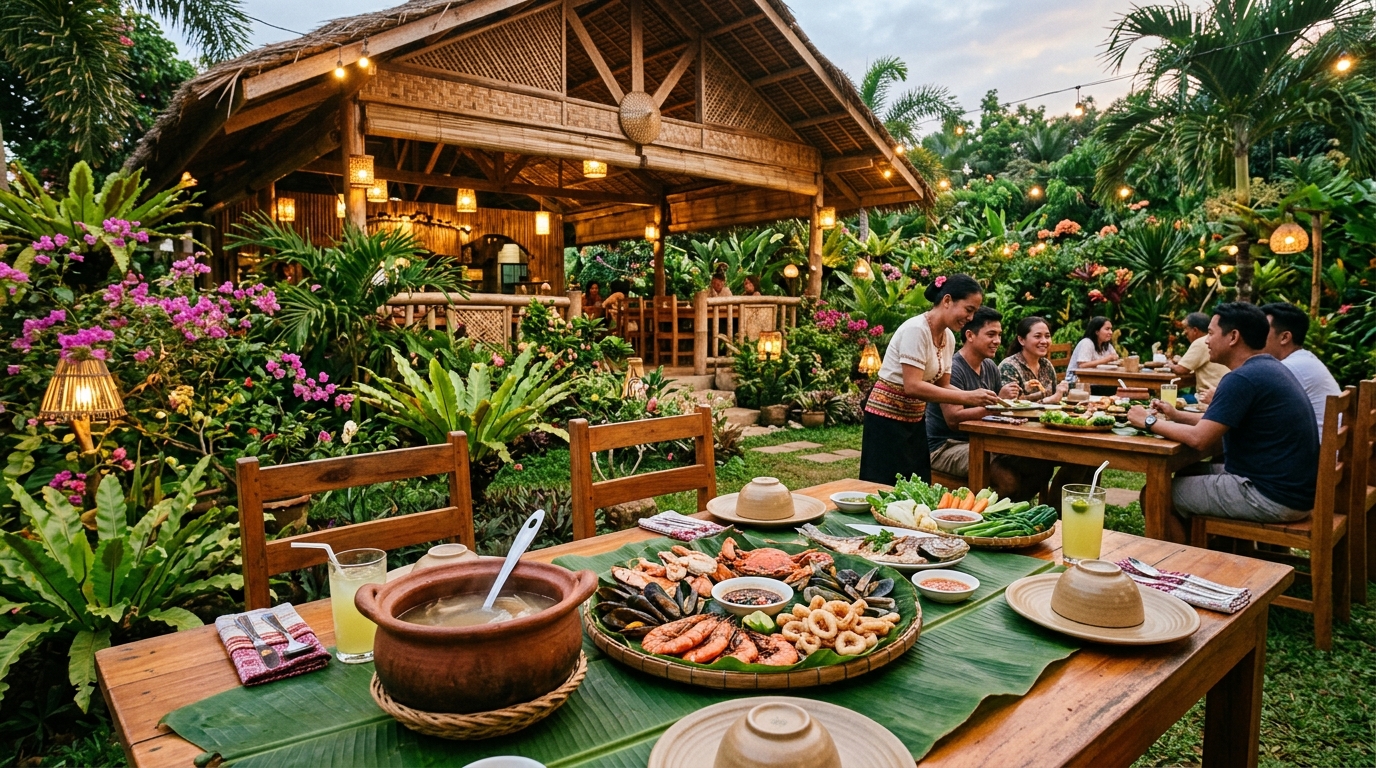
The defining charm of Hapag in mid-2026 is its layout, which eschews traditional indoor seating for a collection of charming outdoor wooden huts surrounded by tropical greenery. This architectural choice embraces the classic probinsya, lifestyle, allowing families and large groups to enjoy their meals in private, breezy pockets of nature. In the intense heat of late May, these native pavilions offer a refreshing, shaded sanctuary where the atmosphere is loud with laughter and the clinking of glasses the hallmark of a true Filipino feast.
The Feast of Sea and Forest
Hapag’s menu is an expansive map of national and regional flavors, but it is most famous for its specialty seafood and its nod to the local Balinsasayaw (Swiftlet) bird's nest soup. In May 2026, verification from frequent diners highlights their Sizzling Seafood Sisig and Grilled Liempo as absolute must-orders, delivering a smoky, rich taste profile that pairs perfectly with garlic mountain rice. For travelers looking to sample a bit of everything, their communal Bilao platters offer a curated spread of crabs, shrimp, grilled fish, and local sides, celebrating the absolute best of the Sulu Sea.
A 2026 Anchor for Post-Tour Recovery
Because of its central location in the capital, Hapag by Balinsasayaw has become the unofficial "recovery hub" for travelers returning from grueling day trips to the Underground River or Honda Bay. The restaurant’s relaxed, unpretentious vibe encourages people to sit back and swap travel stories over refreshing glasses of ice-cold calamansi juice or local halo-halo. It acts less like a commercial eatery and more like a welcoming cultural society, ensuring that anyone who pulls up a chair leaves with a full stomach and a genuine taste of Palawan’s legendary warmth.