TAGUIG CITY — Bonifacio Global City has long understood that the foundation of a true destination is not measured in megapixels on a skyline, but in the decisions people make about where to spend their Saturday nights. Across the first half of 2026, those decisions are increasingly beginning and ending in BGC. The arrival of Smith & Wollensky—the 49-year-old, green-and-white American steakhouse that landed at The Finance Center as its first Southeast Asian address—has ignited a broader culinary moment that is less about any single restaurant and more about what happens when a business district decides to become something else entirely: a dining capital.
A Steakhouse Built on Ritual, Not Trend
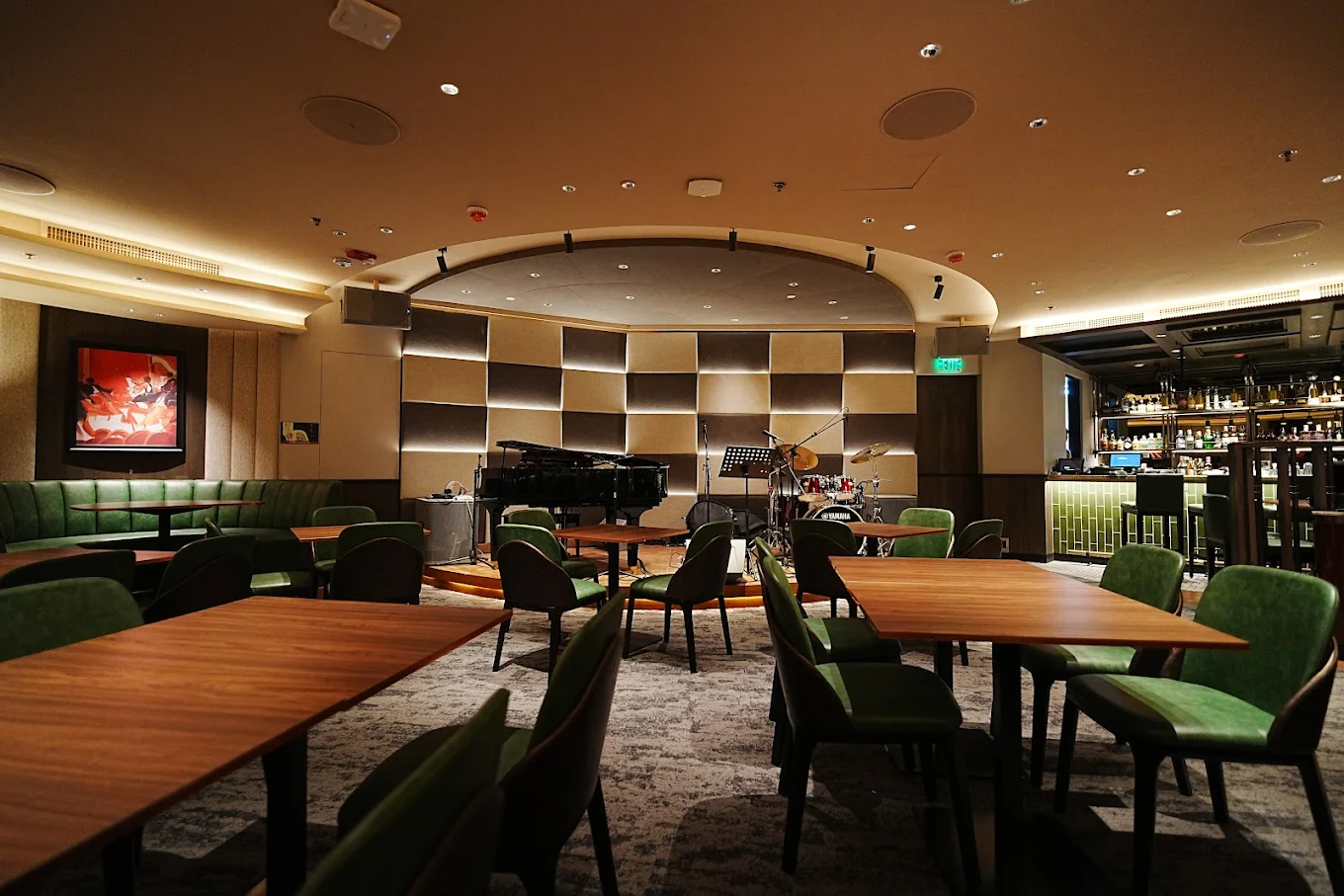
Smith & Wollensky opened its Philippine doors in July 2025, but its gravitational pull continues to define BGC's dining conversation well into 2026. Occupying the entire second floor of The Finance Center at 26th Street corner 9th Avenue, the restaurant operates in two distinct parts: a main dining room with six private chambers and a jazz bar that stays open until 2 a.m. on weekends. The split is as much philosophical as architectural. One side is for the meal; the other, for what comes after.
The kitchen is built around a single process that cannot be rushed. Every USDA Prime steak—from the 8-ounce filet mignon to the 44-ounce American Wagyu swinging tomahawk—spends 28 days in an in-house dry-aging room, losing moisture and concentrating flavor under conditions calibrated by butchers who have been with the brand for years. The beef arrives chilled from Double R Ranch and Snake River Farms, never frozen. "We truly control the quality that is delivered on that plate, that not every steakhouse can do," said Kim Dinsmoore, U.S. Executive Vice President of Operations, during the restaurant's launch.
What separates Smith & Wollensky from many international chains that land in Manila is a willingness to adapt without diluting. Culinary Director for Asia Chef Cale Jackson and his team developed three rice dishes exclusively for the BGC menu: Bone Marrow Rice built on Cajun dirty rice, Spanish Rice with chorizo that nods toward paella, and a decadent Foie Gras Rice with seared foie gras lobe. At the bar, Sizzling Wagyu Beef Tongue Sisig turns a Filipino classic into a late-night companion for the restaurant's award-winning California Cabernet list. Staff uniforms were tailored by Rajo Laurel. The art was curated by Jed Yabut. The result feels less like a transplant and more like a conversation.
Jazz, Privacy, and the Architecture of an Evening
Smith & Wollensky Manila was brought to the Philippines by Bayshore Pacific Restaurants Inc. (BPRI), led by Canadian restaurateur John Hardyment. "I arrived in Asia 47 years ago and I've been involved in the food and beverage business for about 35 years," Hardyment said. "Recently, we decided to come to the Philippines where we're very excited to be opening one of our new Smith & Wollensky's in Manila here at The Finance Center, one of the best buildings in the city."
The restaurant's private dining rooms accommodate groups of up to 50, making it a credible venue for corporate dinners and celebrations that previously might have defaulted to a hotel ballroom. The jazz bar, meanwhile, hosts up to 70 guests and follows a lineage the brand has cultivated across its Asian locations. The interplay between the two spaces—dinner flowing into music, conversation extending past midnight—replicates a rhythm that Manhattan diners have understood since 1977 but that Manila's dining culture is only now embracing at scale.
A Borough in Full Bloom
Smith & Wollensky's gravitational pull has not arrived in isolation. Across BGC, a cohort of new openings is filling in the gaps between the steakhouse headliners. Flour Pot, Chef Rhea Sycip's bistro at Verve Tower, opened in December 2025 and has since become a breakfast-through-dinner fixture grounded in Philippine ingredients sourced from Benguet, Tarlac, and the Mountain Province. Scratch, in collaboration with Nolita Joe's, launched officially on February 16, 2026, serving smash burgers and New York-style pizza under one roof. On the theatrical end, Medusa at The Palace debuted with a kinetic ceiling installation and a cocktail program designed for the late-night set, while the BGC branch of June Eatery introduced an all-day concept that shifts mood as the hours pass.
Collectively, these openings signal something more consequential than a busy restaurant season. They mark BGC's transition from a district where people work and occasionally dine to a place where dining is the primary reason to arrive. The finance professionals who fill The Finance Center by day are now joined by a different crowd after sunset—couples splitting a dry-aged bone-in New York strip, friends ordering a second round at the jazz bar, families settling into bright corner booths at Flour Pot. The borough is becoming a borough in the true urban sense: lived-in, layered, and alive well past the closing bell.