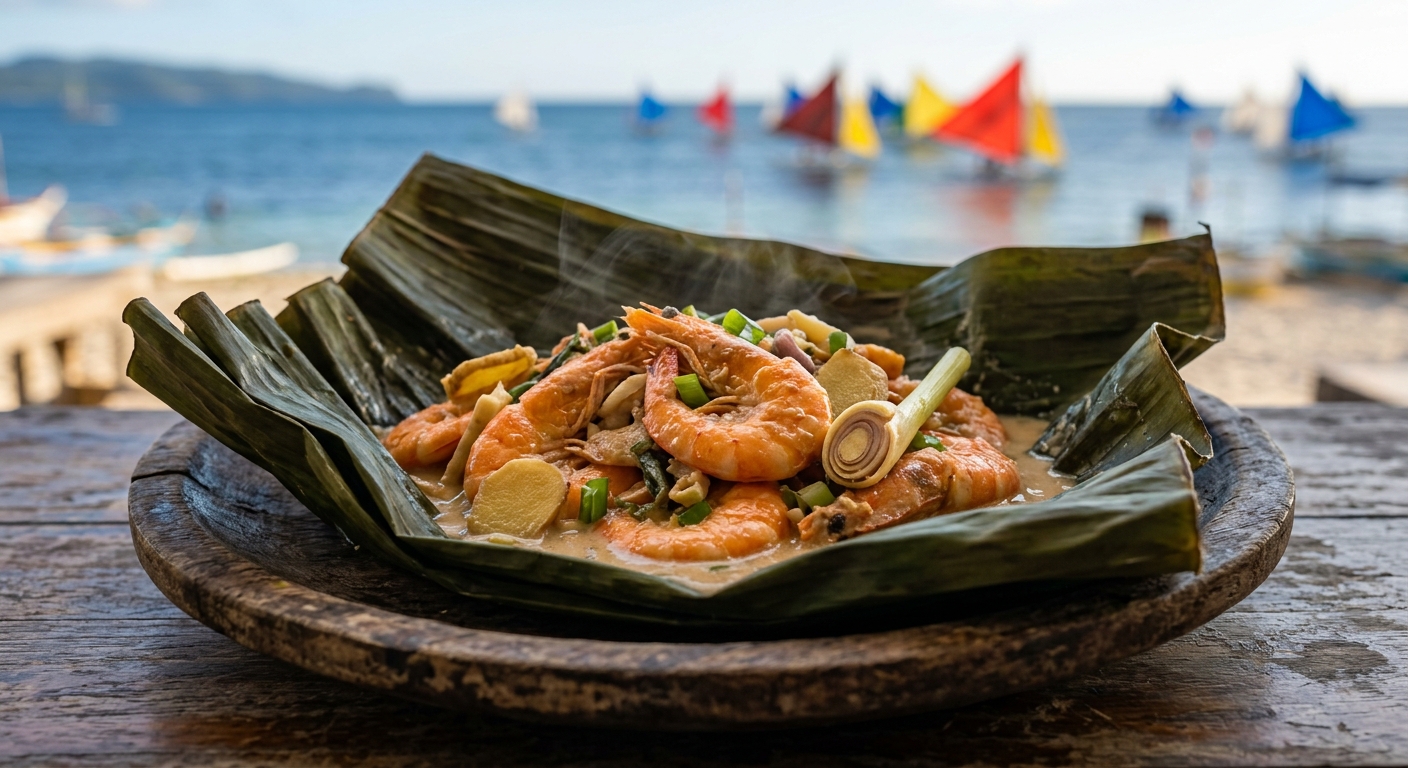
ILOILO CITY — Along the shores of Villa Beach, the colorful sails of paraws signal more than just a race. They mark the celebration of Bugay sang Baybay—the gifts of the sea—and at the heart of the feast sits Tinuom, the traditional Ilonggo dish that captures the ocean’s bounty wrapped in leaves.
A Cooking Method Rooted in Ingenuity
Tinuom, derived from the local word “tuom” meaning to wrap, is not a single recipe but an entire cooking philosophy. Ingredients are enclosed in banana or taro leaves, then steamed or simmered until the flavors meld into something deeply aromatic. The method works equally well with native chicken, mushrooms, pork, or the region’s abundant seafood.
For generations, Ilonggo farmers carried tinuom parcels to the fields, their lunch kept warm and moist by the leaf wrappings. This practical origin gave birth to one of Iloilo’s most beloved culinary traditions, now celebrated far beyond the farmlands. The technique transforms simple ingredients into dishes that are both rustic and refined.
Seafood Versions Fit for the Festival
During the annual Paraw Regatta Festival, the spotlight falls on tinuom’s seafood variations. Tinuom na hipon wraps fresh prawns in banana leaves and cooks them in delicately seasoned coconut milk. Tinuom nga bangrus features milkfish slices with ginger, tomatoes, and lemongrass, all simmered in rice water until tender.
The closely related tinumok uses whole taro leaves to encase a mixture of shrimp, flaked fish, and young coconut meat, then boils the bundles in rich coconut cream. These dishes embody the festival’s theme, transforming the day’s catch into edible treasures. Visitors tasting them for the first time often marvel at how the leaf wrapping intensifies every flavor.
Cabatuan: The Epicenter of Tinuom Culture
The town of Cabatuan has become synonymous with tinuom, particularly the native chicken version that put it on the culinary map. Leah’s Tinuom, a humble eatery founded in the 1950s, still serves the original recipe handed down through three generations. Pilgrims of food travel from Iloilo City and beyond just to experience that single dish.
Near the Iloilo International Airport, Jeara’s Tinu-om offers another beloved rendition. The town even hosts its own Tinuom Festival, weaving the dish into the larger Kasadyahan celebrations. These culinary landmarks prove that a simple wrapped meal can anchor an entire community’s tourism identity.
An Invitation to Taste Heritage
For travelers, tinuom represents more than sustenance. It is an edible lesson in Ilonggo resourcefulness, a sensory encounter with banana leaves, coconut milk, and the freshest catch. Coastal resorts and inland eateries alike proudly include the dish on their menus, knowing it tells a story no souvenir can match.
Tourism officials have documented tinuom as one of over forty heritage dishes worth preserving. Each parcel served is a living museum piece, cooked the way grandmothers taught their daughters. Visitors who sit down to unwrap a steaming bundle of tinuom na hipon or tinumok connect directly with centuries of culinary wisdom.
A Future Wrapped in Tradition
As Iloilo continues to draw global attention for its gastronomy, tinuom stands poised to become a signature export. Cooking classes now teach the wrapping technique, and food tours include stops at Cabatuan’s legendary carinderias. The Paraw Regatta remains the most spectacular showcase, where seafood tinuom celebrates both maritime skill and kitchen craft.
The dish that once sustained farmers now welcomes tourists, chefs, and cultural explorers. By preserving the simple act of wrapping food in leaves, Iloilo safeguards a tradition that speaks to sustainability, creativity, and a deep love for the sea’s gifts.