



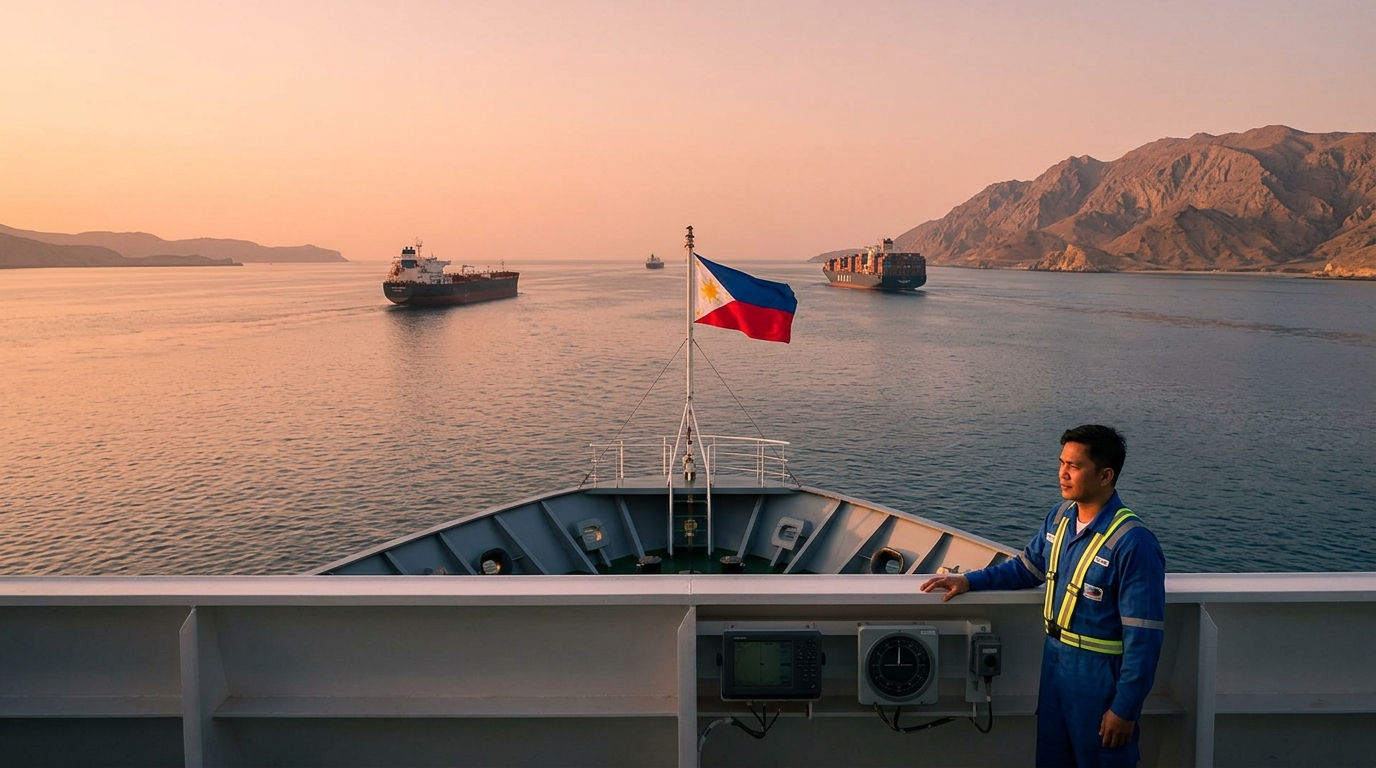
MANILA – Iran has committed to ensuring the “safe, unhindered, and expeditious” passage of Philippine-flagged vessels, energy shipments, and all Filipino seafarers through the strategic Strait of Hormuz, the Department of Foreign Affairs (DFA) announced Thursday.
This development marks a remarkable achievement for the Philippines because it is a country which heavily depends on Middle Eastern countries for meeting its energy demands. According to the DFA, the assurances made by Iran do not only ensure safety to the Filipinos sailing through the dangerous waters, but it will also be a guarantee for energy security for the country.
“Given that the Philippines imports the majority of its energy requirements from the Middle East, these assurances from Iran will greatly facilitate the steady delivery of critical oil and fertilizer supplies to the Philippines,” the DFA said.
No Toll Fees, DFA Confirms
Amid reports that Iran was planning to impose a toll fee of at least USD 1 per barrel—equivalent to an estimated USD 2 million per vessel transiting the strait—DFA spokesperson Analyn Ratonel categorically denied such charges.
“On question regarding the reported toll fee, there is no toll fee,” Ratonel said in a text message to reporters.
Both foreign ministers affirmed their commitment to “maintaining excellent relations and achieving lasting peace through continued dialogue and diplomacy,” the DFA added.
Emergency Declaration Preceded Talks
The initiative was made after the instructions issued by President Ferdinand R. Marcos Jr. that directed the DFA to begin negotiations with Tehran to facilitate the safe transit of Filipino ships in the Strait of Hormuz.
The strait has become a critical chokepoint after Tehran imposed a de facto blockade in response to joint military operations by Israel and the United States on Feb. 28, which targeted Iranian nuclear sites and resulted in the death of Supreme Leader Ayatollah Ali Khamenei.
This blockade has caused a shock in the international market of energy, leading to an increase in the cost of fuel and the necessity for the governments to implement austerity policies. Indeed, last week President Marcos declared a state of national energy emergency in order to prevent possible problems with the provision of fuel.
The assurances from Iran do bring some relief, however, according to many experts, the current geopolitical situation is still quite difficult.
