ILOILO CITY — A short jeepney ride north of the city center delivers travelers to a district where the skyline belongs not to condominiums but to a single, sepia-toned belfry standing alone across a busy street. This is Jaro Cathedral—formally the Jaro Metropolitan Cathedral of St. Elizabeth of Hungary and the National Shrine of Our Lady of Candles—and its detached bell tower is the first clue that the visitor has entered a place where architecture, faith, and history refuse to be separated. Built in 1864 and reconstructed after multiple earthquakes, the cathedral anchors the Jaro Plaza Complex, a Cultural Heritage Tourism Zone declared under Republic Act No. 10555. For the traveler in 2026, it offers something increasingly rare among Philippine heritage churches: a climbable tower with panoramic district views, a shrine to a canonically crowned Marian image, and a living tradition that draws as many as 18,000 pilgrims to its streets each February.
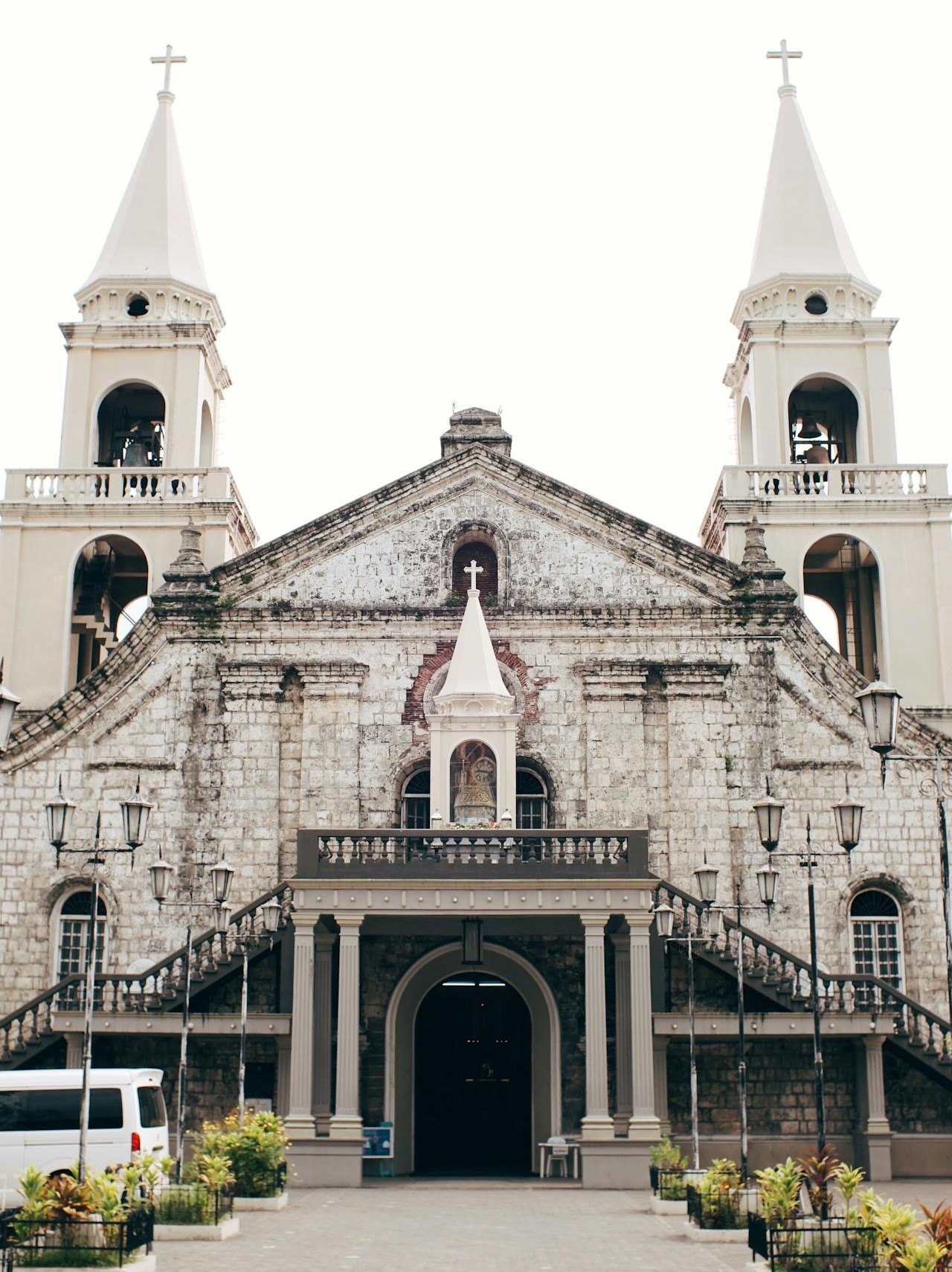
The cathedral's exterior is Romanesque Revival, a style distinguished by its semi-circular arches and robust, grounded proportions. An external staircase sweeps up the facade, lending the entrance a theatrical quality that photographs translate effortlessly into travel album material. Inside, the nave opens into a space of quiet grandeur, lined with biblical paintings and anchored by a modern crucifix. But the visitor's eye is inevitably drawn upward, toward the easternmost end of the upper facade, where the image of Nuestra Señora de la Candelaria rests on an outdoor balcony. This placement is a rarity in Philippine church architecture—an enshrined Marian figure visible from the nave, positioned as if the Virgin herself is both part of the congregation and looking beyond it.
A Bell Tower That Refused to Fall
The Jaro Belfry, standing alone across the street from the main church, tells a story of resilience that predates any travel guide. Damaged by earthquakes—most severely in 1948—the original attached tower was reconstructed at a safe distance from the cathedral, creating an architectural layout rarely seen in Philippine religious structures. Today, the restored belfry features statues symbolizing Temperance, Prudence, Fortitude, and Justice, and accredited guides lead visitors to the top for panoramic views of Jaro district.
What the visitor sees from that vantage point is a district that has preserved its heritage without freezing it. Jaro Plaza, shaded by mature trees, surrounds the belfry with benches and walking paths. Directly adjacent, the Jaro Evangelical Church—one of the oldest Baptist congregations in the Philippines—adds an ecumenical layer to the neighborhood's religious geography. Nearby, the Sanson y Montinola Antillan Ancestral House, a heritage residence dating to the late 19th century, opens its doors to guests seeking a deeper immersion into the district's past.
The Only Marian Image Crowned by a Pope in the Philippines
Jaro Cathedral's deepest claim to pilgrimage status rests on the image of Our Lady of Candles. In 1981, Pope John Paul II personally crowned the statue during his apostolic visit to Iloilo, making it the only Marian image in the Philippines and in Asia to receive a canonical coronation directly from a pope. The Catholic Bishops' Conference of the Philippines formally declared the cathedral a National Shrine in 2012, cementing its status as the spiritual heart of Western Visayas.
During the Feast of Nuestra Señora de la Candelaria every February 2, the cathedral draws between 15,000 and 18,000 devotees from across the region. In 2026, the city government suspended face-to-face classes in Jaro District under Executive Order No. 012 to accommodate the influx, while the Iloilo City Police deployed 149 personnel for security and traffic management. The novena masses began on January 24, and the traditional "perdon" candles—distinctively pink and sold at the Libreria Religious and Souvenir Shop inside the cathedral—were made available from January 26. Each candle carries a name rooted in the Spanish word for forgiveness, and devotees light them when seeking favors, expressing contrition, or praying for protection.
A Year-Round Destination Anchored in Faith and Heritage
For the traveler who cannot schedule a February visit, Jaro Cathedral's appeal endures across all twelve months. The best season for a visit runs from November through May, when the dry weather makes climbing the belfry comfortable and the afternoon light saturates the stone facade in gold. The cathedral is the designated starting point for Visita Iglesia routes across Iloilo City, a seven-church journey that the Philippine Information Agency documented in March 2026 as one of the most meaningful ways to experience the city during Holy Week.
The Living Heritage Museum Tour, launched by the Iloilo City MICE Alliance in May 2026, has further integrated the cathedral into a structured visitor itinerary that spans ten historic sites. Travelers who combine a morning at Jaro Cathedral with an afternoon at Molo Church, Calle Real, or the Iloilo River Esplanade can experience the arc of Ilonggo identity—from faith to commerce to ecology—in a single, unhurried day. The cathedral is free to enter, modest dress is required, and mass is celebrated regularly in Hiligaynon and English. For those who prefer a guided experience, the Heritage City Private Tour includes Jaro Cathedral alongside Casa Mariquit, Molo Mansion, and Molo Church. Whether you climb the belfry for the view, light a perdon candle for a prayer, or simply sit in the nave and watch the afternoon light move across the altar, the cathedral delivers what every authentic travel experience promises: a place where the past is still breathing.