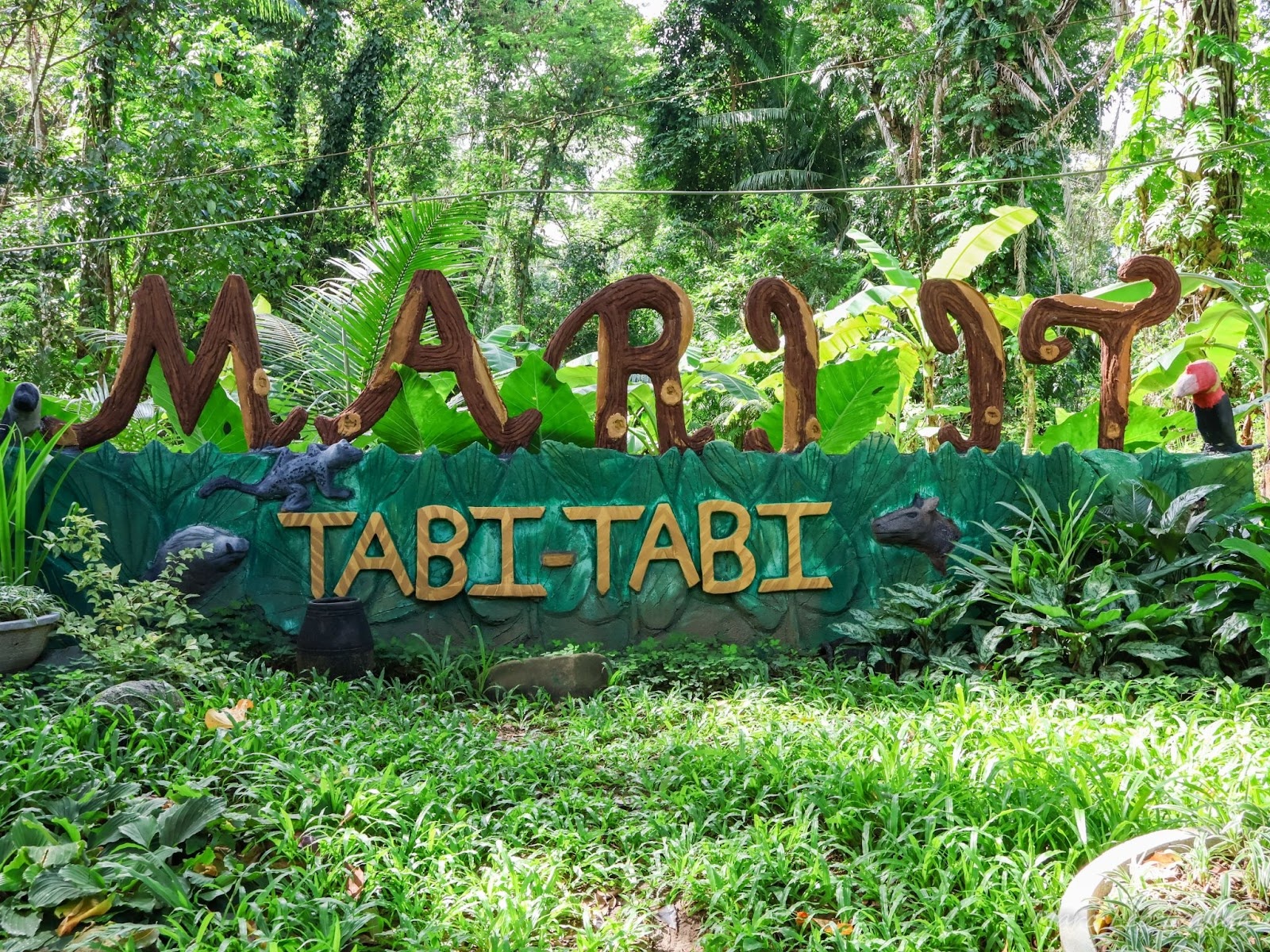
ILOILO — Sixteen kilometres from the town proper, past rolling sugarcane fields and narrow barangay roads, the air begins to change. It cools, thickens with the scent of damp earth and wild fruit, and carries sounds that most of Panay has forgotten: the low grunt of a Visayan warty pig, the sharp call of a writhed hornbill, the rustle of a spotted deer moving through undergrowth. This is Mari‑it Wildlife Conservation & Eco Park, a 1,000‑hectare protected area within the 3,000‑hectare campus of West Visayas State University–College of Agriculture and Forestry in Barangay Jayubo.
In March 2026, the Department of Tourism and the Department of Environment and Natural Resources formally certified Mari‑it as one of 12 new ecotourism sites added to the Western Visayas Ecotourism Loop, a network of destinations designed to promote nature‑based, community‑driven tourism while ensuring environmental conservation. The certification, announced during the first‑semester Regional Ecotourism Committee meeting at Days Hotel Iloilo, represents the culmination of years of effort by Lambunao’s local government, WVSU‑CAF, and conservation partners to transform a research and rescue facility into a destination that welcomes visitors without compromising its primary mission: keeping some of the Philippines’ rarest animals alive.
A Conservation Mission Born from a French Partnership
Mari‑it was not originally intended for tourists. Established in 1993 through an agreement between the DENR and the Mulhouse Zoo of France, the facility was built to conserve the Visayan spotted deer, a species already in alarming decline across the Visayas. Its name comes from mari‑it, an indigenous belief rooted in animism that holds every facet of nature is inhabited by a taglugar—a spirit guardian that compels locals to respect and care for the environment.
That philosophy now governs a facility unlike any other on Panay. Mari‑it is the first conservation, breeding, and rescue park on the island, and it functions simultaneously as a captive breeding centre, a rescue facility for confiscated wildlife, and, since the 2026 certification, a formal ecotourism destination. The park’s scope has expanded far beyond deer. Today, its forested enclosures house 20 endangered Visayan spotted deer, 11 critically endangered Visayan warty pigs, five vulnerable Visayan leopard cats, two Panay cloud rats, and 16 Visayan writhed hornbills—the world’s second most critically endangered hornbill.
The park’s veterinarian, Dr. JB Ian Bullo, has long argued that Mari‑it’s environment is almost ideal for hornbill conservation. “Birds are supposed to be at mid‑elevation,” he said. “This area is in mid‑elevation. It is almost ideal.” Yet breeding the writhed hornbill in captivity has proven extraordinarily difficult. The last successful breeding occurred 14 years ago. Hornbills require a diet rich in carotene, vitamin C, and carbohydrates, supplemented with live mice, crickets, and worms. Without live food, they will not breed. If a female senses insufficient nutrition, she aborts her eggs—a survival mechanism that has frustrated years of careful intervention.
The LGU Steps In: A Roadmap for Agro‑Ecotourism
On 19 February 2026, just weeks before the certification was announced, representatives from the Lambunao LGU and WVSU‑CAF met at the Lambunao Government Centre to review the salient points of a Memorandum of Agreement for the joint management and development of Mari‑it. The meeting, led by Campus Administrator Dr. Jose Ariel A. Tutor and attended by LGU department heads, was the latest in a series of collaborative sessions aimed at finalising a formal partnership.
The venture, as described by the LGU, “envisions boosting local tourism, promoting environmental conservation, and creating additional livelihood opportunities for the Lambunaonons, especially for those who are living near the area.” The partnership builds on a joint venture that has existed for over seven years. Under the arrangement, the LGU has provided annual funding for physical improvements—trails, viewing areas, basic visitor infrastructure—while WVSU‑CAF provides the land, the animals, and the scientific expertise. Lambunao Mayor Reynor Gonzales, speaking some years earlier, acknowledged that the funds allocated were “not enough,” but expressed hope that eco‑tourism certification would eventually make the park self‑sustaining.
The February 2026 MOA meeting signals a new level of institutional commitment. Both parties are now set to meet for a final presentation before the execution of an LGU‑funded project that would further develop Mari‑it as a premier destination for agro‑ecotourism—a model that combines wildlife conservation with agricultural demonstration, educational tourism, and community‑led enterprise.
What the 2026 Certification Means for Western Visayas
Mari‑it’s inclusion in the Western Visayas Ecotourism Loop is part of a broader regional strategy to diversify the travel portfolio beyond conventional beach destinations. The 12 new sites—three in Iloilo, three in Capiz, four in Antique, and two in Aklan—represent a mix of coastal mangrove protection, inland water systems, mountain ecoparks, and wildlife conservation areas.
DENR Regional Executive Director Raul L. Lorilla framed the certification as a mandate to balance conservation with equitable access. “We are blessed to have a massive lush green and vibrant blue resources that surrounds us,” he said. “With the approval of this new 12 sites, we are fulfilling the DENR’s mandate to provide equitable access to our country’s beauty while ensuring that every visitor becomes a partner in conservation.” The sites undergo a rigorous assessment on ecological sustainability, visitor safety, and community participation before qualifying.
An Invitation to Walk Where the Visayan Spotted Deer Walks
Visiting Mari‑it in 2026 is not a zoo experience. It is a journey into a working conservation facility where the animals are not on display for entertainment but are residents of a protected landscape that visitors are permitted to enter. The 1,000‑hectare park also encompasses two waterfalls—Matillano and Inas Falls—and a canopy of fruit‑bearing trees that feed both wildlife and the communities that harvest them.
For the traveler, the park offers something increasingly rare: the chance to see Philippine endemic species in a setting that approximates their natural habitat, supported by a management model that channels tourism revenue directly into animal care. Each entrance fee, each guided tour, each donation feeds a hornbill its standard meal of three fruits per day, provides live chicks to a leopard cat, and inches the park closer to the day when a writhed hornbill chick hatches successfully in captivity for the first time in over a decade. Mari‑it, in the end, is not just a place to visit. It is a place to invest in—with every kilometre driven up the Lambunao road, and every peso spent at the gate.