



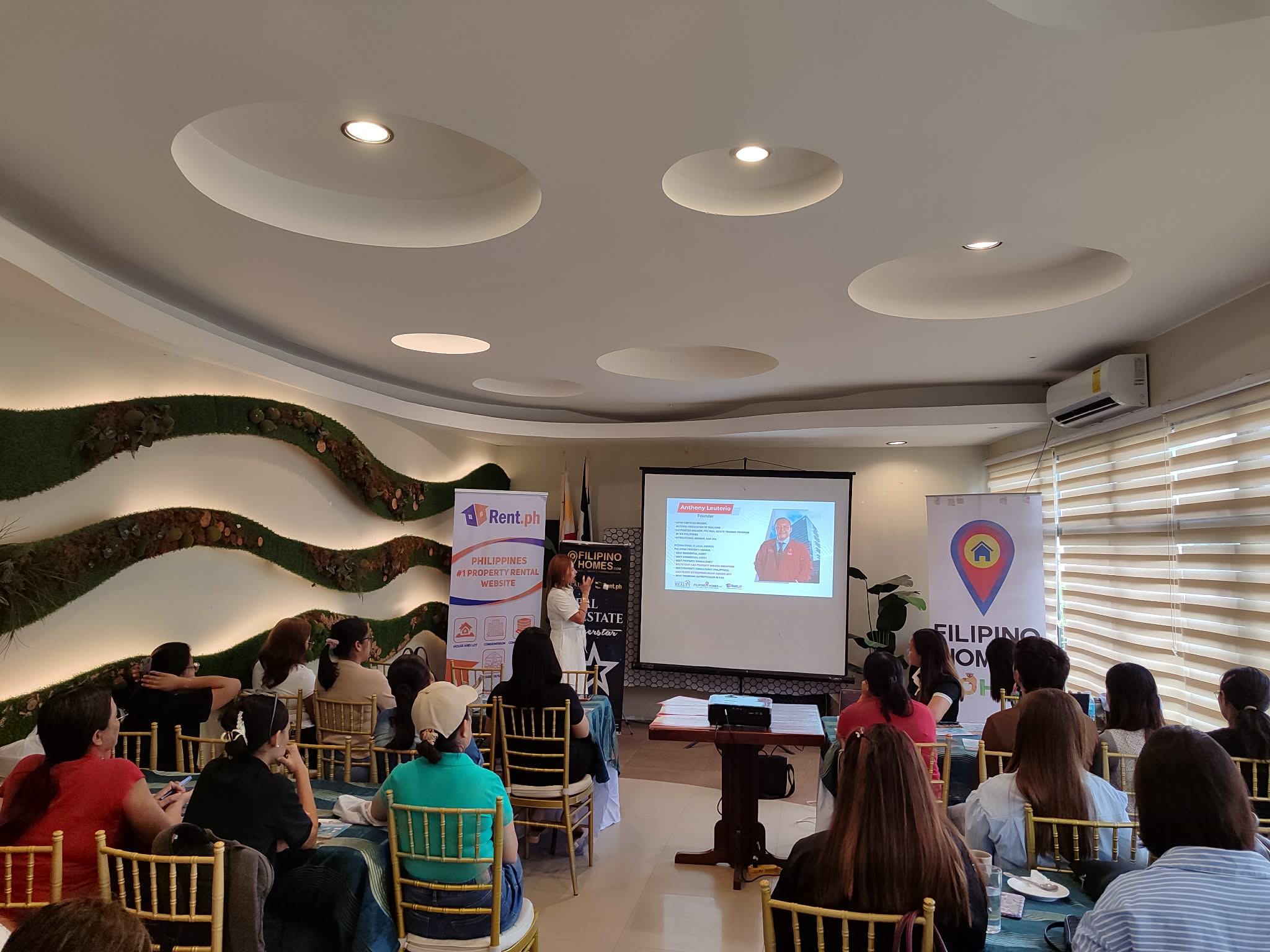
The real estate landscape in the Philippines is getting more crowded—and that’s a good thing, if you ask the team at Filipino Homes.
Last week, the country’s largest real estate network held another one of its New Agents Orientations (NAO) in Bohol, gathering fresh faces eager to break into the property industry. These events have become a staple for the company, happening regularly across provinces as they onboard new blood into their growing army of brokers and agents.
For the uninitiated, Filipino Homes isn’t your typical real estate brokerage. Founded by Anthony Gerald O. Leuterio, a Cebuano entrepreneur who started in a tiny 16-square-meter office, the company has ballooned into a network of over 100 offices nationwide with more than 35,000 agents. Leuterio, who was named 2024 International Realtor of the Year by the National Association of Realtors, has built a brand that’s hard to miss, whether it’s through their aggressive social media presence or their distinctive red-and-white signages dotting subdivisions from Luzon to Mindanao.
So what happens in these orientations? It’s not just the usual "welcome to the company" spiel. Based on how these events typically run, new agents get a crash course on how Filipino Homes operates, lead generation strategies, and the ins and outs of working with developers. Given that the company has over 600 developer partners and 1,000 projects in its portfolio, there’s a lot to cover.
For someone walking in without a real estate background, which is most new agents. It can feel like drinking from a firehose. But that’s precisely the point.
The industry has a steep learning curve. According to industry data, a significant number of new agents wash out within their first few years if they don’t get proper support. That’s where structured onboarding programs like this come in. Instead of the old-school "sink or swim" approach, brokerages that invest in training early tend to see better retention and faster productivity from their recruits .
Leuterio himself knows the value of showing up prepared. A Computer Science graduate from the University of San Jose-Recoletos who later took strategy courses at Harvard Business School Online, he’s big on continuous learning. It’s probably why Filipino Homes puts such an emphasis on gathering new agents in rooms like the one in Bohol last week—to drill the fundamentals before letting them loose in the field.
Why This Matters
If you’ve been scrolling through social media lately, you’ve probably noticed more people posting about real estate, condo launches, house-and-lot preselling, "pasalo" opportunities. That’s not by accident.
Real estate as a career has been gaining traction, especially as more Filipinos look for ways to diversify income outside the traditional 9-to-5. And with the market constantly shifting, interest rates, inflation, overseas remittances, having properly trained agents isn’t just good for business; it’s good for buyers and sellers who need competent guidance.
The fact that Filipino Homes is holding NAOs in multiple locations signals something else: opportunity. Whether it’s Cebu, Davao, or a province like Bohol, the company is casting a wide net. For someone on the fence about getting into real estate, seeing these events pop up left and right might be the nudge they need.
A Bigger Picture
This isn’t unique to Filipino Homes, either. Across the industry, brokerages are waking up to the reality that recruiting is one thing, but keeping agents productive requires a system . The days of handing someone a license and a business card and saying "good luck" are fading. Structured training, mentorship, and ongoing education are becoming the norm—not just in the Philippines but globally.
New agents arriving in Bohol last week face tough months ahead. Though property sales rely heavily on personal connections, building trust doesn’t happen overnight. Yet judging by how many attended the welcome sessions, effort isn’t in short supply. Despite slow beginnings, persistence might just open doors.
Leuterio often tells new buyers and real estate professionals something simple - start by understanding your actual goals, then find mentors who offer direction. When so much around you shifts unpredictably, sharp focus becomes a quiet advantage worth having.
