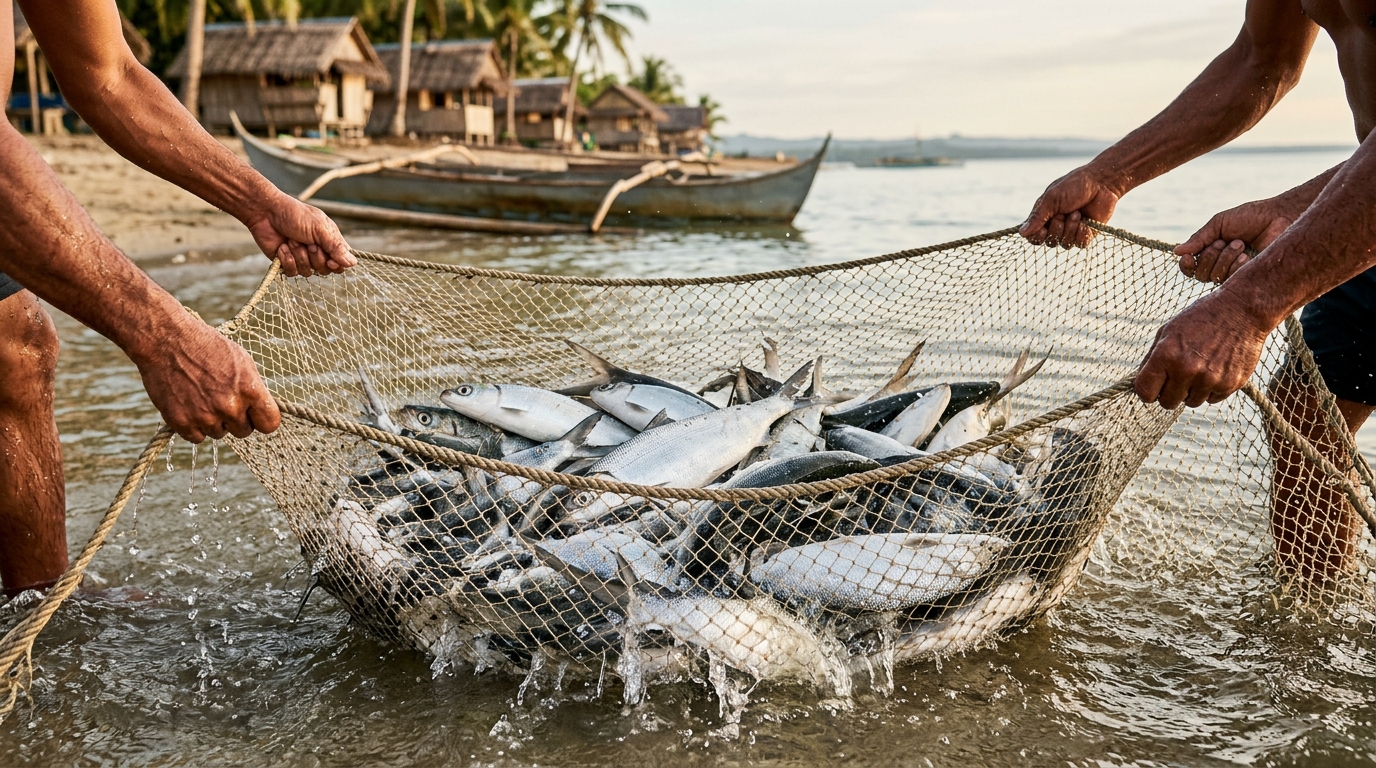
LAPU-LAPU CITY, CEBU — On the morning of May 17, 2026, 20 fisherfolk in Barangay San Vicente hauled in a harvest that represented more than fish. It represented the culmination of 15 months of effort under Project LAWA at BINHI, the Department of Social Welfare and Development’s flagship climate‑resilience program. The first net brought 240 kilos of bangus. The next day, another 252 kilos.
The project began on February 1, 2026, with 6,000 bangus fingerlings provided by the Lapu‑Lapu City Government and DSWD‑7. The Fisherfolk of San Vicente Association, led by president Veleriano Soon, raised them to market size. Their combined harvest generated total sales of ₱100,400, with another batch expected to be harvested in the coming week.
A Partnership That Builds Food Security
The aquaculture initiative was implemented through close coordination between DSWD‑7, the City Social Welfare and Development Office, and the City Agriculture and Fishery Office. DSWD‑7 representatives Irene Montejo and Cristine Tagsip were present during the harvest alongside CSWDO and CAFO teams.
Mayor Cindi King‑Chan commended the beneficiaries for turning government support into measurable results. “This achievement reflects the hard work and dedication of our fisherfolk and proves that with proper support and cooperation, we can continue strengthening food security and sustainable livelihoods in our coastal communities,” she said.
A National Program Rooted in Local Results
Project LAWA at BINHI is DSWD’s integrated response to climate change. LAWA (Local Adaptation to Water Access) improves community water access, while BINHI (Building and Innovating Nutritious Harvest Initiatives) strengthens food production. In 2026, DSWD is targeting the program across 2,549 barangays in 450 municipalities nationwide.
The Olango Island harvest is a tangible return on that investment: 20 families now have income, a community has proven its capacity, and the waters off San Vicente are productive. The project is not an end but a beginning—and the fish are still growing.