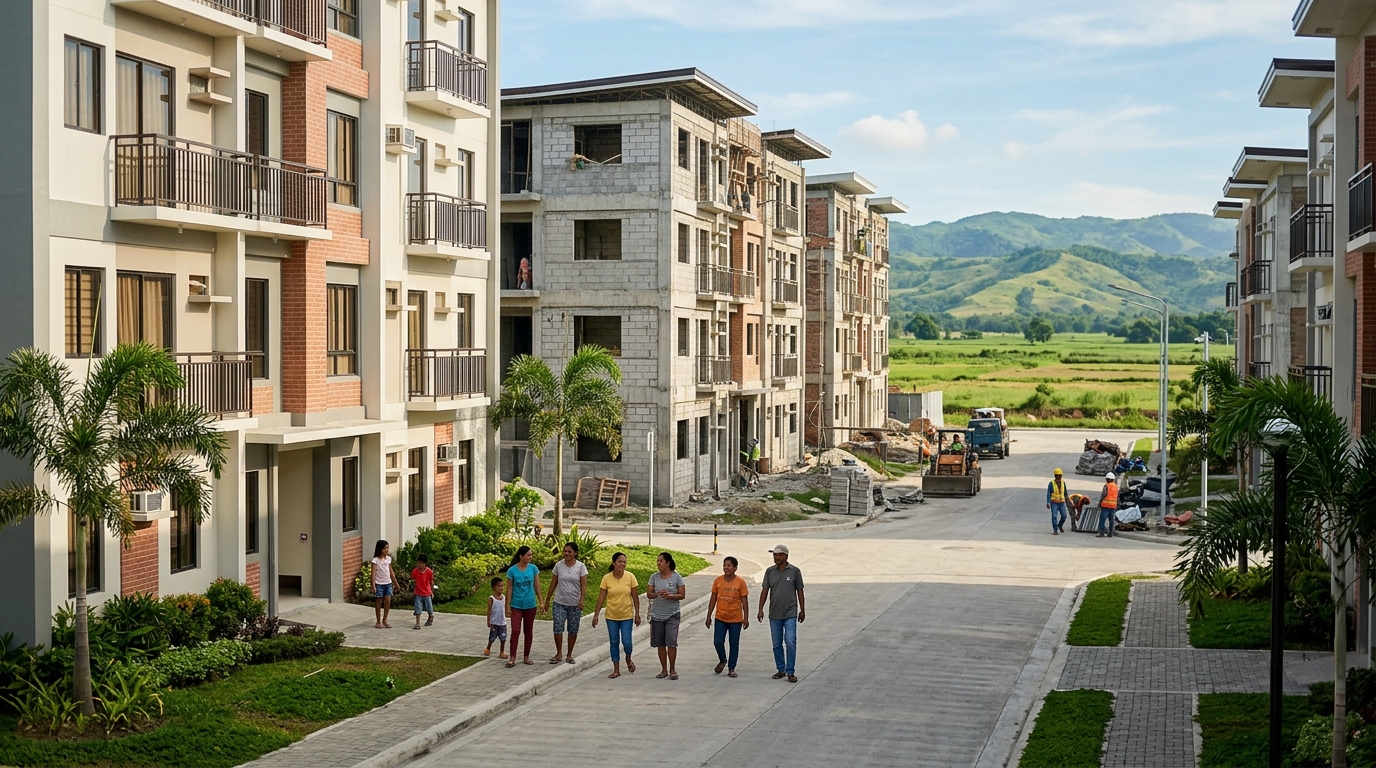
PALAYAN CITY, NUEVA ECIJA — President Ferdinand R. Marcos Jr. walked through completed residential buildings, a central park, and a clubhouse on April 23, 2026, inspecting a project that three years earlier had been little more than a groundbreaking ceremony and a set of architectural renderings. The Palayan City Township Project in Barangay Atate has now transitioned from construction site to living community, with families moving into condominium-type units and a growing sense of neighborhood identity taking root across the 23-hectare development.
The President was accompanied by Department of Human Settlements and Urban Development (DHSUD) Secretary Jose Ramon Aliling, Palayan City Mayor Viandrei Nicole Cuevas, and other government officials. Their walkthrough covered not just residential buildings but key amenities including the central park and clubhouse, after which Marcos interacted directly with early homeowners. The visit underscored a broader narrative: the government's flagship housing program is no longer a promise but a place where people sleep, cook, raise children, and build futures.
A Township Designed for Dignity, Not Just Shelter
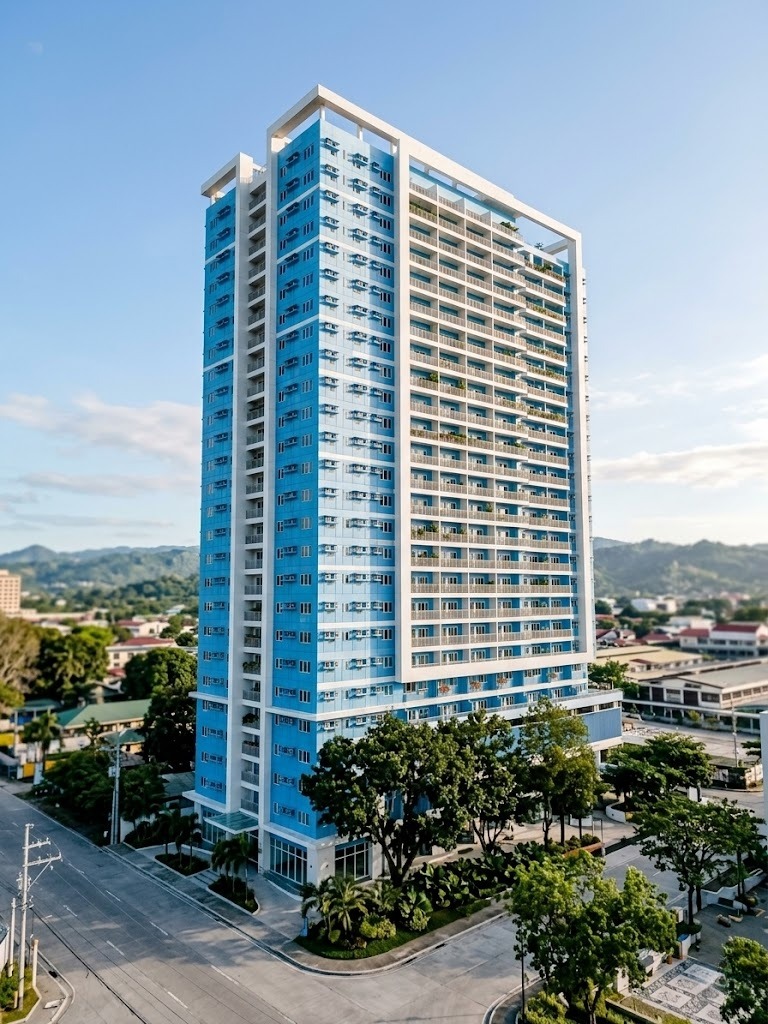
Spanning 23 hectares, the Palayan City Township is conceived as a vertical housing community integrating 24 residential buildings with open spaces and shared facilities. Upon full completion, it will accommodate approximately 22,596 beneficiaries. The design moves beyond the utilitarian model of socialized housing, incorporating elements typically associated with private subdivisions: landscaped parks, recreational amenities, and communal gathering spaces that encourage interaction among residents.
Units are priced at roughly PhP1.3 million for a 29-square-meter floor area, offered with no down payment and monthly amortization ranging from PhP3,500 to PhP4,000. This pricing structure places homeownership within reach of minimum-wage earners, a demographic historically excluded from the property market. Applications remain open to qualified residents of Palayan City as well as interested families from other areas, reflecting an inclusive approach that DHSUD has embedded into the broader Expanded Pambansang Pabahay para sa Pilipino (4PH) Program.
Secretary Aliling captured the philosophy behind the project during the inspection. "Tatlong taon mula nang simulan itong proyekto, malinaw na ang direksyon—unti-unti nang nabubuo ang komunidad, at nakikita na natin ang tunay na bunga ng programa," he said. "Hindi lang ito pabahay. Ito ay pagbubuo ng komunidad kung saan may dignidad, seguridad, at pag-asa ang bawat pamilyang Pilipino."
Real Faces Behind the Real Estate Numbers
The most compelling evidence of the township's success lies not in square-meter calculations but in the testimonials of its first residents. Alexander Punsalan Driz, a 55-year-old public high school teacher from Zaragoza, Nueva Ecija, was among the earliest beneficiaries. "Napakaswerte namin bilang mga guro na nabigyan ng pagkakataon na magkaroon ng sariling bahay. Safe na, maayos pa," he said. Despite being offered a shorter 15-year payment term due to his age, Driz expressed gratitude for the program's affordability, noting that even at PhP8,000 monthly, the amortization was manageable.
Donna Ramos, a 39-year-old fish trader, described how the program changed her family's circumstances after years of uncertainty. The land her family previously occupied was not theirs, leaving them vulnerable to displacement. "Ito po kasing pagkakapunta namin dito is malaki siyang impact sa amin dahil kasi 'yung dati namin tirahan hindi naman sa amin 'yung lupa. Pero ito kasi, masasabi namin sa amin na," she shared. For Elsa Evangelista, a 28-year-old public school teacher, the program represents both stability and peace of mind, particularly meaningful for minimum-wage earners who struggle to save while renting.
Vincent Geronimo, a 26-year-old medical technologist, emphasized the program's accessibility for ordinary working Filipinos. "Big help po siya para 'yung mga normal Filipinos, hindi ganoong kabigat magkaroon ng own place mo na tatawagin mong home," he said. Charushin Tolentino, a 38-year-old government employee, highlighted a different dimension: the township enabled her to live with her parents, reuniting her family under one roof—a housing outcome that transcends pure economics.
National Ambitions Anchored in Local Success
The Palayan City Township forms the leading edge of an ambitious national housing agenda. The Expanded 4PH program targets the construction of one million homes annually from 2023 to 2028, aiming to reduce the country's 6.5 million housing backlog while generating approximately 1.7 million jobs each year. The program has broadened its reach across Luzon, with housing fairs in Central and Southern Luzon collectively showcasing more than 40,000 socialized housing units from dozens of private developers.
The government has also expanded the program's scope to serve overseas Filipino workers, removing income bracket requirements and subsidizing interest rates. OFW beneficiaries under the expanded 4PH now pay only one percent interest for the first five years, with DHSUD shouldering the remaining two percent from the standard three percent rate. The Palayan City Township thus represents both a local triumph and a scalable model—proof that when government sets ambitious targets and follows through with execution, the distance between groundbreaking and housewarming can be measured not in decades but in years.