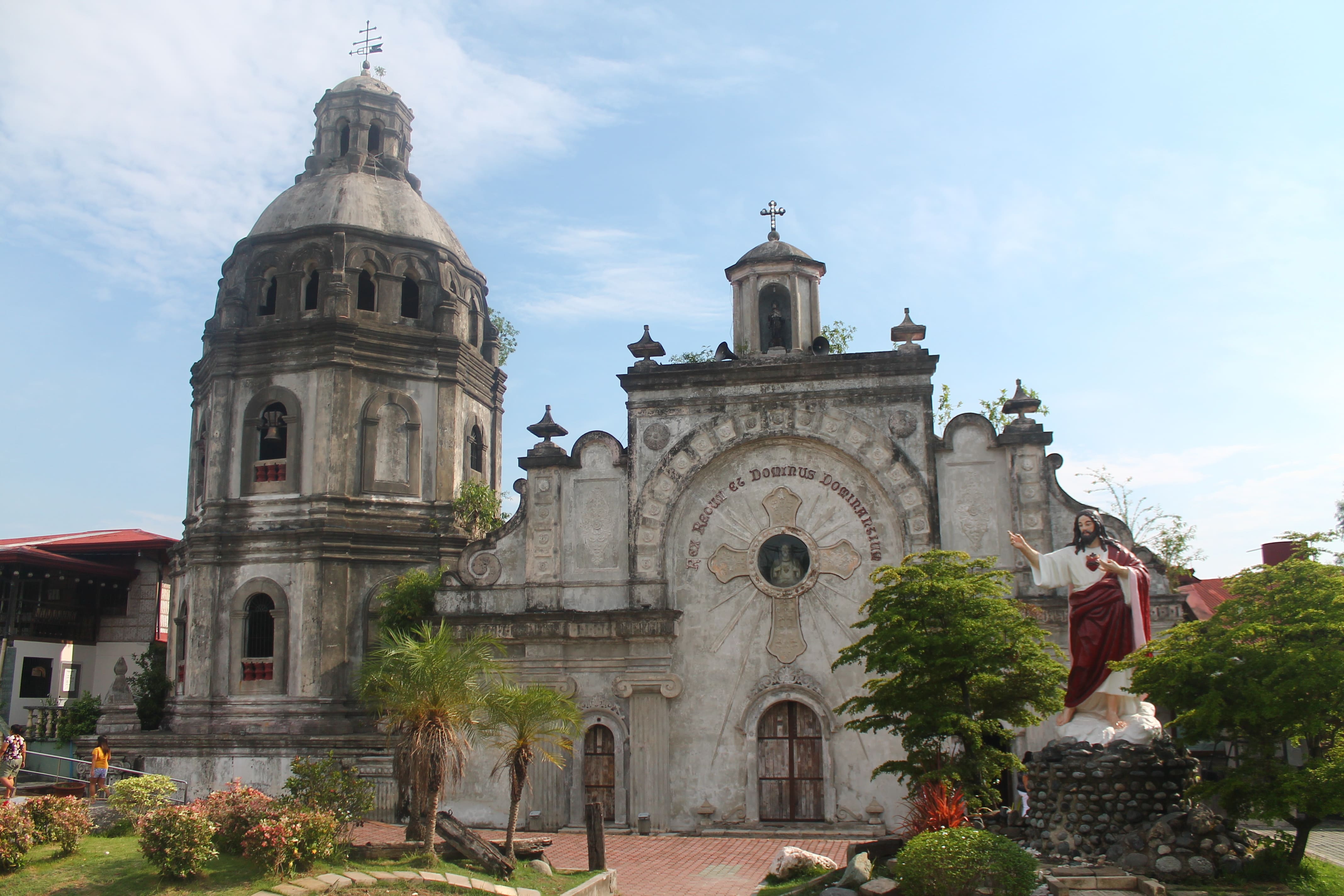
Imagine attending Mass by climbing through what was once a church window. That is the extraordinary reality at San Guillermo Parish Church in Bacolor, Pampanga, where the faithful have entered through the upper windows for nearly three decades. Half-buried under six meters of lahar from the 1991 Mount Pinatubo eruption, this resilient baroque church stands today as one of the Philippines' most unique historical landmarks.
A 16th-Century Foundation That Survived Earthquakes
The San Guillermo Parish Church was originally constructed by Augustinian friars in 1576, making it one of the oldest churches in the Philippines. Named after San Guillermo, the town's patron saint, the church was built on land donated by Don Guillermo Manabat, a wealthy landlord believed to be the founder of Bacolor. The town itself derives its name from "Bakulud," a Kapampangan word meaning "high ground".
In 1880, an earthquake destroyed the original structure, and a new church was erected by Fr. Manuel Diaz in 1886. The rebuilt church features a central nave and well-lit transept with windows. What makes this church architecturally remarkable is the richness of its decoration, which depicts an advanced stage of Baroque and Rococo styles. The main retablo, side retablos, and pulpit are all heavily gilded with gold leaf.
Buried by Lahar, Yet Still Standing for Worship
The church's most dramatic chapter began on June 15, 1991, when Mount Pinatubo erupted in one of the most powerful volcanic events of the 20th century. On September 3, 1995, devastating lahar flows – a rampaging slurry of thick debris, pyroclastic material, and ash washed down by rain – buried the church to half its 12-meter height. The lahar forced more than 50,000 town residents to evacuate to safer resettlement grounds.
Today, approximately six meters of lahar remain buried around the church, covering its lower half. The faithful now access the building through what were originally second-story windows, now converted into doorways. Despite this dramatic alteration, the structure remains active as a place of worship, with the Archdiocese of San Fernando continuing to hold Mass and religious services within its preserved walls.
Excavated Baroque Treasures Inside a Resurrected Church
After the lahar buried the church, the townspeople of Bacolor carefully excavated the main altar and the retablos, relocating them under the dome. The retablo niches are now filled with centuries-old statues that were saved from lahar destruction. The citizens painstakingly restored the ornately carved main and side altars to their immaculate condition, preserving the baroque artistry that makes this church unique in the region.
The choir area, which used to be located above the sanctuary, was moved to a new location after the lahar. Near the façade of the parish church, a small museum now houses the church's written history and contains paintings depicting the 1991 Pinatubo eruption. Visitors can learn how the church has survived not only the lahar but also earthquakes, wars, fires, typhoons, and political upheavals over nearly 450 years.
A Testament to Kapampangan Resilience
San Guillermo Parish Church had already been a world-renowned tourist destination before the lahar tragedies. Today, even more tourists flock to see this remarkable site where faith literally rose from the ashes. The church represents the resilience of the Kapampangan people, who continue to worship in a place that nature tried to bury but could not destroy.
When the townsfolk of Bacolor celebrate their fiesta on February 10 each year, they still enter through the upper windows, just as they have done for the past three decades. This annual celebration draws both devotees and tourists who wish to witness how a community preserved its spiritual heart despite losing so much to the lahar. Visitors consistently describe seeing the half-buried church as "a truly unique and poignant experience" and "a powerful testament to both the destructive force of nature and the resilience of the local community".