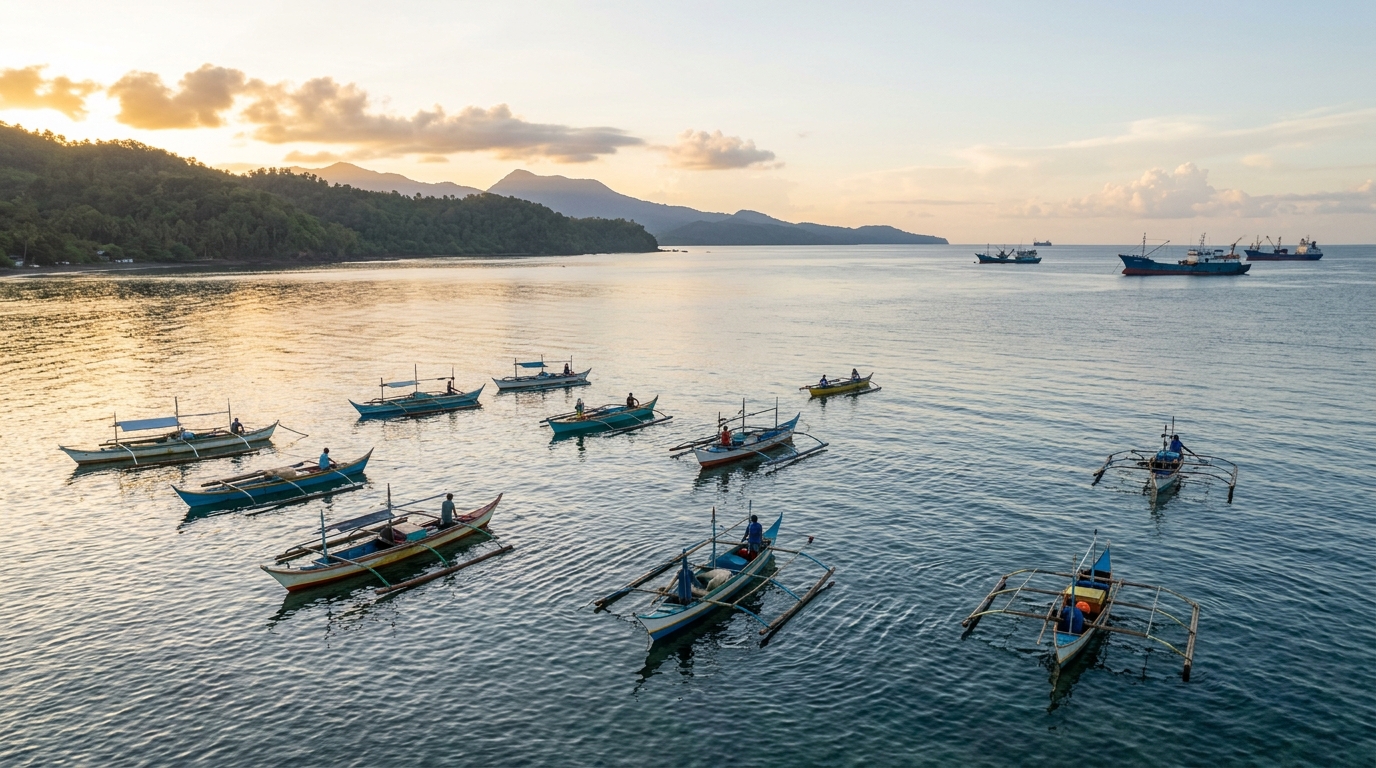
The provincial government of Palawan has taken a historic legislative stand to protect its liquid gold by enforcing a strict ban on commercial fishing within its municipal waters. This bold political move is designed to create a "biological shield" that stretches 15 kilometers from the shoreline, reserving these nutrient-rich zones exclusively for small-scale local fishers. It represents a massive shift in the province's food security strategy, prioritizing the survival of coral reefs and the livelihoods of traditional coastal families over industrial profits.
A Victory for the Small-Scale Fisher
The enforcement of this ordinance is a direct response to the increasing encroachment of heavy industrial trawlers that have long depleted the province's traditional fishing grounds. By clearing the "Blue Border" of these massive vessels, local authorities are allowing the marine ecosystem a much-needed window to regenerate. Small-scale fishers in towns like Brooke's Point and Taytay are already reporting a noticeable stabilization in their daily catch as the competition from mechanical giants vanishes. This legislative victory is being hailed as a "Livelihood First" policy that puts the dinner tables of Palaweno families ahead of export-oriented commercial interests.
High Stakes and Heavy Fines
To ensure the law isn't just words on paper, the provincial government has established a multi-agency task force equipped with real time tracking technology. Violators now face astronomical penalties, with fines ranging from ₱200,000 to ₱1 million, along with the potential for six years of imprisonment. These strict measures are intended to act as a powerful deterrent against the "midnight raiding" that has historically plagued the Sulu Sea. By putting teeth into environmental law, the province is sending a clear message that its natural resources are no longer open for unregulated exploitation.
Balancing the Scales of Sustainability
While the ban is sweeping, it includes clever exemptions for small-scale commercial boats 3 to 20 gross tons to ensure the local market doesn't face a sudden seafood shortage. This nuanced approach shows a level of political maturity that seeks to balance environmental protection with the practical needs of the provincial economy. It encourages larger fleets to move further offshore into deeper waters, where they can operate without damaging the fragile nurseries of the coastal reefs. This long-term vision is positioning Palawan as a global leader in "Blue Economy" management for the year 2026.