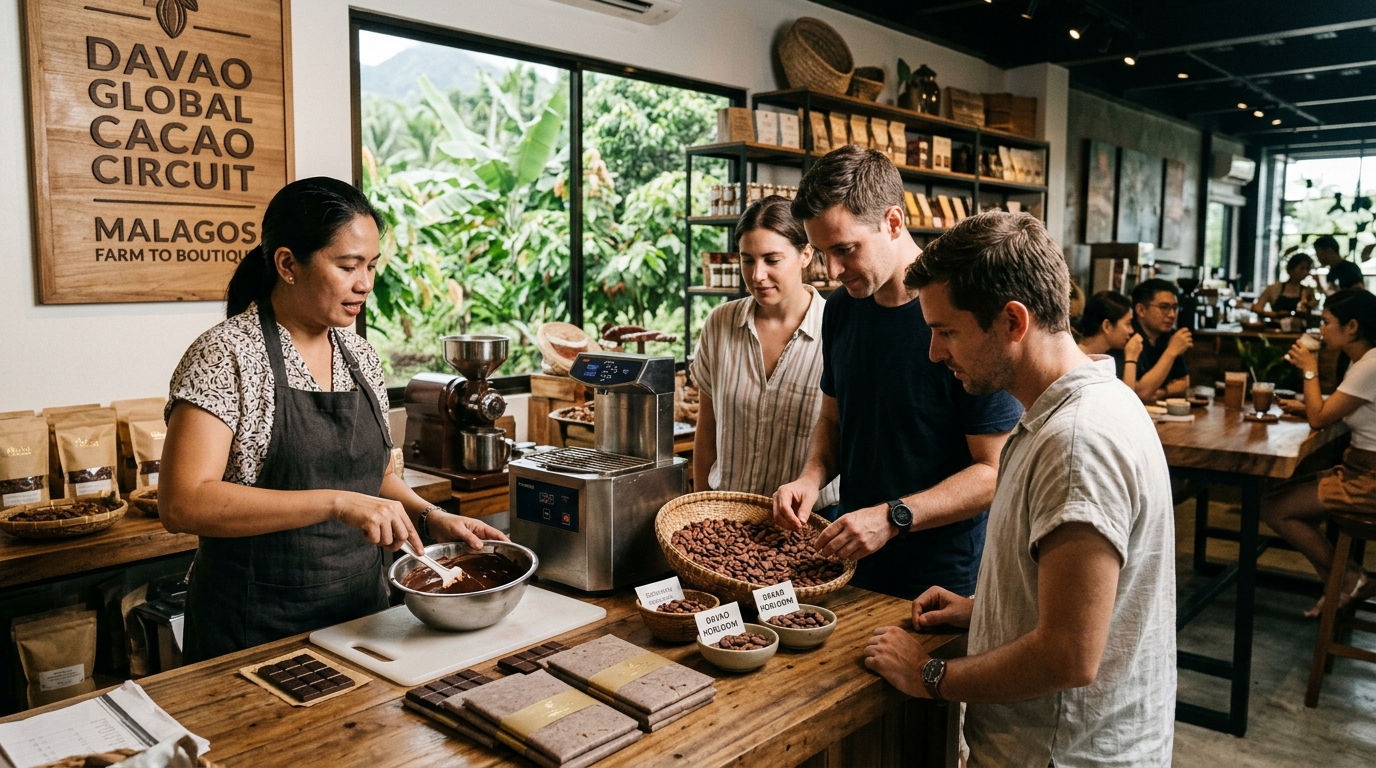
Davao City has officially launched its "Global Cacao Circuit" this April, a curated tourism experience that connects the city’s urban chocolate boutiques with the award-winning farms of the Calinan and Baguio districts. This initiative leverages the city’s status as the "Cacao Capital of the Philippines" to attract international food connoisseurs and professional chocolatiers for "bean-to-bar" immersive workshops.
The Sensory Legacy Narrative
For Davao’s agricultural sector, the story is about the premiumization of the commodity. By transforming traditional cacao farming into a high-sensory tourism experience, the city is ensuring that local farmers capture a larger share of the value chain. Visitors can now participate in every stage of production—from the fermentation of heirloom pods in the highlands to the tempering of gourmet bars in the city center. This direct connection between the source and the consumer is fostering a global brand for "Davao Chocolate" as a peer to the famous origins of West Africa and South America.
Research, Development, and Genetic Preservation
This movement is driving increased investment in "Cacao Science," with the establishment of a regional genetic preservation center in the Malagos district. The center focuses on identifying and protecting heritage varieties that thrive in Mindanao's volcanic soil, ensuring that the city's chocolate industry remains resilient against global climate shifts. These research facilities are open to tourists, offering a "Science-of-Sweets" tour that explains the complexity of cacao genetics and flavor profiles. This educational component is a key differentiator for Davao’s culinary tourism compared to more traditional resort destinations.
Economic Durability and SME Growth
Local officials report that the circuit is stimulating the growth of "Nano-Chocolatiers"—small-scale local entrepreneurs who produce specialized, small-batch bars for the tourist market. These SMEs are benefiting from the city’s "Direct-to-Diner" logistics program, which simplifies the supply chain and lowers the cost of entry for new brands. The economic ripple effect is particularly strong in the highland barangays, where traditional farmers are now seeing a 40% increase in net income through tourism-related sales. By the end of 2026, the Cacao Circuit is projected to be the city's most successful model for inclusive rural-urban economic integration.