Stepping — off the public ferries from neighboring Coron into the quiet harbor of Culion instantly shifts a traveler's perspective away from mainstream resort commercialism toward a deeply textured colonial past. Looming directly over the harbor on a jagged limestone cliff, Fort Culion serves as the definitive visual anchor for incoming visitors looking to decode the island's complex historical identity. Erected originally in 1740 by Recollect Augustinian missionaries, this defensive fortification was engineered to shield the isolated island settlements from heavy maritime raids. Today, the weathered site offers a peaceful vantage point where the deep echoes of Spanish colonial conflicts blend naturally into panoramic views of the open blue sea.
The Fortified Promontory View
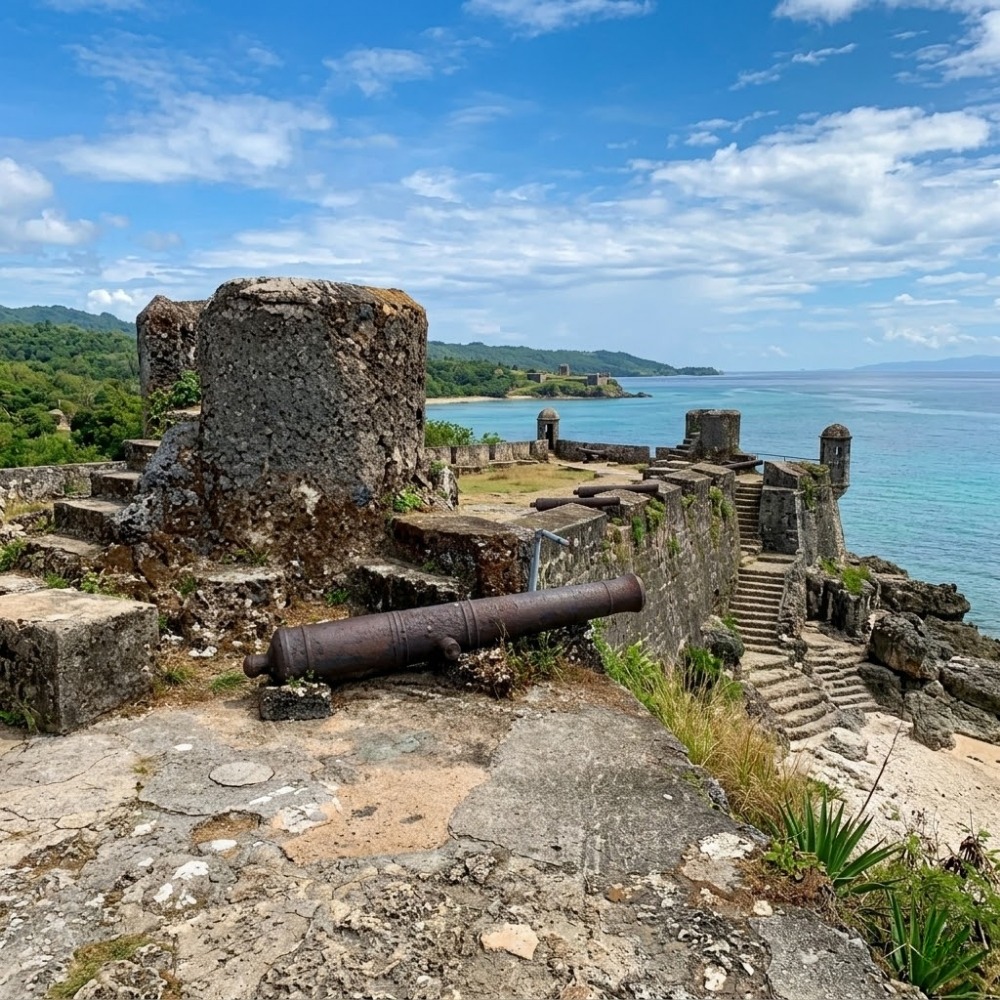
The structural layout of this historical landmark utilizes a classic square-shaped stone footprint anchored by four defensive bastions positioned on the cliff edge. While time has reduced much of the original barracks to ruins, the massive outer walls, constructed entirely of hand-carved live coral stone, remain solidly intact against the elements. Visitors regularly climb the historic stone steps to wander past the ancient black iron cannons that still point outward toward the shipping channels of the Calamian group. The peaceful elevation functions as an exceptional viewing platform where approaching vessels are visible for miles, providing photography enthusiasts with an uninterrupted, birds-eye view of the coastal town center.
The Sacred Fusion Architecture
The absolute heart of the fort’s modern physical identity lies in an extraordinary architectural transformation that took place during the early decades of the twentieth century. In 1933, Jesuit missionaries creatively repurposed the fortress grounds by using the original coral stones to reconstruct the walls of the La Immaculada Concepcion Church, which sits directly inside the citadel perimeter. The striking building features a classic Baroque facade displaying the historic Spanish royal seal, while the interior showcases a magnificent, vibrant red ceiling painted completely by a local resident during the island's era as an isolated sanitarium. This unique layering of a house of worship directly into the framework of a military bastion creates a deeply moving atmosphere unmatched by standard provincial churches.
The Coastal Navigation Beacon
By serving simultaneously as an active parish community center and a functional maritime navigation point, the highland pavilion maintains a vital role in contemporary island life. The highest point of the old Spanish bastion has been converted into a working lighthouse, casting a dependable guiding beam across the dark straits to ensure safe passage for late-night fishing boats and transit vessels. This harmonious blending of a historic defensive citadel, a dedicated religious sanctuary, and a modern maritime lighthouse elevates the property into an indispensable cultural destination. For independent travelers looking to explore Palawan beyond the predictable island-hopping itineraries, it stands as an authentic monument to community survival and architectural ingenuity.