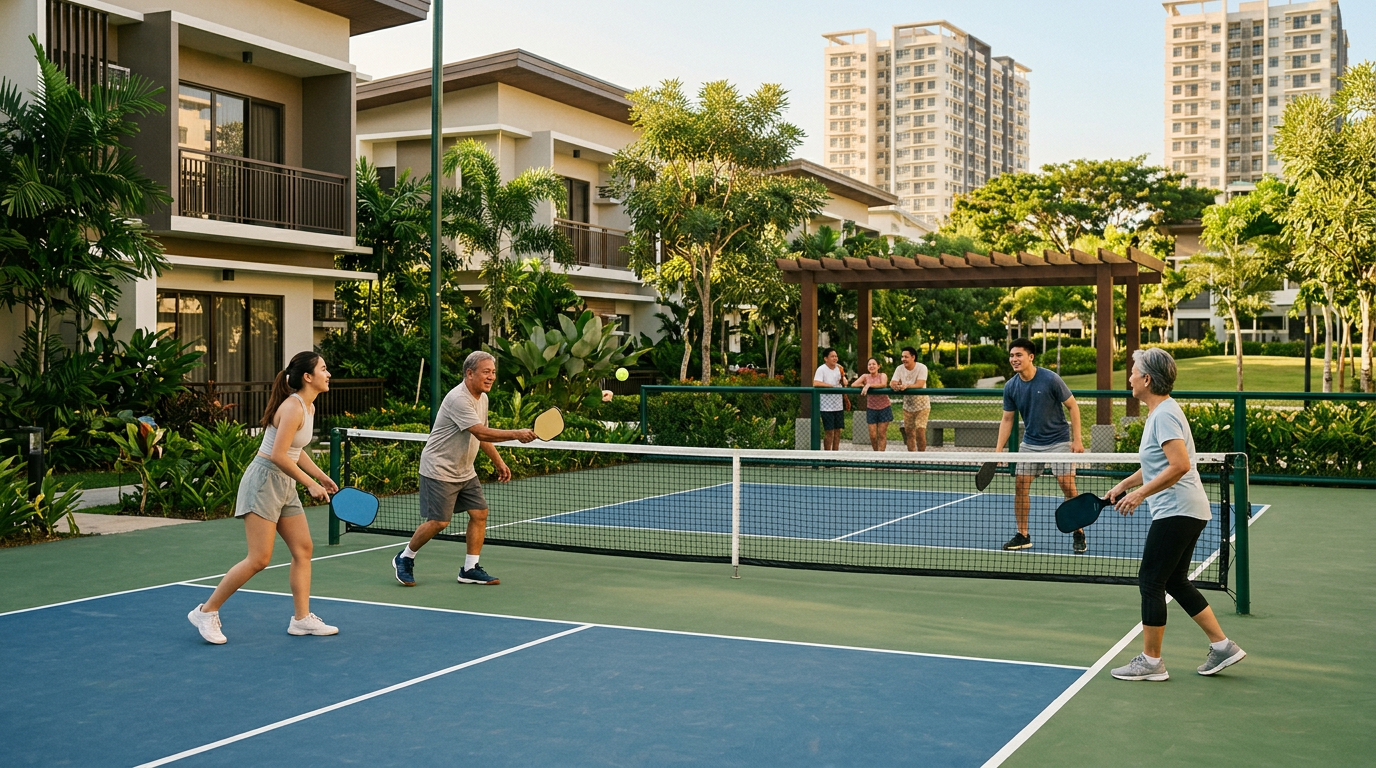
Not like any other fitness trend, pickleball has turned into a powerful community building asset that boosts property value and image, attracting deep social connections, more interested buyers, and effectively turning residential subdivisions into an active and high-trust neighborhoods.
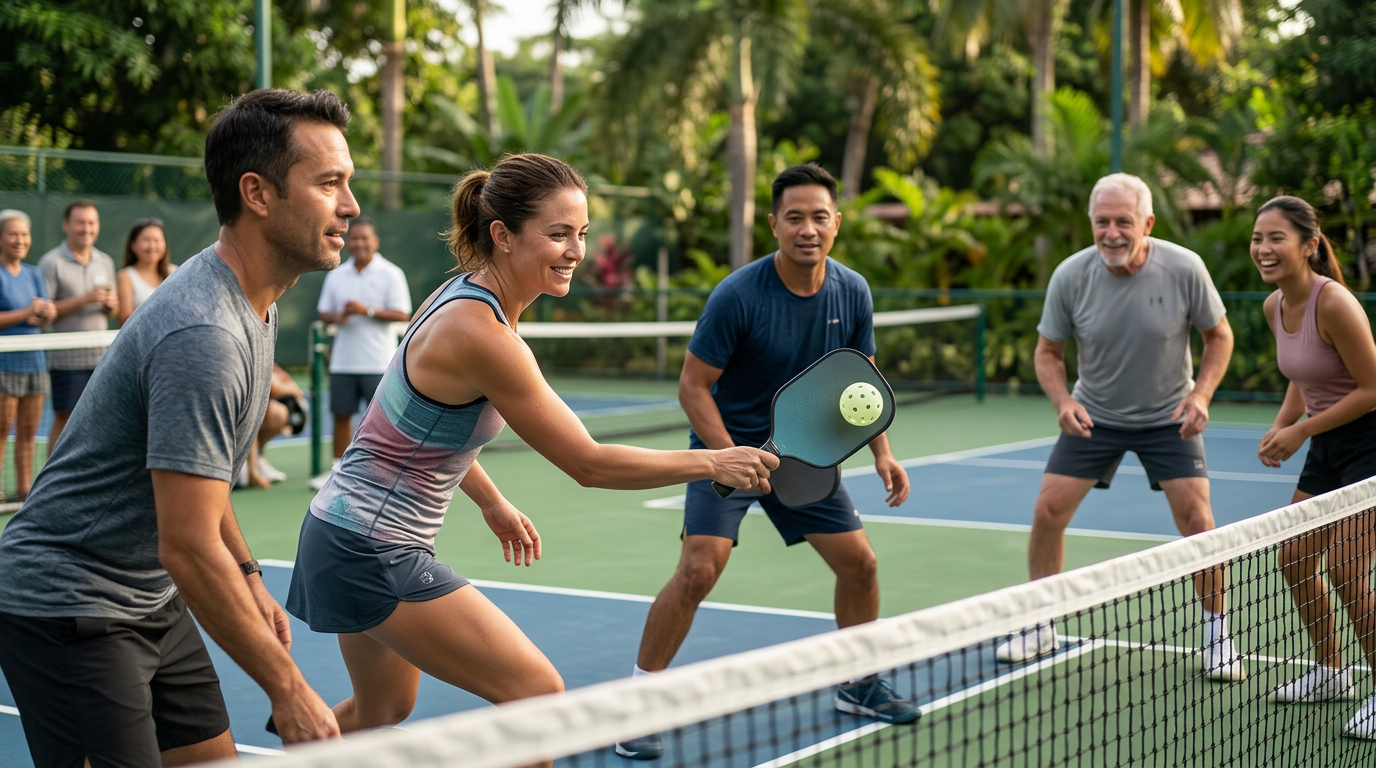
In the rapidly urbanizing landscape of Cebu City, where high-rise living can often feel isolating, pickleball is acting as a revolutionary "social catalyst" that bridges the gap between residents. Unlike tennis, which requires years of technical mastery, or basketball, which can be physically exclusive, pickleball’s low barrier to entry creates a unique "level playing field" where a 20-year-old tech professional and a 65-year-old retiree can compete and connect. This inclusivity is creating a new kind of "social equity" in Cebuano real estate; a property with an active court isn't just selling a square footage of asphalt, it is selling an instant support system. This shift is particularly visible in new developments in Mandaue and Talisay, where the court has replaced the lobby as the primary place for community bonding.
This "court-to-curb" effect has a direct, positive impact on property long-term sustainability, as high-engagement communities typically see lower turnover rates and better-maintained common areas. When neighbors play together, they are more likely to collaborate on homeowners' association initiatives and look out for each other’s security, creating a "soft security" layer that tech-based surveillance can’t replicate. Real estate appraisers are beginning to notice that "High-Engagement Zones"—neighborhoods with active pickleball cultures—tend to have more resilient market prices because the human connection acts as a permanent amenity. In 2026, the most valuable square meter in a Cebuano estate isn't the master bedroom; it’s the transition area outside the court where people linger to talk after a game.