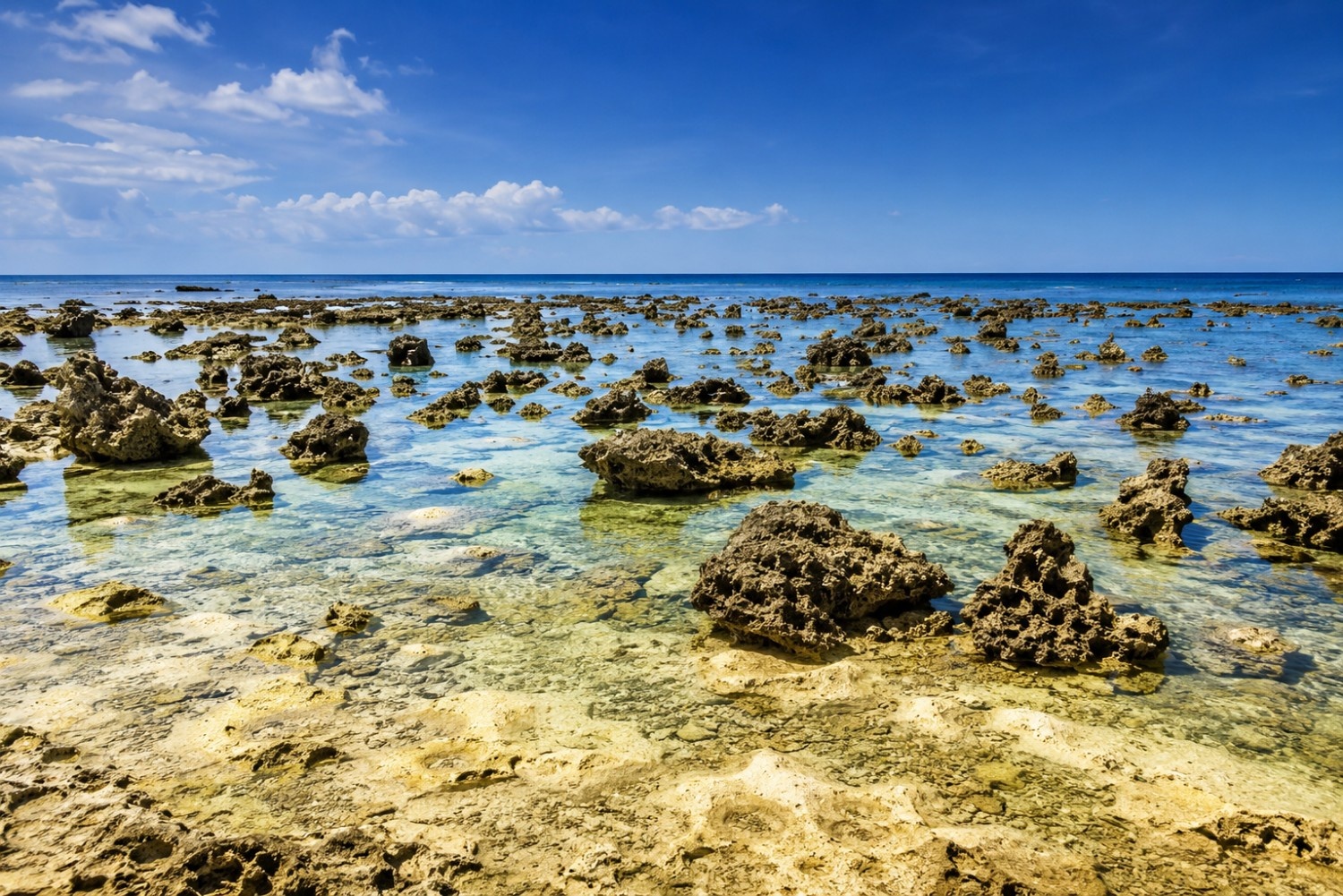
While most natural wonders take millennia to form, the Loon Uplifted Marine Terrace—affectionately known as the "Coral Garden"—is a masterclass in instantaneous evolution. Born in the span of seconds during the 7.2-magnitude earthquake on October 15, 2013, this 137-hectare expanse was thrust upward by 1.5 meters, effectively reclaiming the sea for the land. The site has transitioned from a barren seismic scar into a lush, color-shifting ecological sanctuary. It serves as a flagship geosite within the Bohol Island UNESCO Global Geopark, the first and only one of its kind in the Philippines, proving that destruction can be the precursor to a breathtaking environmental rebirth.
The Alchemy of Coastal Shifting
The emergence of the terrace was a rare tectonic demonstration where the shoreline shifted 50 meters seaward, exposing an entire underwater reef system to the open air. This sudden elevation created a unique "blank slate" for nature, which was quickly colonized by Sesuvium portulacastrum, or sea purslane. During the current sunny window of May 2026, the terrace is draped in its signature red and orange carpet, a biological mimicry that mirrors the vibrant hues of the sunken corals it replaced. This botanical phenomenon is why the "Coral Garden" name persists; travelers aren't just looking at a field, but at a terrestrial ghost of the marine life that once thrived beneath the waves.
UNESCO Stewardship and Scientific Value
Beyond its aesthetic charm, the Loon-Maribojoc Geological Monument is a vital research hub for understanding seismic activity and coastal geomorphology. Under its UNESCO Global Geopark status, reaffirmed through community capacity-building workshops in April 2026, the site is managed with a "protective but permissive" philosophy. This means that while the land is strictly preserved for its scientific value, it remains accessible for "geo-education," where local students and visitors learn about the Inabanga Fault's power. It is a rare location where one can literally walk on the former ocean floor, touching ancient coral beds that are now home to land-dwelling succulent plants.
A Seasonal Palette for 2026 Travelers
Visiting the Coral Garden in Barangay Tangnan offers a distinct experience depending on the month of arrival. For those exploring Loon this week, the "autumn-like" scenery is in full effect, providing a stark, beautiful contrast against the deep blue of the Cebu Strait. During the rainy season, this same landscape undergoes a "mysterious" transformation, turning into a luxurious, vibrant green mat as the sea purslane reacts to the increased hydration. The site remains a top photography destination because of this dynamic nature, ensuring that no two visits—even those just a few months apart—ever look the same.