General Santos City, affectionately known across the archipelago as "GenSan," carries a name that serves as a permanent salute to one of the Philippines' most influential pioneers. While today it is celebrated as the "Tuna Capital," its identity was forged in 1939 through a massive national resettlement program that forever altered the landscape of Sarangani Bay. The shorthand "GenSan" is more than just a convenient abbreviation; it is a linguistic bridge between the city’s indigenous roots and its modern status as a center of commerce and industry. Understanding the evolution of its name reveals a story of grit, migration, and the legislative transformation of a wild frontier into a thriving urban hub.
The Thorny Roots of Dadiangas
Long before the concrete roads and tuna canneries, the area was known to the indigenous Blaan people as Dadiangas. This original name was a direct reference to the Ziziphus spina-christi, a resilient, thorny tree that once grew in abundance across the sun-drenched plains of the south. This botanical heritage remains a point of local pride, with many residents still using the old name to refer to the city’s central district. It serves as a reminder of the rugged, untamed terrain that greeted the first waves of arrivals before the urban sprawl took hold.
A Military General’s Resettlement Mission
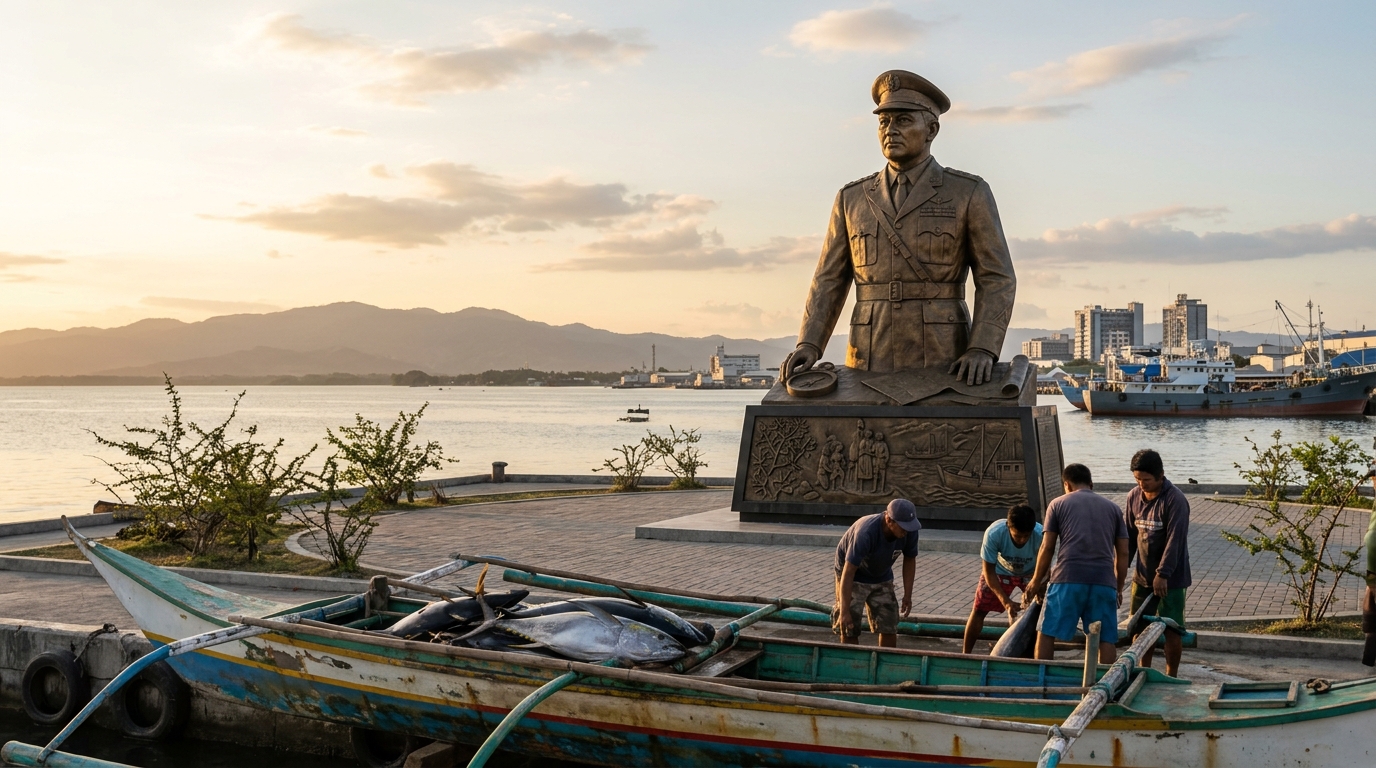
The shift toward the city’s modern identity began in February 1939, when General Paulino Santos, a former Commanding General of the Philippine Army, led the first batch of 62 Christian settlers from Luzon. Under his disciplined leadership, this group landed on the shores of Sarangani Bay to establish a new life under a strategic national resettlement program. This migration turned the settlement into a melting pot of cultures, setting the stage for the rapid economic expansion that would follow. The general's ability to organize a sustainable community in the wilderness earned him a legendary status among the early families who built the city from the ground up.
Legislating a Legacy in June 1954
While the settlement was briefly designated as the Municipality of Buayan in 1948, the name was officially changed to honor its founder just six years later. In June 1954, Congressman Luminog Mangele authored Republic Act No. 1107, a piece of legislation that formally renamed the municipality to General Santos. This act was a deliberate effort to solidify the general's role in Philippine history and provide the growing city with a distinct, prestigious identity. Today, as GenSan continues to evolve as a global trade partner in 2026, its name remains a constant tribute to the military precision and pioneering spirit that defined its birth.