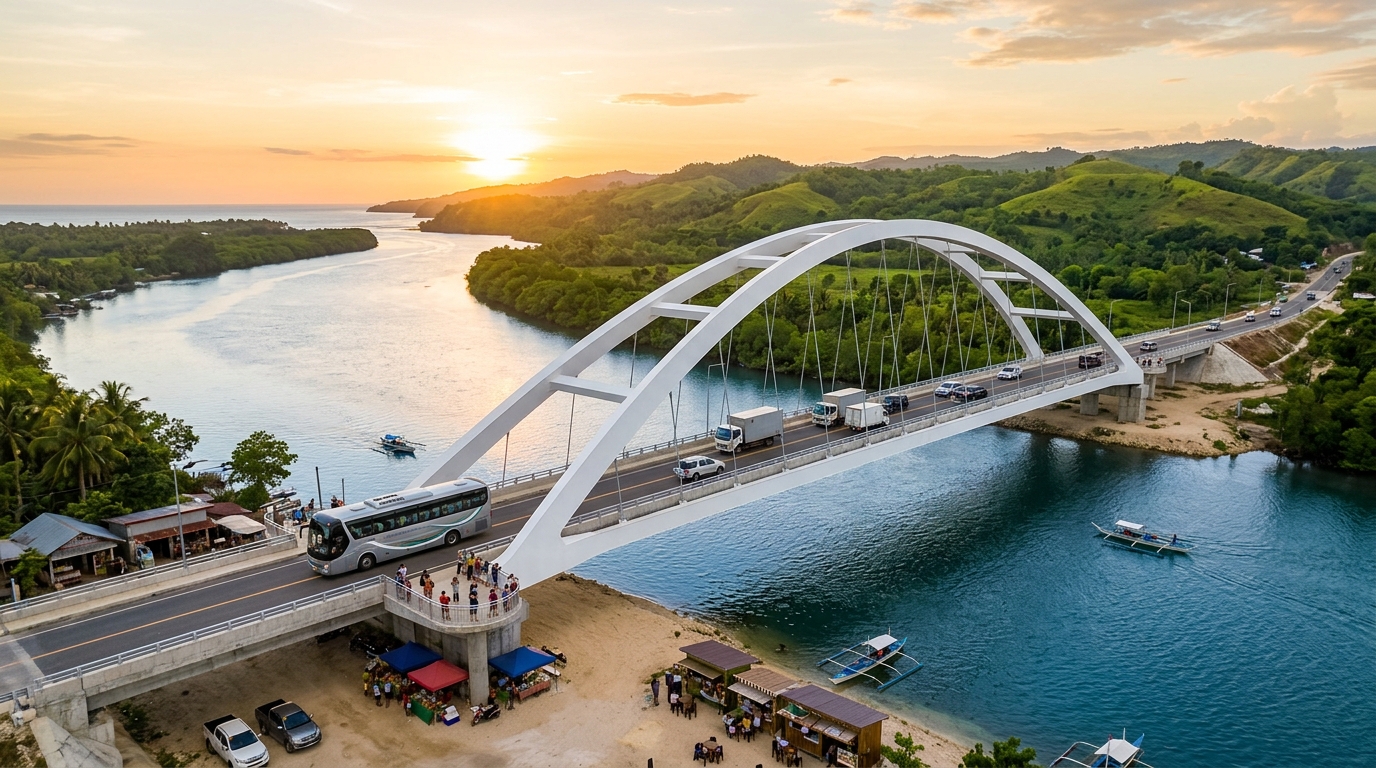
The inauguration of the Clarin Ancestral Bridge in Loay has officially unlocked the eastern corridor of Bohol for large-scale development this April. This modern "Nielsen Arch" bridge replaces the old structure damaged in previous years, providing a resilient and visually iconic link for the province's tourism and trade routes.
The Logistical Resilience Narrative
For the eastern municipalities of Bohol, the story is one of renewed accessibility and economic hope. The Loay Bridge serves as a vital artery connecting Tagbilaran to the "hidden gems" of the east, such as the white sand beaches of Anda and the emerald terraces of Candijay. This infrastructure ensures that heavy logistics and tour buses can travel safely and efficiently, removing a major bottleneck that previously hindered large-scale investment. For the 2026 developer, the "East" is now the most promising frontier for luxury eco-resorts.
Architectural Tourism and Scenic Value
This movement is driving a new type of "Sightseeing Logistics," where the bridge itself has become a tourist attraction. The Nielsen Arch design—the first of its kind in the province—offers a scenic viewpoint of the Loboc River opening into the sea, encouraging travelers to stop and explore the local Loay economy. This "Gateway Effect" has led to the development of new riverside cafes and artisanal shops at the bridge’s landing points. The aesthetic value of the infrastructure is proving to be as economically significant as its functional utility.
Real Estate Value and Diversification
Real estate market data shows that land values in Loay and neighboring Alburquerque are rising as these towns become attractive residential hubs for those working in the capital. The bridge makes a "countryside lifestyle" feasible for professionals who require daily access to Tagbilaran but prefer the tranquility of the river towns. This diversification of the housing market is relieving pressure on the capital’s urban core and encouraging the development of mid-range residential communities. By the end of 2026, the Loay corridor is expected to be a primary site for "wellness-centric" housing projects.