



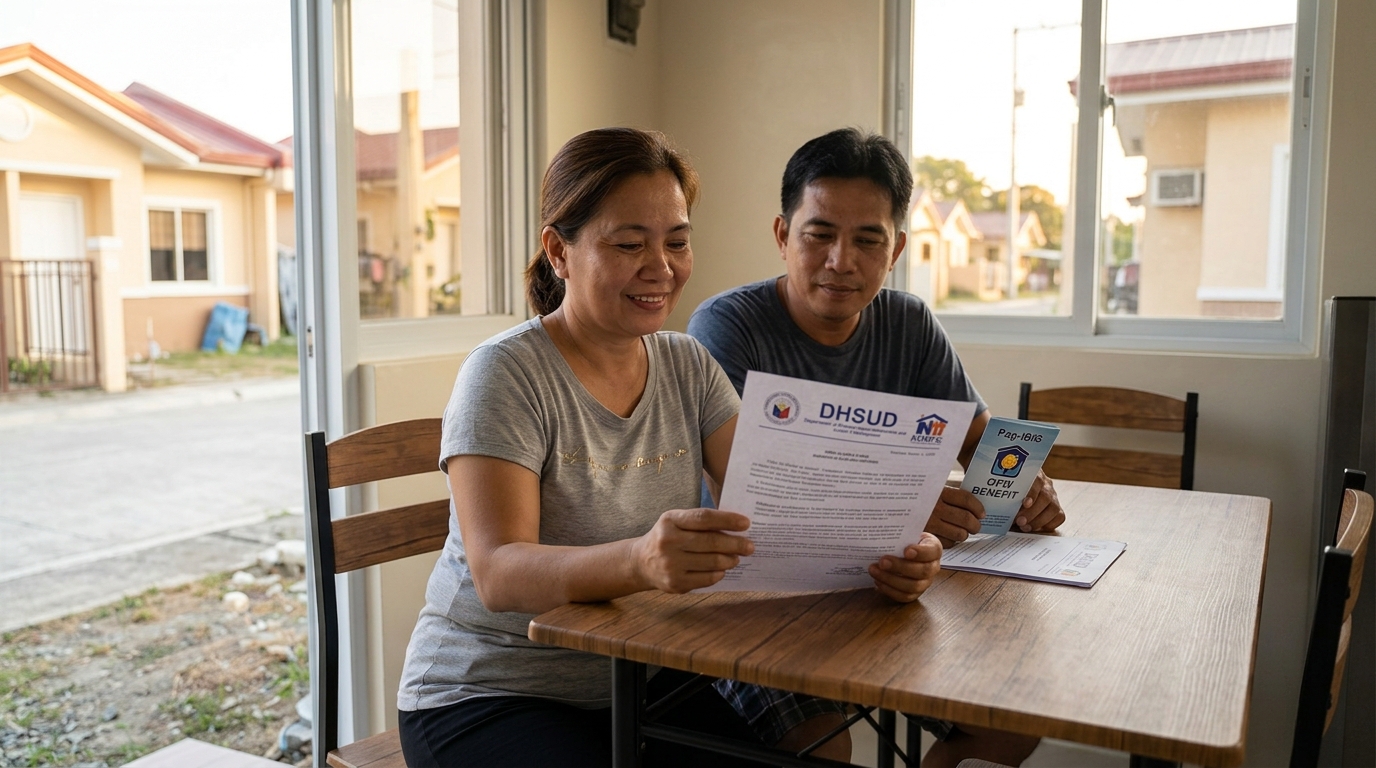
PHILIPPINES — The Department of Human Settlements and Urban Development (DHSUD) rolled out a sweeping three-month moratorium on housing loan payments in late April 2026, a direct response to the energy emergency triggered by the Middle East conflict. The relief, which runs from May 1 to July 31, covers approximately 50,000 borrowers under the National Home Mortgage Finance Corporation (NHMFC) and extends to Pag-IBIG housing loan payers, effectively putting a temporary floor under the country's residential real estate market at a moment of mounting economic pressure.
Secretary Jose Ramon Aliling framed the intervention as part of a whole-of-government directive from President Ferdinand R. Marcos Jr., designed to cushion Filipino families from rising fuel costs and global economic headwinds. "Sa gitna ng energy crisis na nararanasan natin, mahalaga po na mabigyan natin ng kahit kaunting ginhawa ang ating mga kababayan," Aliling said, underscoring that housing security and family dignity remain central to the government's crisis response. For the property sector, the policy functions as a critical shock absorber, preventing a wave of payment defaults that could cascade into foreclosures and depressed asset values.
Automatic Coverage Keeps Borrowers in Their Homes
Unlike previous relief programs that required cumbersome applications, the NHMFC moratorium applies automatically to all eligible borrowers nationwide. Noe Valencia of NHMFC confirmed that beneficiaries will not incur penalties or additional interest during the three-month suspension, with loan terms extended correspondingly based on the moratorium's duration. This administrative simplicity is designed to deliver immediate household-level relief without bureaucratic friction.
The automatic nature of the coverage carries significant implications for real estate market stability. By preventing missed payments from accumulating into defaults, the moratorium preserves borrower credit standing and keeps families in their homes during a period when fuel and electricity costs are straining household budgets. Real estate analysts note that foreclosure prevention measures of this scale help maintain price equilibrium in the broader residential market, particularly in the socialized and low-cost segments most vulnerable to income disruption.
Pag-IBIG Joins the Relief Effort with Expanded OFW Package
Complementing the NHMFC program, Pag-IBIG Fund CEO Marilene Acosta approved a special benefits package for overseas Filipino workers repatriated due to the Middle East conflict. Qualified OFW members may now withdraw up to 100 percent of their Pag-IBIG Regular Savings before the 20-year maturity period, access their Modified Pag-IBIG II (MP2) Savings ahead of the five-year term, and avail of an interest-free and penalty-free three-month moratorium on Pag-IBIG Housing Loan payments.
The OFW-focused component is particularly consequential for the real estate sector, given that Pag-IBIG had nearly 900,000 registered OFW members in the Middle East as of February 2026. Colliers Philippines has consistently identified OFW remittances as a primary driver of residential demand, especially in the mid-income condominium and house-and-lot segments. By allowing repatriated workers to tap their savings and pause their amortizations, the package sustains the purchasing power of a demographic that historically accounts for a substantial share of property acquisitions in growth corridors like Metro Manila, Cebu, Davao, and Iloilo.
A Broader Strategy to Safeguard Property Market Stability
DHSUD emphasized that the combined NHMFC and Pag-IBIG interventions form part of an integrated strategy to protect Filipino families from the economic pressures of the energy crisis while supporting vulnerable sectors such as displaced workers and low-income households. The department's open-door policy has also yielded complementary measures, including a maximum 36-month deferment for developers to comply with balanced housing requirements, ensuring that the supply side of the housing equation remains intact.
Secretary Aliling characterized the moment in terms that resonate beyond immediate relief. "Sa panahon ng krisis, ang pabahay ay hindi lamang tungkol sa tahanan kundi sa seguridad at dignidad ng bawat pamilyang Pilipino," he said, committing the agency to continued assistance for those most in need. For the Philippine real estate market, the three-month payment freeze represents more than a stopgap. It is a calibrated intervention that buys time for households, preserves asset quality across lending portfolios, and signals to investors that the government is willing to deploy regulatory tools to maintain market stability during an external shock whose duration remains uncertain.
