



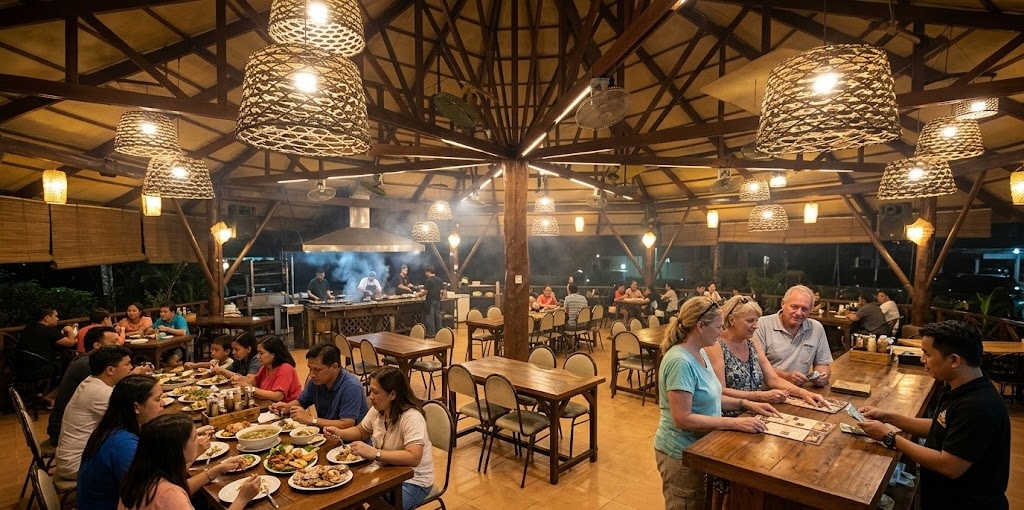
Family-operated restaurants often create stronger emotional connections because interactions feel conversational rather than procedural. Customers return repeatedly until staff begin remembering preferred dishes and routines naturally. Dining becomes relational over time. Bacolod residents value that familiarity deeply. Hospitality feels warmer when it carries history.
Many long-running restaurants preserve recipes tied closely to household traditions instead of aggressive reinvention. Diners return because flavors remain recognizable across years or even decades. That consistency creates trust between kitchens and communities. Food becomes emotionally dependable. Some dishes survive precisely because they resist change.
Tourists searching for Bacolod’s food identity often discover it more clearly inside family-owned establishments than larger chains. Meals feel less standardized and more reflective of local taste preferences developed gradually over time. Visitors remember conversations and atmosphere as much as specific dishes. Restaurants become storytellers indirectly. Personality stays visible there.
