Different Schedules Changed Dining Habits
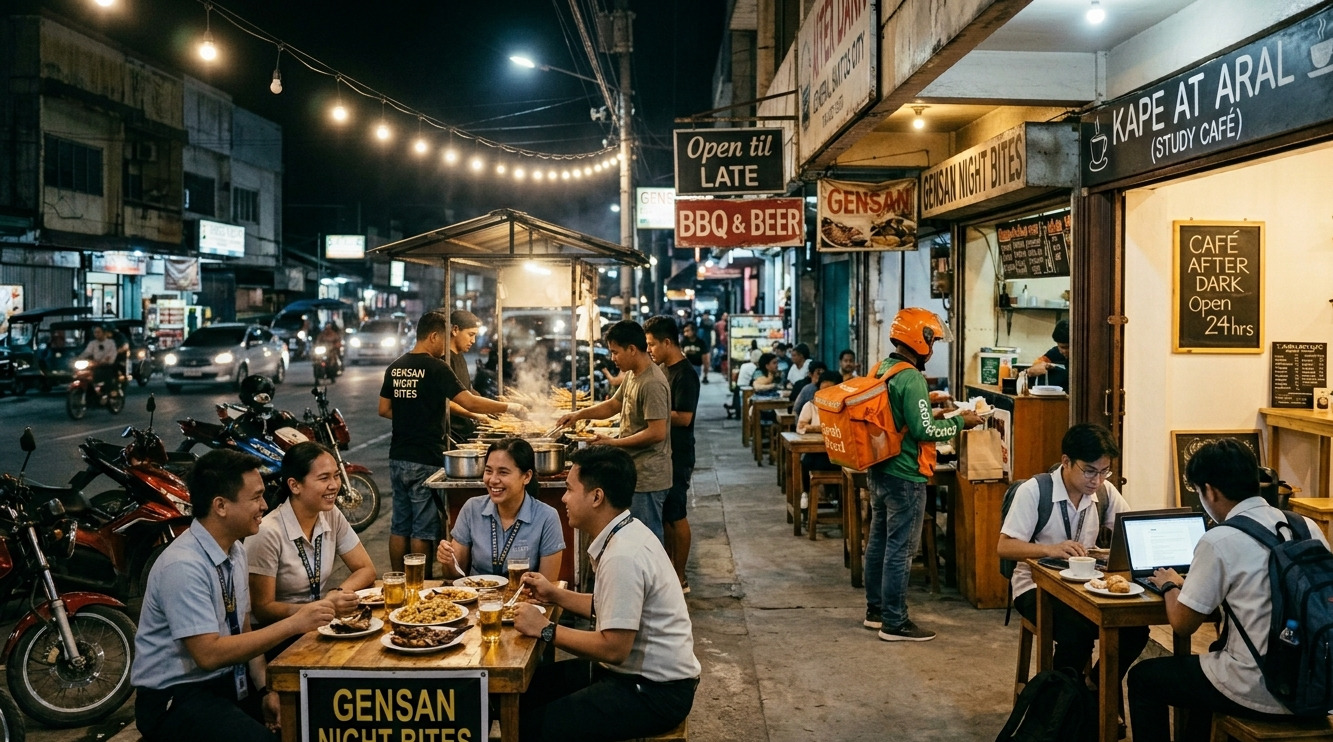
Not everyone follows traditional daytime routines anymore. BPO employees, freelancers, students, and service workers often eat outside regular meal hours due to changing schedules. Restaurants operating late benefit from steady demand among customers looking for meals after work or study sessions. Dining culture naturally adapts when lifestyles become less predictable. Food businesses are adjusting to more flexible routines.
Cafés and Restaurants Became Social Spaces at Night
Late-night establishments are not only serving food—they are also functioning as places where people unwind, study, or meet friends after long days. Some customers stay for conversations and atmosphere as much as the menu itself. Lighting, music, and quieter nighttime environments create a different dining experience compared to daytime crowds. Food spaces increasingly overlap with lifestyle culture. Restaurants are becoming part of urban social patterns.
The Night Economy Is Quietly Expanding
As more establishments extend operating hours, nighttime commercial activity also grows around them. Delivery riders, convenience stores, and transport services become connected to late-night dining ecosystems. General Santos may still feel calmer than larger cities, but nighttime food culture is becoming more noticeable. Gastronomy often expands alongside changing urban behavior. A city’s rhythm can often be understood through when people choose to eat.