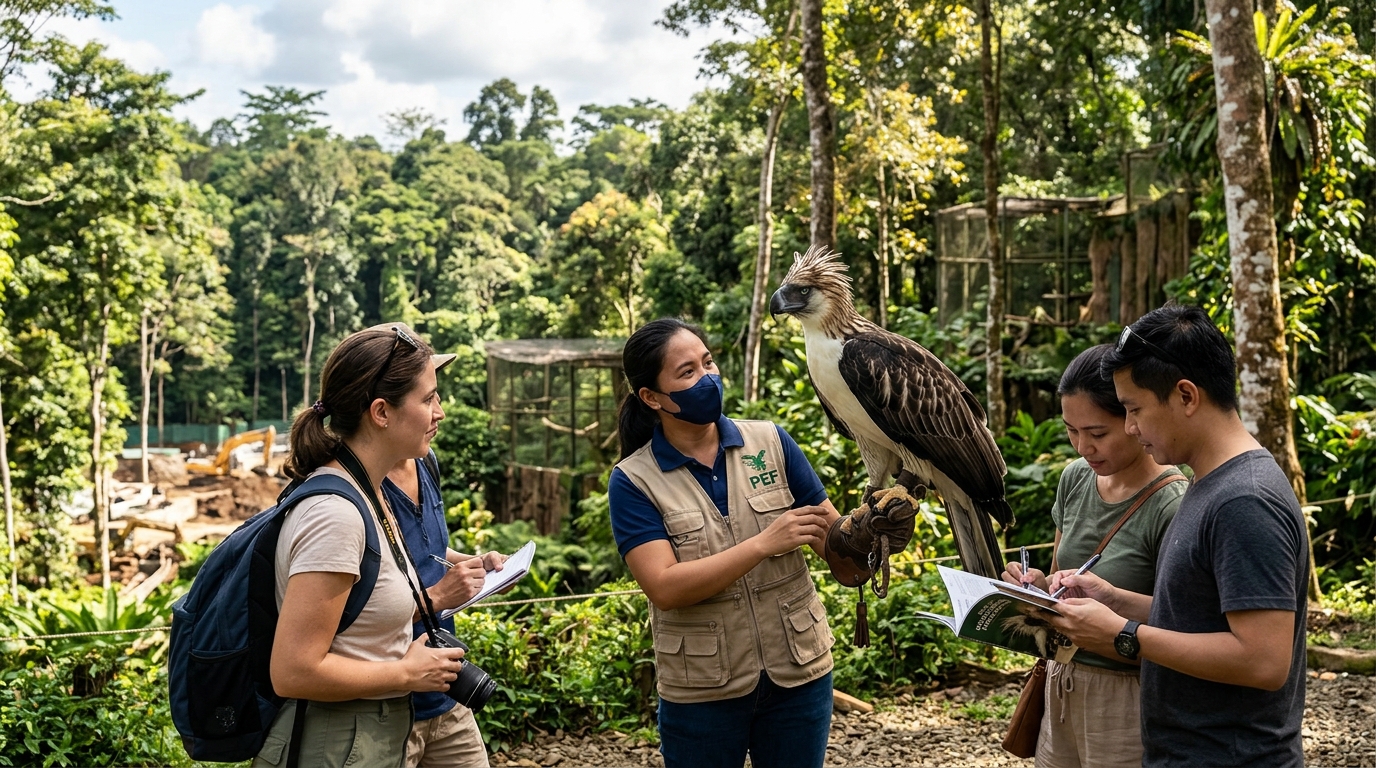
The survival of the world’s largest eagle is taking center stage in Davao’s tourism and scientific circles this weekend. On Sunday, April 19, 2026, the Department of Tourism and the Philippine Eagle Foundation (PEF) concluded a specialized refresher training at the Philippine Eagle Center (PEC) in Malagos. This effort aims to reposition the facility not just as a wildlife park, but as a "living classroom" where travelers can engage directly with the high-stakes world of avian conservation. As biodiversity loss becomes a global concern, the Queen City’s eagle sanctuary is emerging as a premier destination for meaningful, research-led eco-tourism.
Education Through the Raptor's Flight
The "Raptors in Action" flight demonstration, which officially resumed full operations this weekend, allows guests to witness majestic birds of prey flying and swooping in the Flight Zone of the center. Dominic Tadena, a senior animal keeper, explained that these demonstrations are vital for teaching visitors about the natural behavior and ecological role of apex predators in Mindanao’s forests. The center has also released the “Guide to the Philippine Eagle Center: 30 Experiences to Love,” a field guide designed to spark curiosity and foster national pride in the country's natural heritage. This interactive approach has been highly effective in converting standard tourists into active advocates for habitat protection.
The Rise of the Eden Sanctuary
As the landscape around the original Malagos facility changes, the PEF is rushing the construction of a new "Noah’s Ark" for eagles in the highlands of Toril. The Philippine Eagle Conservation Breeding Sanctuary (PECBS) in Barangay Eden is set to serve as a secluded breeding hub, located over 1,000 meters above sea level to provide a safer temperature for the birds. This move is critical because the existing facility is facing increasing threats from nearby human activities and the looming risk of avian influenza. This transition represents a P26-million investment in the future of the species, ensuring that rescued and captive-bred raptors can eventually be returned to the wild in sustainable numbers.
Genomics for the Nation's Survival
What makes the current visitor experience at the PEC unique is the integration of cutting-edge science, including the announcement of the first reference genome for the Philippine Eagle. Blood samples collected during this April’s annual physical check-ups are being used in a landmark international project to understand the species’ genetic health and inbreeding risks. Scientists aim to use this data to guide future conservation breeding and release programs, ensuring the genetic diversity of the remaining 392 pairs in the wild. For the 2026 traveler, a visit to the center offers a rare glimpse into how technology and tradition are working together to save a mythical creature from the brink of extinction.