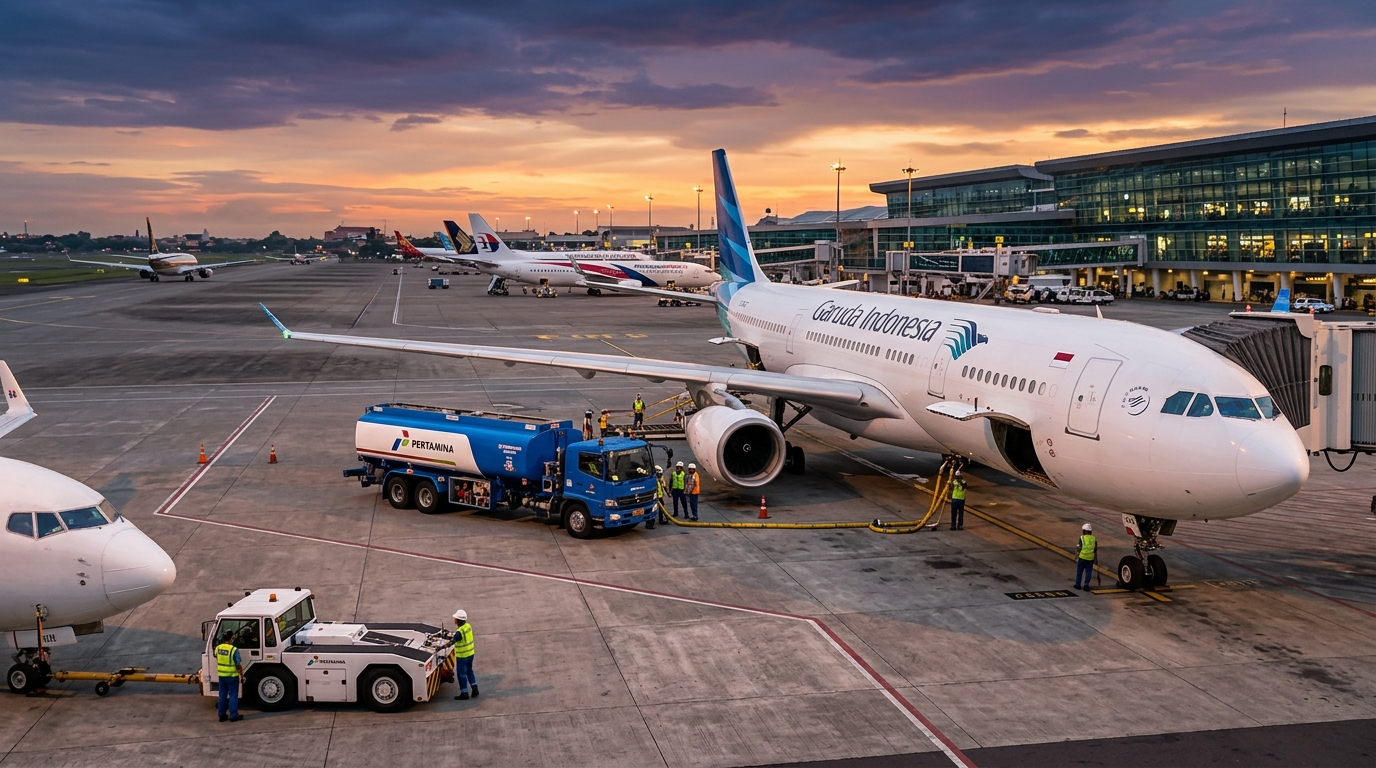
Indonesia — The country's state-owned energy giant, Pertamina, has announced a significant 10 percent reduction in jet fuel prices, a strategic move poised to make air travel more accessible and bolster the strength of airlines operating across the region. This initiative positions Indonesia alongside other key Southeast Asian nations, including Singapore, Malaysia, the Philippines, Thailand, Vietnam, and Brunei, which are collectively striving to enhance regional connectivity and affordability in air transportation.
Boosting Carrier Liquidity and Expanding Regional Routes
The decision by Pertamina is expected to inject new life into the aviation and tourism sectors, potentially leading to more competitive airfares and an expansion of flight routes. For a region heavily reliant on air travel for both business and leisure, such a reduction directly translates to lower operational costs for airlines. These savings could, in turn, be passed on to consumers, making flights within and to Southeast Asia more attractive. This development underscores a growing regional commitment to fostering a vibrant travel ecosystem, benefiting millions who frequently commute or plan vacations across borders.
Fostering Local Tourism Yields and Strengthening Aviation Logistics
This regional trend towards more affordable air travel holds significant economic implications. Cheaper flights are a direct catalyst for increased tourism, which can boost local economies through spending on accommodation, dining, and local services. For the Philippines, a nation with a thriving tourism industry and a vast global diaspora, this could mean an influx of visitors and more frequent visits from overseas Filipinos. Stronger airlines, supported by lower fuel costs, are also better positioned to invest in fleet expansion, new technologies, and enhanced customer services, creating a ripple effect of job opportunities in aviation, ground handling, and hospitality sectors.
Reducing Cross-Border Airfares and Maximizing Remittance Efficiency
For Filipinos and Overseas Filipino Workers (OFWs) globally, this development is particularly relevant. The reduction in jet fuel prices across key Southeast Asian hubs could translate into more affordable flight options for those traveling home to the Philippines or visiting family members working in neighboring countries. OFWs in the region, in particular, may find it easier and more economical to bridge the distance with their loved ones. Prospective travelers are encouraged to monitor flight deals and airline announcements from carriers operating within Southeast Asia, as the competitive landscape is likely to intensify, leading to potentially significant savings on airfares. This regional commitment to cheaper air travel reinforces Southeast Asia's position as a dynamic and increasingly interconnected hub for both personal and professional journeys.