TAGUIG CITY — On April 18, 2026, Bonifacio Global City did not merely host an event. It became the subject of 1,200 simultaneous creative acts. The Canon Photomarathon Asia returned to the BGC Amphitheater after a seven-year hiatus, drawing photographers, videographers, and hybrid creators into a day-long pursuit that transformed the business district into what organizers described as a living canvas. For a city that has invested heavily in positioning itself as a cultural and lifestyle destination, the Photomarathon was not simply a competition. It was a form of tourism marketing produced not by a government agency or a hotel brand but by the people who came to shoot and the streets that rose to meet their lenses.
The numbers alone do not capture the full tourism significance, but they provide a starting point. More than 1,200 participants registered for the event, which was open to professionals, students, camera club members, hybrid creators, and photography enthusiasts alike. Many used Canon equipment, but the competition broke from tradition by opening the Open Photo and Video categories to all digital camera users regardless of brand. Registration was free, submitted through the Canon PH Delightful app, creating a low barrier to entry that encouraged participation from across Metro Manila and beyond. Participants traveled to BGC—some from nearby business towers, others from provinces—and in doing so, became both producers and consumers of the destination's tourism economy for at least one full day.
"Feel It": A Theme That Pushed Photographers Beyond the Skyline
The day's creative challenge was summarized in two words: "Feel It." Canon designed the prompt to push participants beyond technical perfection and toward emotional impact, a decision that shaped not only the images produced but the way photographers moved through the city. Instead of defaulting to BGC's modern facades and polished public art, many participants ventured into less obvious corners of the urban landscape, searching for moments of genuine feeling.
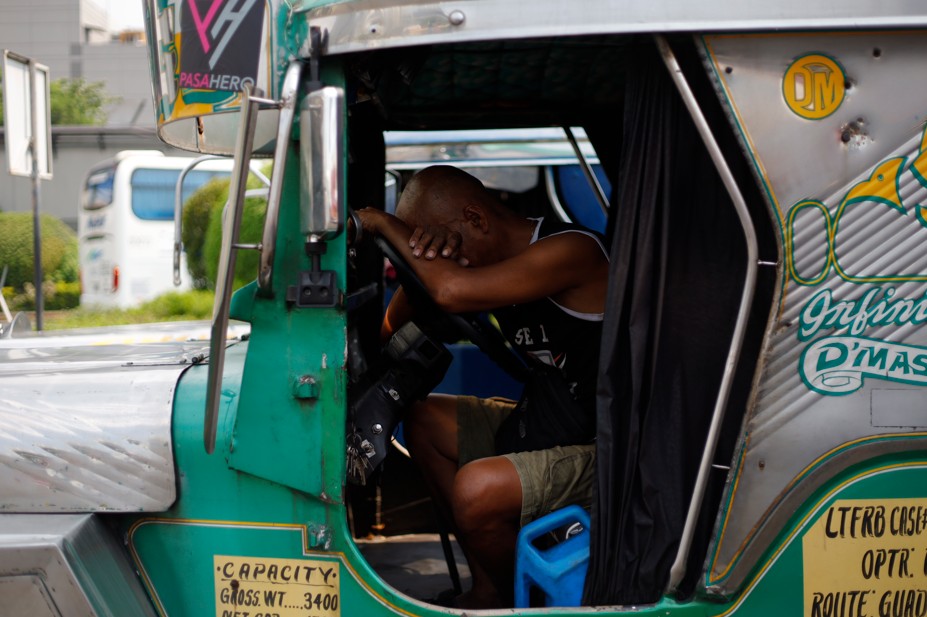
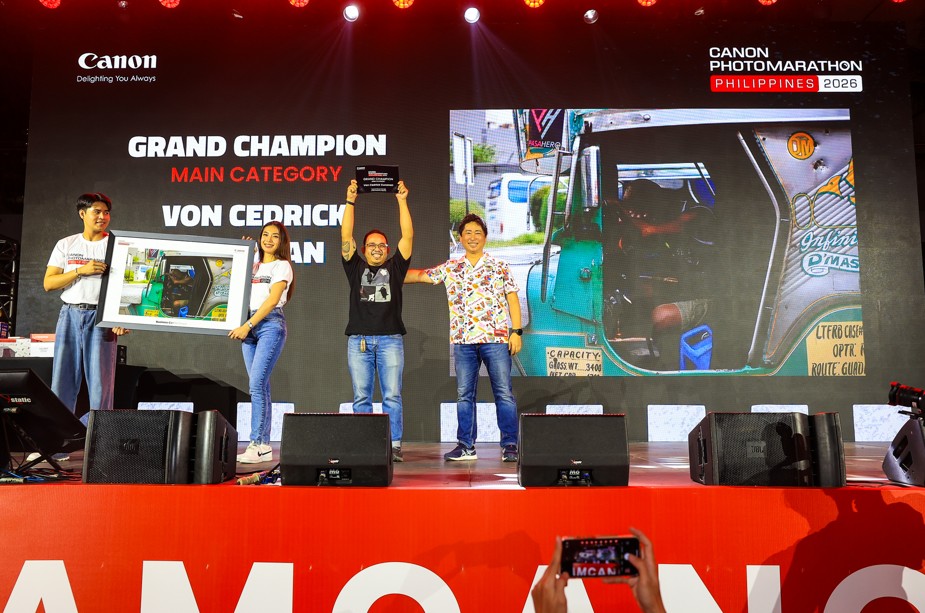
The Grand Champion, Von Cedrick Cunanan, embodied this restless instinct. A civil engineer who had only returned to photography a year before the competition, Cunanan bypassed the gleaming towers of BGC and headed instead toward a jeepney terminal. There, he found a driver resting inside his vehicle, seeking relief from the midday heat. The resulting image captured the heavy atmosphere of the Philippine summer and the quiet resilience of the working class. "I wanted to capture what he's feeling—the heat, the tiredness, the gas prices," Cunanan said. "I wanted the judges to feel something when they saw it." The photograph earned him the Grand Champion title and a Canon EOS R6 Mark III with an RF24-105mm IS STM lens.
For tourism planners, Cunanan's choice of subject is instructive. A jeepney driver photographed by a civil engineer at a terminal near BGC is not the image that appears on a destination's official Instagram. But it is precisely the kind of image that signals to culturally curious travelers that this is a city where genuine life unfolds alongside its curated aesthetics. The Photomarathon, by design, generated thousands of such images in a single afternoon, each one a micro-ambassador for a destination that is more textured than its skyline suggests.
The Canon Creator Park: A Festival Within a Festival
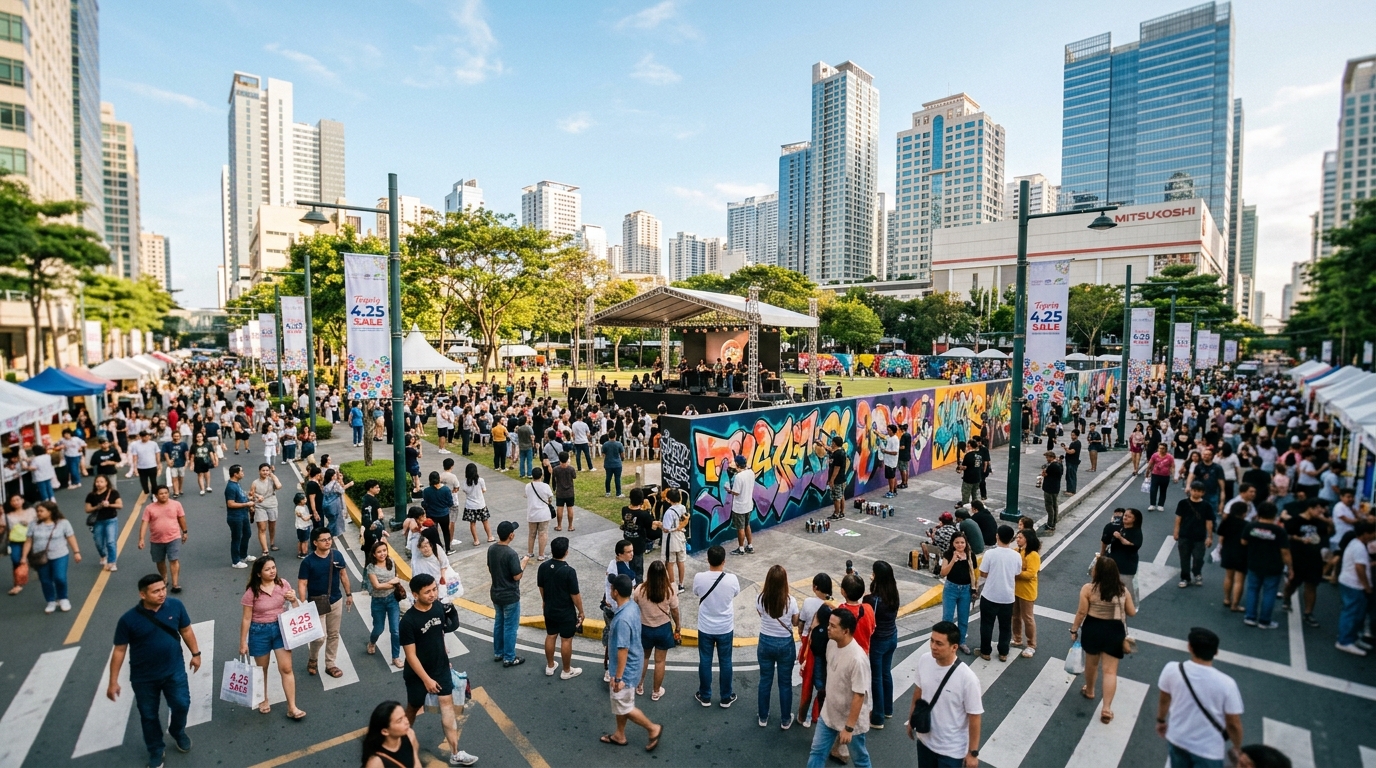
The BGC Amphitheater was not merely a starting line. Canon transformed it into what it called the Canon Creator Park, an immersive activation zone that drew crowds beyond the registered competitors. Attendees could move through themed stations featuring pet photography, cosplay portraiture, and bridal portrait sessions, each led by Canon ambassadors and professional photographers. These were not passive displays but hands-on experiences where visitors could borrow equipment, pose for shots, and receive real-time guidance from working professionals.
The educational component was equally robust. A main stage hosted a rotating schedule of workshops throughout the day. Wildlife photographers Marie Lozano and Aaron Gekowski shared techniques for capturing animals in motion. Content creator Gab Altonaga walked audiences through building a personal brand in the digital space. Edwin Martinez demonstrated cityscape photography, while Ian Celis and Paolo Ruiz offered hands-on training with Canon's EOS C50 cinema camera, a piece of professional filmmaking equipment. On-site instant printing stations allowed participants to see their digital captures become physical keepsakes using MegaTank Printers, closing the loop between creation and tangible memory.
For BGC, the Creator Park functioned as a tourism product in its own right. Visitors who had not registered for the competition could still walk into the Amphitheater, explore the activations, and experience the energy of hundreds of creators working in real time. This kind of incidental tourism—where a visitor arrives for a coffee and stays for a photography workshop—is what distinguishes mature urban destinations from those still building their cultural portfolios.
A Video Category and the Rise of the Hybrid Creator
The decision to introduce a dedicated Video Category in 2026 acknowledged a shift in the creator landscape that has been underway for years but is now impossible to ignore. Vloggers, cinematographers, and hybrid creators who move fluidly between still photography and motion now constitute a significant segment of the creative tourism market. They travel not only to capture images but to produce content that feeds YouTube channels, TikTok accounts, and Instagram Reels, each post a piece of geo-tagged destination marketing.
Anuj Aggarwal, President and CEO of Canon Marketing (Philippines), Inc., framed the category expansion as a response to this new creative reality. "What made today special was seeing so many different kinds of creators in one place, all chasing the same thing: a moment worth capturing," Aggarwal said. "Canon Photomarathon 2026 reminded us that creativity grows when people are given the room and the tools to explore it together." The Video Category winners received Canon EOS R50 V and PowerShot V1 cameras, prizes that signaled Canon's commitment to building out its video ecosystem.
For the tourism sector, the presence of 1,200 creators—many of them producing geo-tagged, shareable video content—translates into a marketing multiplier that no tourism board budget can replicate. Each participant who posted their work to social media in the hours and days following the event became, in effect, a distribution channel for images of BGC. Some showcased the architecture. Others captured the street scenes, the food stalls along High Street, the quiet benches along 5th Avenue where exhausted photographers paused to review their shots. The cumulative effect was a portrait of a city in motion, captured not by a single hired photographer but by a thousand different eyes.
The Seven-Year Wait and What It Tells Us
That the Photomarathon disappeared for seven years and then returned to 1,200 registrants on its first day back is not merely a testament to brand loyalty. It speaks to the hunger for creative gathering spaces that outlasted the pandemic years and have only intensified since. The last Philippine Photomarathon took place in or around 2019. The hiatus spanned the global health crisis and the slow recalibration of public events that followed. By April 2026, the conditions for a large-scale photography event had returned, and Canon chose BGC as the stage for its comeback.
The choice of venue was unlikely to have been accidental. The BGC Amphitheater has proven itself as one of Metro Manila's most reliable open-air event spaces, hosting everything from the Manila Gin Festival to British Council cultural programs to major fan activations. Its central location, surrounded by restaurants, retail, and hotels, means that an event held there is never just an event. It becomes part of a larger day out—photography in the morning, lunch at a nearby restaurant, perhaps a shopping stop in the afternoon. The Photomarathon plugged directly into this ecosystem, feeding BGC's broader economy even as it consumed its streets as raw material for art.