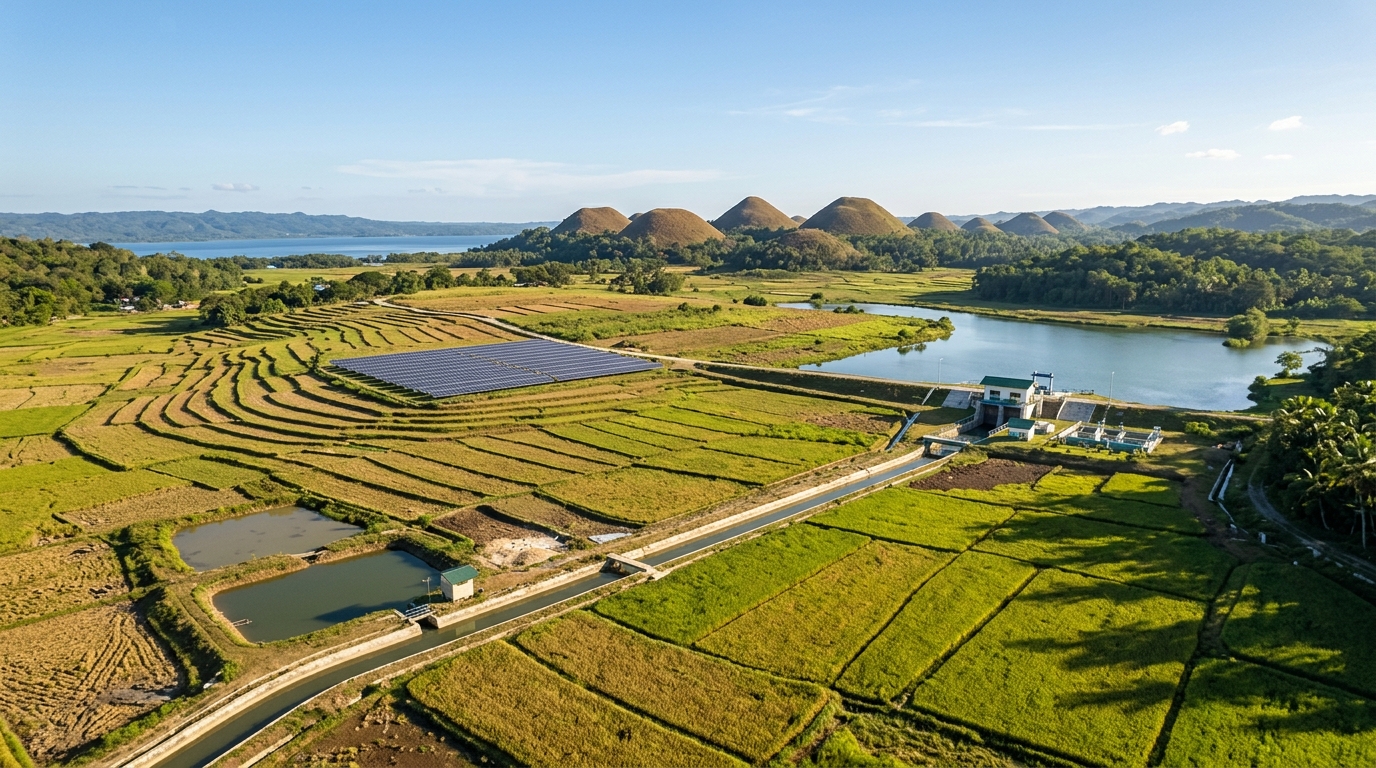
Bohol — The province is taking proactive measures to safeguard its agricultural and energy security as the provincial government officially launched a reconstituted El Niño Task Force this week. Governor Erico Aristotle Aumentado signed Executive Order No. 20-A to establish nine specialized working committees, each designed to manage specific risks associated with the predicted dry season. By moving beyond a single-focus approach, the administration aims to create a robust, multi-sectoral defense system that protects everything from local power grids to essential water supplies. This shift reflects a commitment to advanced disaster planning, ensuring that the province remains resilient even as environmental patterns become increasingly unpredictable.
A Specialized Approach to Drought
The decision to utilize nine distinct working committees marks a departure from standard response models, allowing for more granular management of different public sectors. These committees, which range from energy and power to public works and social services, are tasked with developing both immediate relief plans and long-term mitigation strategies. By separating these duties, the government ensures that critical issues—such as balancing irrigation needs with municipal water usage—can be handled simultaneously without bureaucratic delay. This structure allows the province to address the complex reality of environmental stress in a way that is both targeted and effective.
Proactive Planning Over Reactive Response
The task force is moving quickly to integrate scientific data and local weather projections into their planning models to anticipate how the dry spell might unfold. By pre-positioning resources and refining early warning systems, the administration intends to minimize the economic and social disruptions that typically follow severe climate events. This strategy is essential for protecting the livelihoods of Boholano farmers and the stability of the local food supply, which are often the most vulnerable to drought. It represents a pivot from simply reacting to emergencies toward a model of persistent, science-led readiness.
Building Regional Stability
For the people of Bohol, this initiative provides a crucial layer of security, as the province aligns its local goals with broader national frameworks for climate resilience. The governor emphasized that success will require not just government action, but ongoing collaboration with national agencies and local community partners. As the province continues its journey as a UNESCO Global Geopark, maintaining the stability of its food, water, and energy systems is a priority for provincial leadership. This comprehensive approach reinforces Bohol’s reputation as a well-managed and forward-thinking destination for both residents and visitors alike.
No people