BOHOL — Farmers in the country's ube capital are embracing modern, science-backed methods that can triple planting materials and break the crop’s seasonal limitations, as global demand for purple yam continues to surge.
Breaking Seasonal Barriers with New Varieties
Researchers from the Philippine Root Crop Research and Training Center (PhilRootcrops) at Visayas State University have identified five ube varieties that can be cultivated outside the traditional May to June planting window. This breakthrough directly tackles one of the farmers' biggest struggles: the crop's strict seasonality.
Among these promising varieties is Ubi Kinampay, celebrated as the "Queen of Philippine Yams," and Zambal, a type that skips the usual two-to-four-month dormancy period. Local breeds Baligonhon, Inoringnon, and Kabus-ok also demonstrated strong off-season potential.
PhilRootcrops director Marlon Tambis confirmed that February planting is now a proven reality. By using simple aids to stimulate germination during naturally unproductive months, farmers can extend their growing calendar and stabilize supply.
Minisett Technique Triples Planting Materials
Beyond seasonality, low yields have long plagued the industry. National ube production plummeted to just 14,000 metric tons in 2020, down from over 30,000 metric tons in 2006. A major culprit was the wasteful practice of replanting entire mother tubers, which multiplies only up to five times.
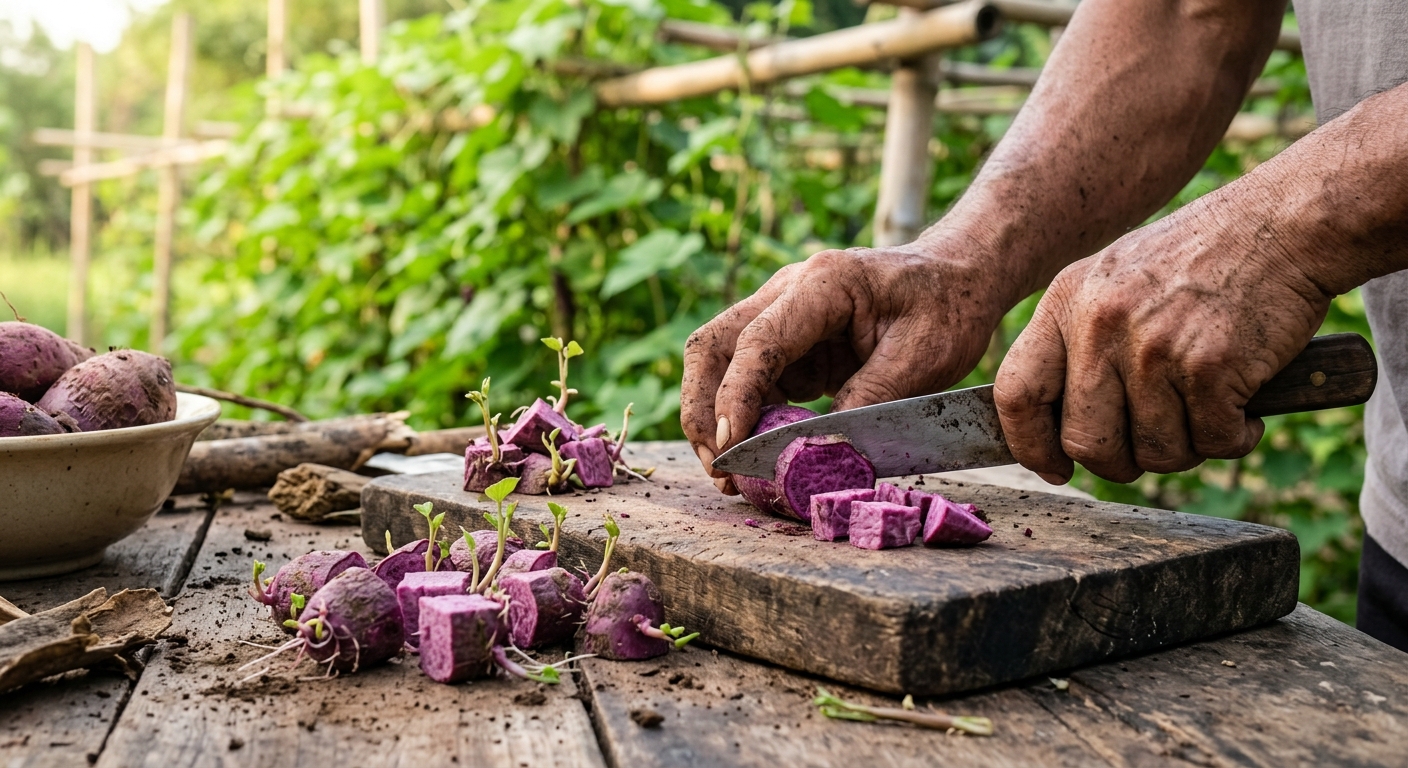
Tambis’ team introduced the minisett method, a rapid propagation technique originally developed in Nigeria. Instead of using whole tubers, farmers cut the mother yam into smaller, functional pieces, each capable of sprouting into a new plant.
The results are dramatic. Traditional methods yield only seven to ten planting materials per kilo of ube. With minisett, that number jumps to over thirty. This efficiency drastically reduces input costs and promises to revive Bohol’s ube production capacity.
Tissue Culture and Future Plans
Looking ahead, researchers are preparing to deploy tissue culture technology by next year. This method involves growing tiny pieces of plant tissue inside sterile glass jars or Petri dishes under precisely controlled temperature and light.
Tambis explained that tissue culture is a more complex process. The plantlets must first undergo incubation and a critical hardening phase before they can survive in the field. Once mastered, this technique could produce disease-free planting materials on a massive scale.
The entire initiative falls under a Department of Science and Technology-funded project in collaboration with Bohol Island State University. It aims to replace unscientific traditional practices with proven S&T-based farm protocols, ensuring sustainable growth for the ube industry.
Global Ube Demand Skyrockets
The push for modernized farming aligns perfectly with an unprecedented global appetite for ube. Food analytics firm Datassential reported that ube menu offerings in the United States alone have jumped 230 percent over the past four years.
Awareness of the Filipino crop is also rising rapidly, with one in four American consumers now familiar with it. On Instagram, the #ube hashtag has amassed over 765,000 posts, signaling the ingredient’s growing international clout.
For Bohol's farmers, the message is clear: meeting this booming demand requires leaving outdated practices behind. Science, Tambis emphasized, is the most reliable tool to boost yields, ensure quality, and transform ube farming into a globally competitive enterprise.