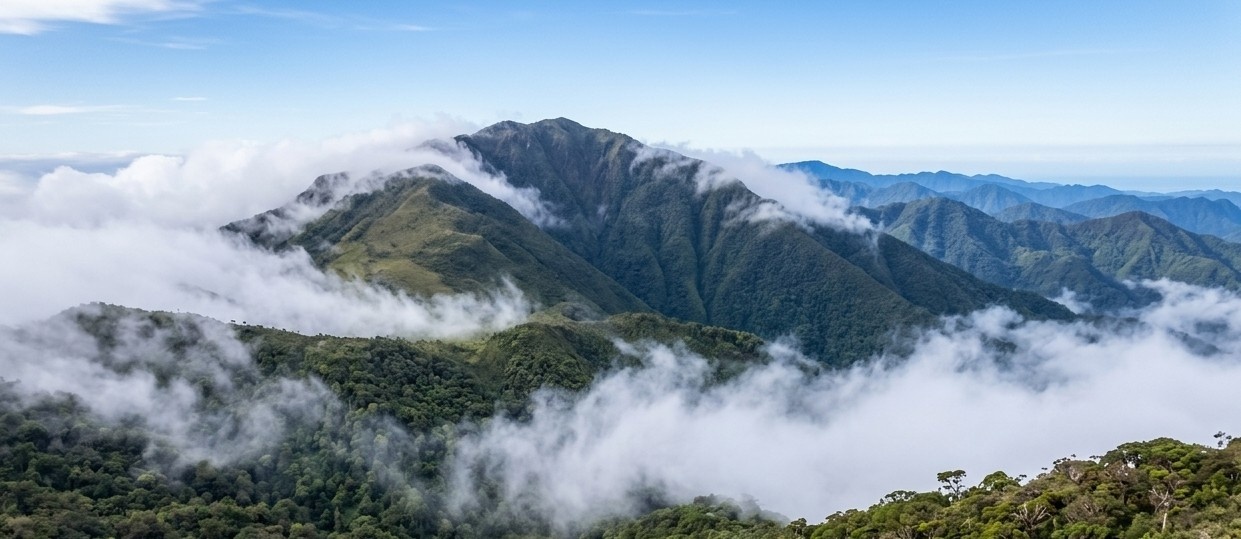

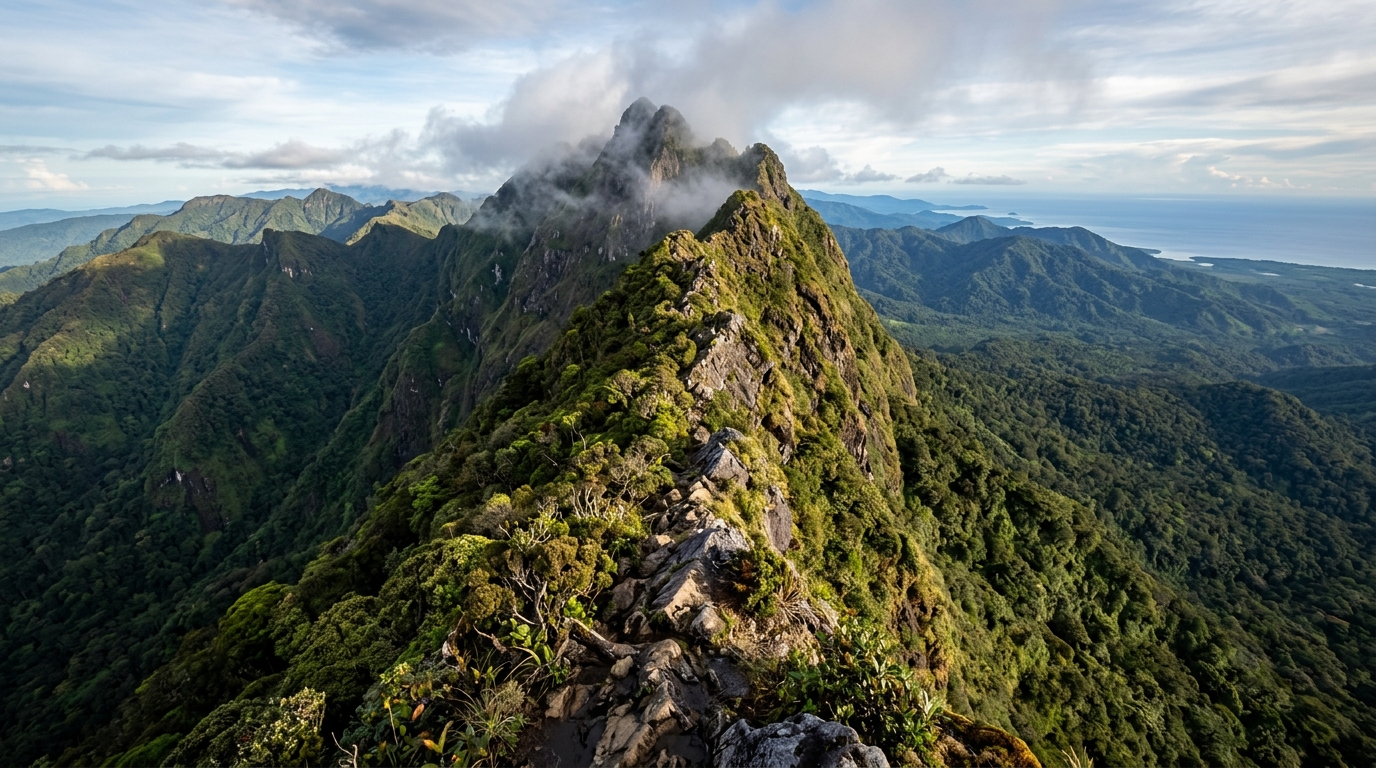
Palawan is widely defined by its coastal wonders, but its true geographic crown sits thousands of feet above the sea in the wild, mist-shrouded southern interior. Standing as the highest point in the entire island province at an imposing 2,086 meters (6,844 feet) above sea level, Mount Mantalingajan is a monolithic ultra-prominent peak that dominates the southern skyline. As of May 2026, this legendary massif remains the ultimate crucible for mountaineers, officially designated by top climbing authorities as one of the most technical and physically grueling major climbs in the Philippines.
The Legendary 9/9 Extreme Traverse
For elite adventurers navigating the 2026 climbing season, Mount Mantalingajan represents a serious badge of honor. Rated with a maximum difficulty score of nine by PinoyMountaineer, the standard route is an intense 4-to-5-day multi-stage traverse. The expedition typically commences on the southwest coast at Barangay Ransang in Rizal, requiring hikers to battle muddy, ultra-marshy jungle terrain and steep elevation gains that start nearly at sea level. The defining physical challenge is the notorious "Canopy Knife Edge" a narrow, exposed rocky ridge that testers must cross before achieving the summit assault and descending toward Brooke's Point on the southeastern coast.
A Sacred World of Endemic Life and Ancient Cultures
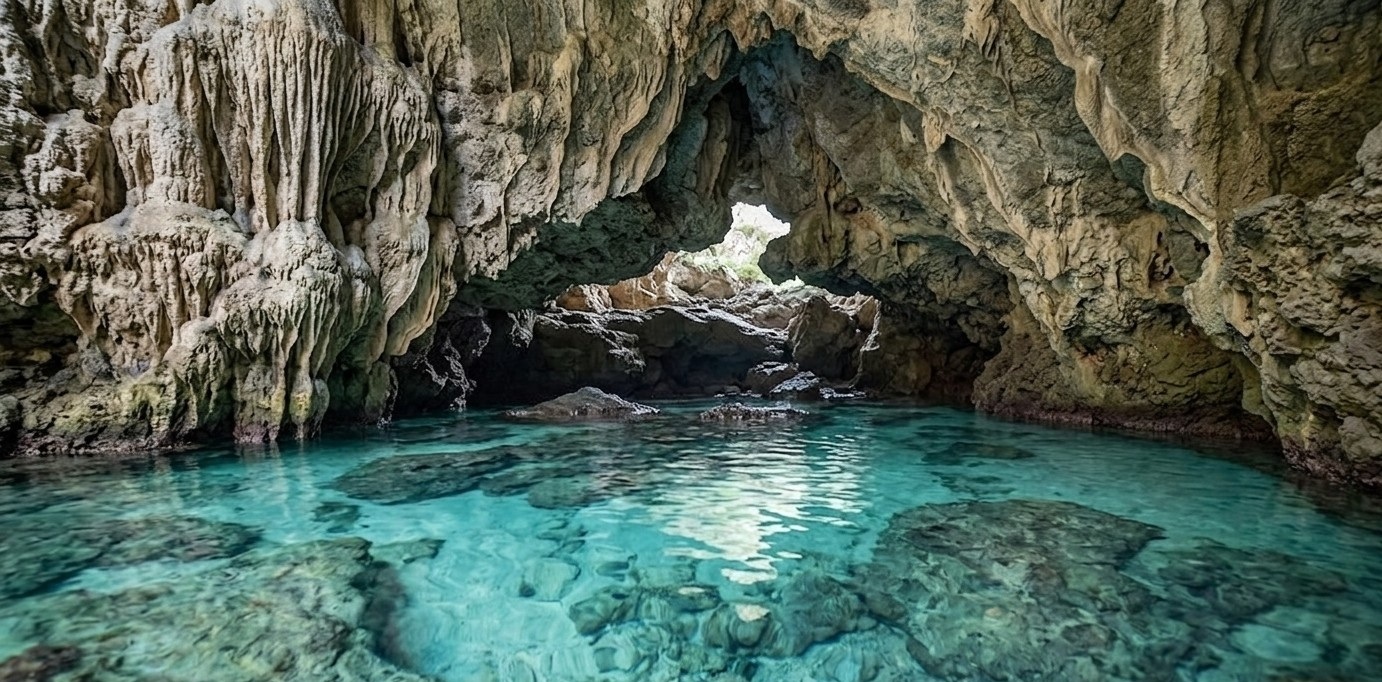
Beyond its reputation for sheer physical punishment, Mount Mantalingajan is an ecological wonderland of global significance. Forming the core of the 120,457-hectare Mount Mantalingahan Protected Landscape (MMPL), the mountain functions as a crucial sanctuary for rare evolutionary biodiversity. It is the exclusive evolutionary birthplace of the carnivorous pitcher plant Nepenthes mantalingajanensis and the endangered Palawan peacock-pheasant. Furthermore, the mountain serves as the ancestral home to the indigenous Palaw'an people, including isolated communities like the Tau't Bato (People of the Rock), who still practice traditional cave-dwelling lifestyles deep within the mountain's limestone folds.
The Path to World Heritage Status
The political and environmental status of the mountain is taking center stage in late May 2026 as local leaders push forward with its tentative inscription as a UNESCO World Heritage Site. This conservation framework acts as a protective shield, drawing vital global attention to combat illegal logging and mining pressures targeting the Beaufort Mountains Ultramafics geological region. For the rare travelers who secure strict trekking permits, standing on the summit provides a breathtaking 360-degree view spanning both the Sulu Sea and the South China Sea a profound moment of isolation on what is locally revered as the "Mountain of God."